
Texas Rabbit Works
Highlights
- Explore the historic Texas Rabbit Works to uncover the pivotal role of the rabbit industry in local history.
- Discover the Riverside Freezing Works, showcasing a unique era that supported the Queensland economy during the Great Depression.
- Learn about the significant employment opportunities created by rabbit trapping, which helped families thrive during tough times.
- Wander through a site that once exported three tons of rabbit meat weekly, highlighting its impact on Australia's economy.
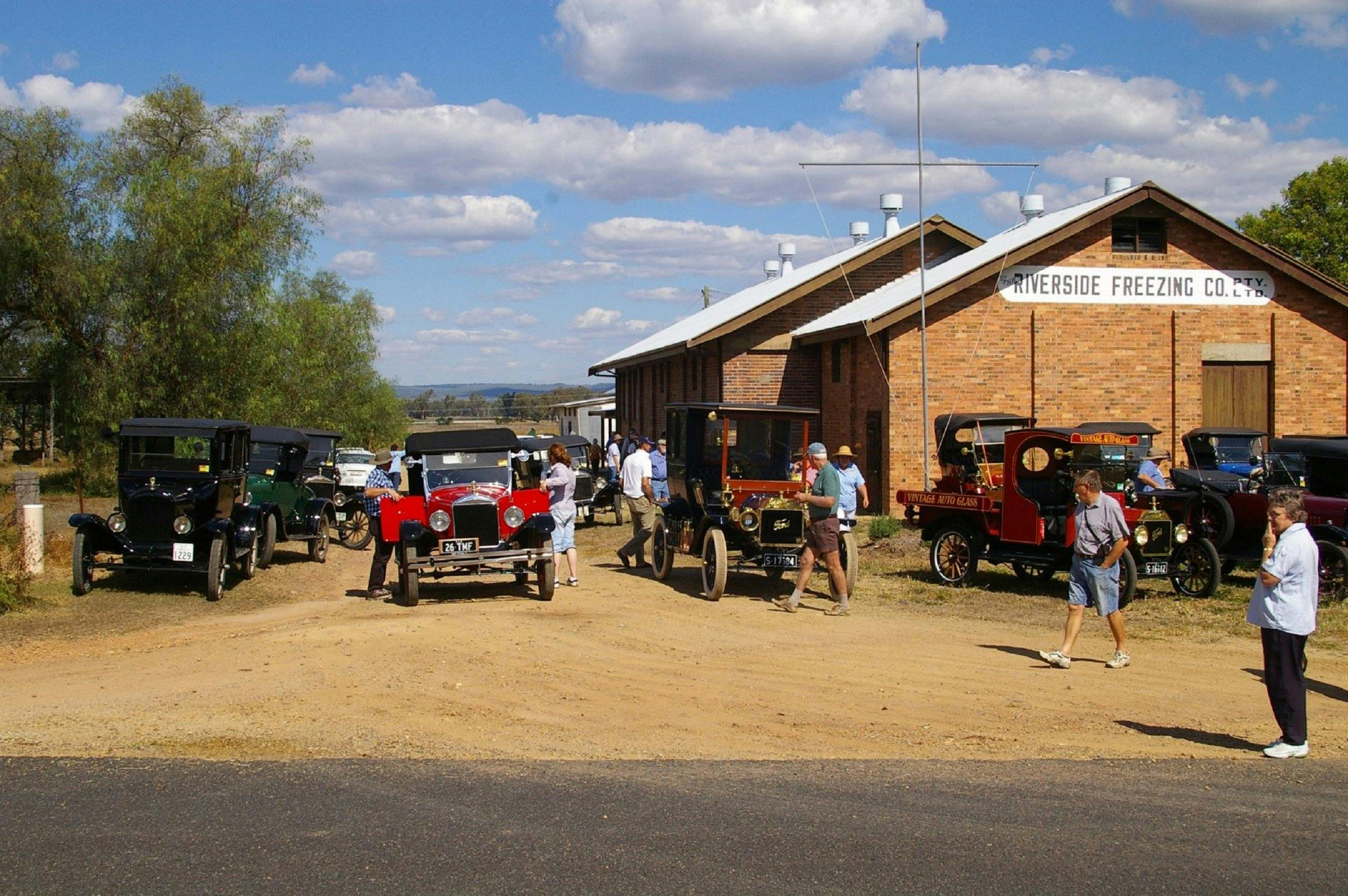
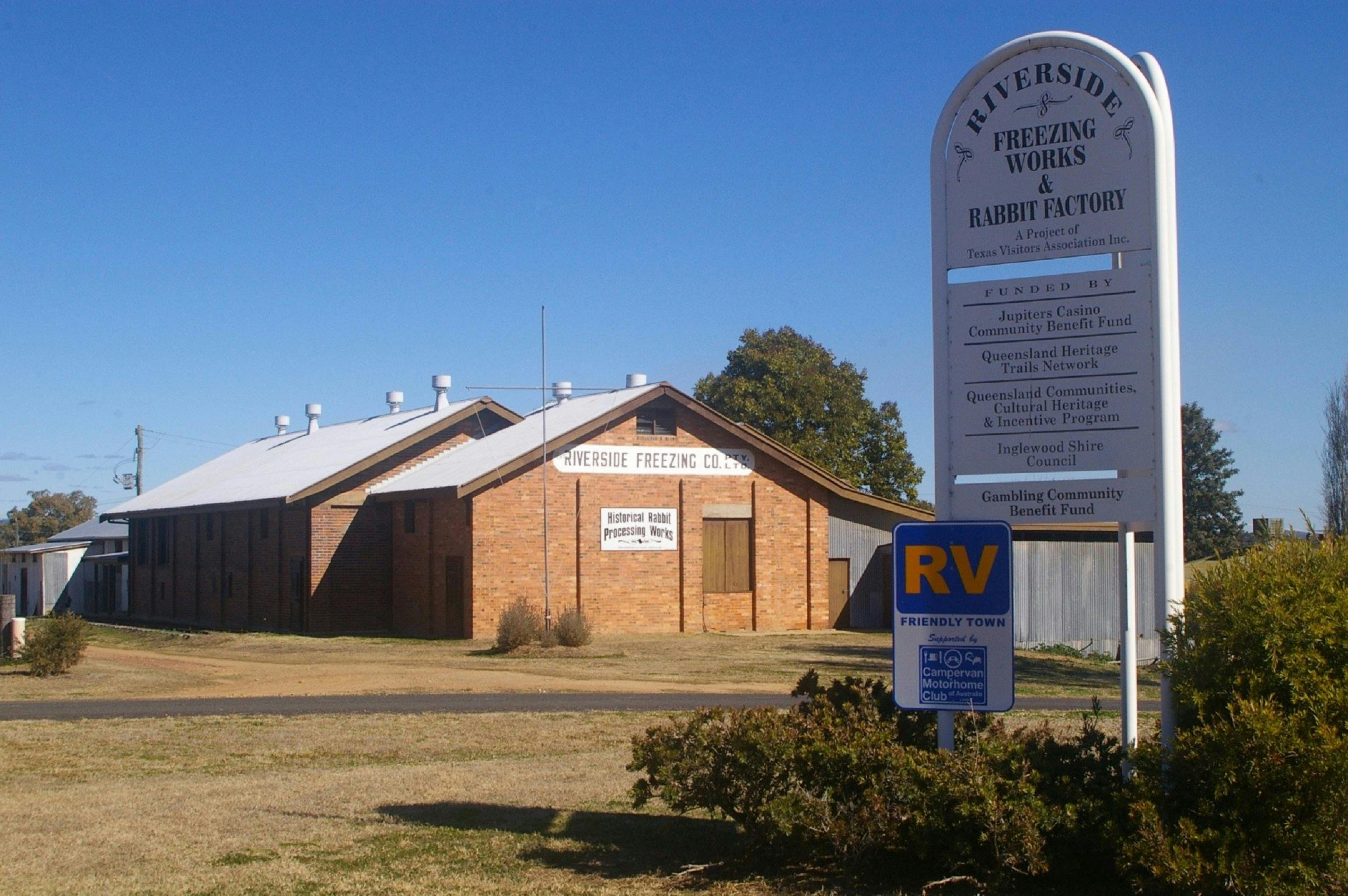
The historic Texas Rabbit Works, which includes the Riverside Freezing Works, brings to life a very important era in the history of Texas and Australia. During the 1930s the Texas Rabbit Works employed 30 men and exported three tons of rabbit meat a week to England. The industry was credited with saving the Queensland town during the depression years. The works closed in 1992. The rabbit industry in 1929 was the largest employer in Australia.
When you think of what makes the wheels of the Australian economy turn today, most people think of mining and, historically, of agriculture. But in the 1930s the rabbit industry was at the top. At its peak, there were about 15 rabbit processing centres in Australia. If they each matched the exports of the Texas Rabbit Works, which in today’s terms would be about AUD$200 million, then the rabbit industry was worth AUD$10 billion.
In a period where the economy suffered, workers of all trades found they could earn more money through trapping rabbits rather than pursuing their usual occupations. Entire families would ‘rabbit’ together, regularly earning up to the equivalent of AUD900 a week.
Images and Video

Accreditations
- QLD – Queensland Country Tourism
Features
Tags
Disabled access available, contact operator for details.
Plan more around this area
 Texas, QLD
 Rachels Cottage
Rachel's Cottage is a historical workers cottage built in 1898 as the family home of the Middleton family. It has been lovingly restored and refurbished.
 Texas, QLD
 The Texas Motel
The Texas Motel is situated on High Street, the main street of Texas, opposite the Stockman Hotel.
 Texas, QLD
 Texas Dumaresq River Rest Area
Dumaresq Crossing Road, Texas 2km South of Texas, you turn off the Texas Road, turn onto the Dumaresq Crossing Road.

 Texas, QLD
 Valley Heights Texas QLD Bush Camp
This is a hosted stay through Hipcamp, below is the information provided by the Host regarding their offering. Valley Heights is a beautiful rural…
 Texas, NSW
 Goat Rock Camping Ground
Goat Rock Camping Ground and Tourist Park offers a stunning background for camping, bushwalking, stargazing and bird watching, and a number of other activities.
 Atholwood, NSW
 Sky Camp
This is a hosted stay through Hipcamp, below is the information provided by the Host regarding their offering. Welcome to big sky country. Sky…
