National Anzac Centre
Highlights
- Explore 32 Anzac characters and connect personally with their stories of courage during the First World War.
- Engage with interactive displays that bring to life the experiences of Australians and New Zealanders in conflict.
- Reflect on your journey at the interactive wall, sharing your thoughts within the National Anzac Centre.
- Wander through Albany Heritage Park, immersing yourself in the rich history of the Anzac legend.
In 1914, more than 40,000 Australians and New Zealanders left Albany, bound for the Great War. This is their story.
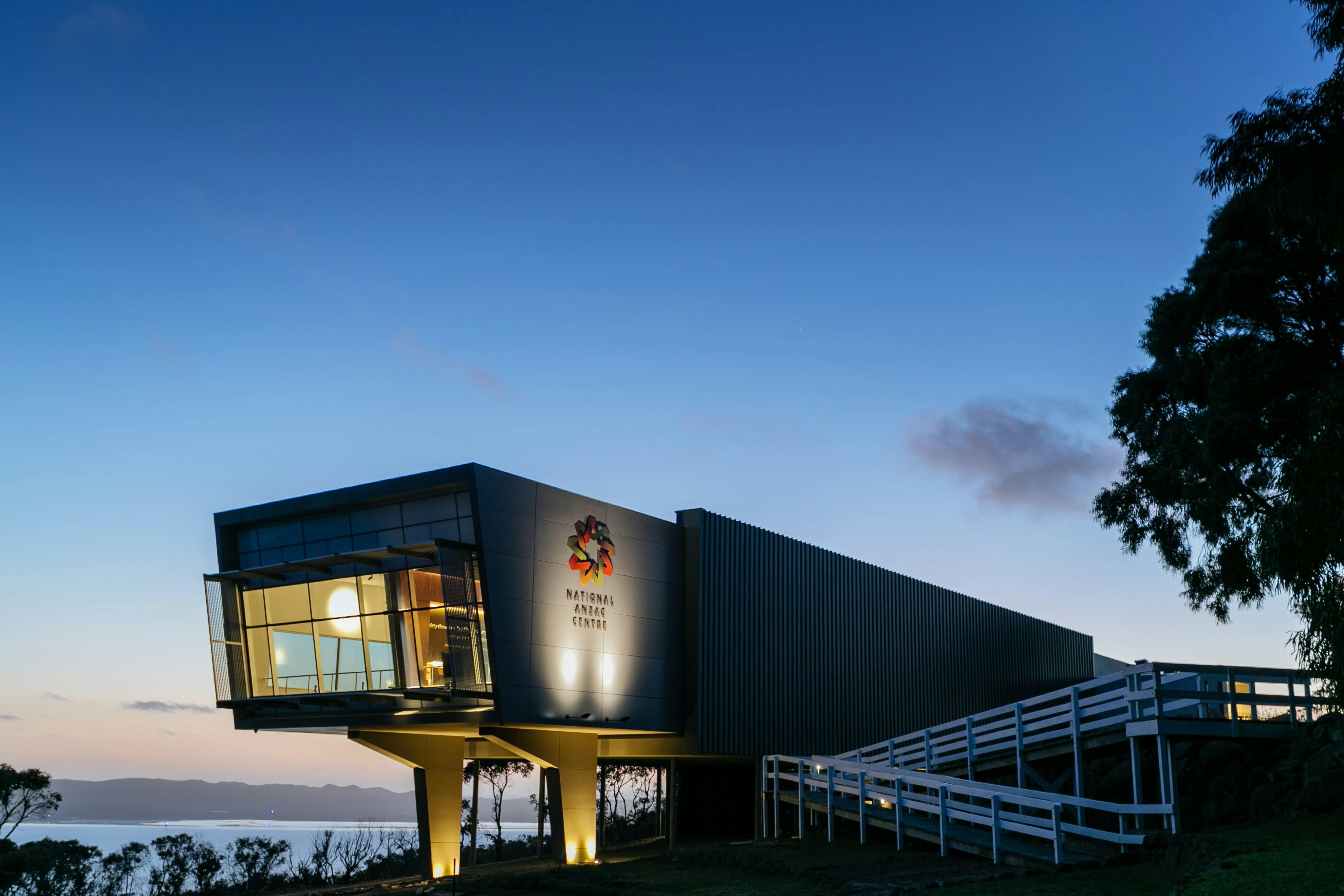
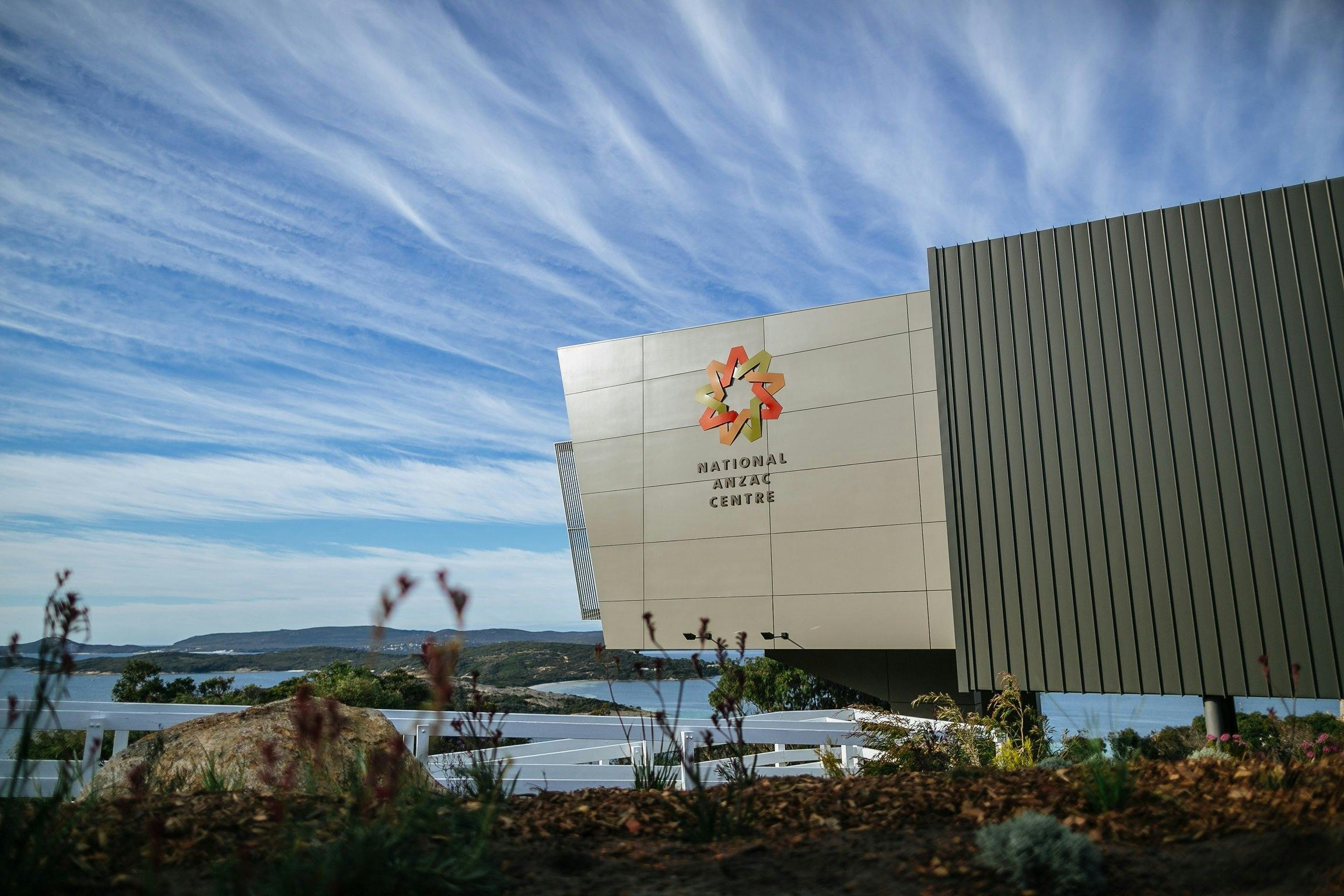
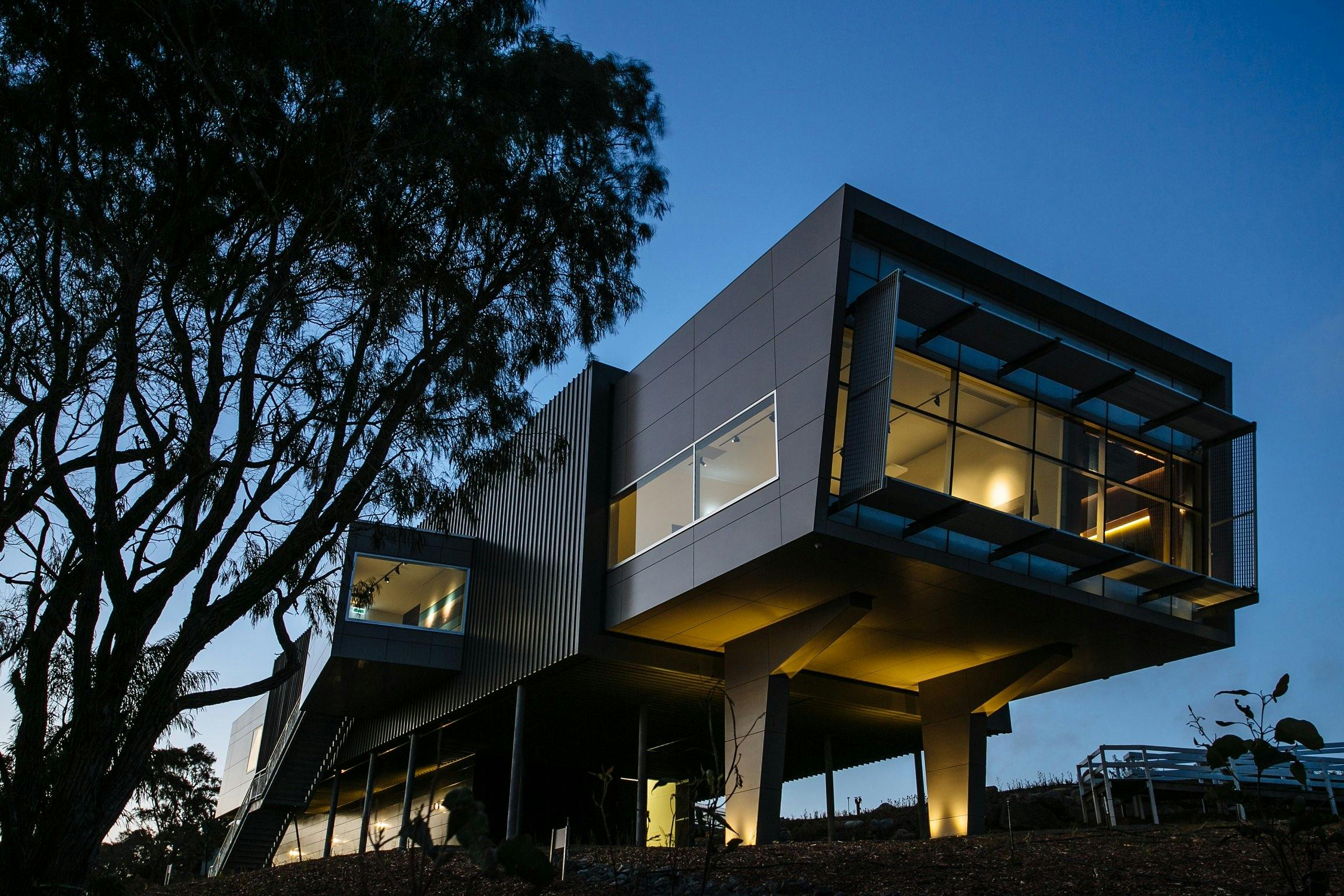
The National Anzac Centre is Australia’s foremost museum honouring the Anzac legend. Set within Albany Heritage Park, the Centre offers visitors a deeply personal connection with the Anzac experience.
Upon entering the National Anzac Centre, visitors assume the identity of one of 32 Anzac characters and walk with them as they experience the First World War: from recruitment; through training and embarkation; engagement in conflicts in the Indian Ocean prior to arrival in Egypt; and on to Gallipoli, the Palestine and Sinai; and across the Western front.
These personal stories unfold through interactive, multimedia displays and audio commentary, as visitors witness the First World War through the eyes and stories of their Anzac.
The National Anzac Centre experience concludes with the discovery of each Anzac’s fate and the opportunity for visitors to document their own feelings through an interactive wall that displays their message within the National Anzac Centre.
The Centre opened on 1 November 2014, to mark the centenary of the Australian and New Zealand troop convoys’ departure from Albany’s King George Sound to enter the First World War.
Images and Video

Accreditations
-
 Quality Tourism Accreditation
-
Sustainable Tourism Accreditation by ATIC
- Australian Museums and Galleries Association
- Regional Tourist/Tourism Association/Organisation
- WA – Australia's South West
Features
Activities
Tags
Actively welcomes people with access needs.
General access

- Offers multiple options for booking – web, email, phone is available.
- Offers a range of contact methods for receiving complaints.
- Companion Cards are accepted.
- Employs people with disabilities.
- Staff are trained in disability awareness.
- Accessibility information and photos, including of a bathroom, room and/or floor plan on their website (can be emailed on request).
- Asks all visitors if there are any specific needs to be met.
- Website meets <a href="https://www.w3.org/WAI/standards-guidelines/wcag/" target="_blank">WCAG 2.0</a> accessibility standards
- Advise tour guides of the access needs of guests at the time of booking (includes pick up and drop off requirements)
- Assistance with booking arrangements (includes providing clear itineraries with written instructions on what to do at various destinations)
Communication

Welcomes and assists people who have challenges with learning, communication, understanding and behaviour. (includes people with autism, intellectual disability, Down syndrome, acquired brain injury (ABI), dyslexia and dementia)
- Staff are trained in communicating with people with learning or behavioural challenges.
- Uses Plain English / easy read signage and information (includes menus and emergency information)
Vision

Caters for people who are blind or have vision loss.
- Information in large print is available.
- Information in audio format (includes an audio described map of their venue, audio descs of performances and/ or displays) is available.
- Digital communication materials (hard copy information also online) is available.
- Uses easy to read fonts in their signage and communication materials (Helvetica and Arial).
- An appropriate area for toileting an assistance dog is available.
- Handrails on all stairways
Hearing

Caters for people who are deaf or have hearing loss.
- A hearing loop is available.
- Telephones which are compatible with hearing aids are available.
- Volume controlled phones are available.
Physical – Mobility

Caters for people with sufficient mobility to climb a few steps but who would benefit from fixtures to aid balance. (This includes people using walking frames and mobility aids)
- Uses floors/coverings which are slip resistant, firm and smooth
- Uses non-slip tiles in the bathroom or slip resistant matting
- Grab rails in the bathroom
- Seating in common areas including reception area
Physical – Wheelchair

Caters for people who use a wheelchair.
- Step free outdoor pathways (includes picnic areas, barbecues and shelters)
- A step free main entrance to the building and/or reception area (includes ramps or slopes with a maximum gradient of 1:14, otherwise are too steep for wheelchairs)
- Step free access to restaurant, lounge and bar
- Accessible seating areas in theatrette
- Doorways which are easy to open and have lever handles (doorways 850mm or wider when open and not heavy).
- An accessible public toilet which is unlocked.
- A wheelchair accessible toilet / shower and change room is available.
- At least one wheelchair accessible parking space with wheelchair accessible signage clearly displayed (International standards are 3200mm wide x 2500 mm high).
Plan more around this area
 Middleton Beach, WA
Park Avenue Holiday Units
Comfortable and affordable Accommodation in the heart of Albany’s ocean side suburb of Middleton Beach.
 Middleton Beach, WA
Albany Holiday Units
Situated on Golf Links Rd, Albany Holiday Units offer comfortable and affordable accommodation in the heart of Albany’s ocean side suburb of Middleton Beach.
 Middleton Beach, WA
 The View Middleton Beach
Situated on the slopes of Mount Clarence, overlooking the white sands of Middleton Beach to Emu Point, and the Stirling Ranges on the horizon.
 Middleton Beach, WA
 API Middleton Beach Front Albany
The holiday home units are all located in premium positions and are self-contained.

 Middleton Beach, WA
BIG4 Middleton Beach Holiday Park
Sheltered by the calm waters of King George Sound, the stunning BIG4 Middleton Beach Holiday Park is located on 500 metres of world-class, pristine beach.

 Albany, WA
Foreshore Apartment 106
Enjoy stylish city living at the Foreshore Apartment.
 Albany, WA
 Rustlers Steakhouse and Grill
Rustlers Steakhouse & Grill has become a landmark for visitors seeking a true taste of the Great Southern region.
 Albany, WA
 Vancouver Street Cafe
Vancouver Street Café is a much-loved Albany institution, woven into the rhythm of local life for generations. Located on a historic corner, the café blends
 Albany, WA
 Ryan's Restaurant
Ryan’s provides guests with the best produce that showcases the region.
 Robinson, WA
Limeburners and Giniversity Albany
Great Southern Distilling Company, founded in 2004 was the very first distillery to legally make Single Malt Whisky in Western Australia.
