Campsites
Highlights
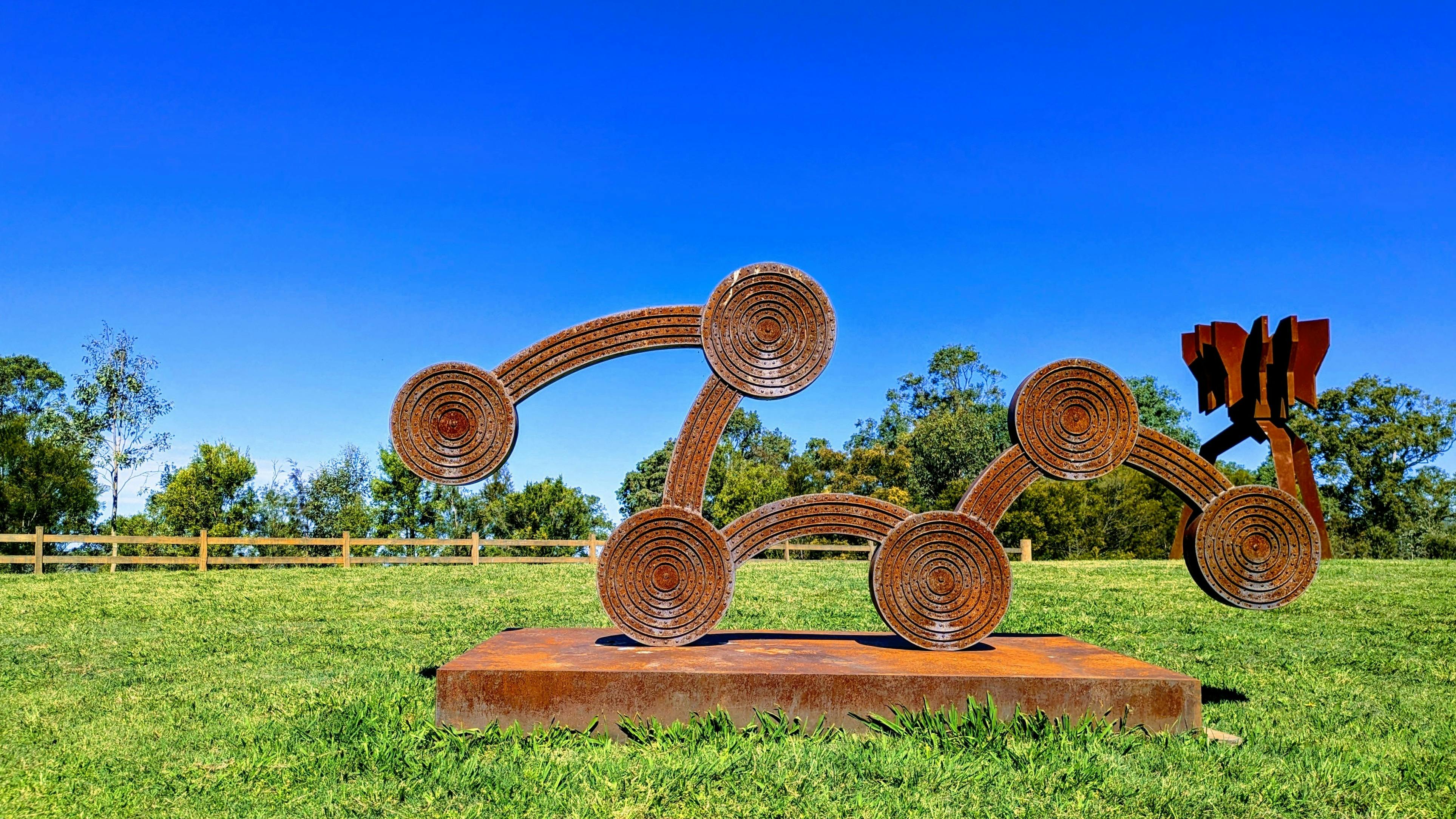
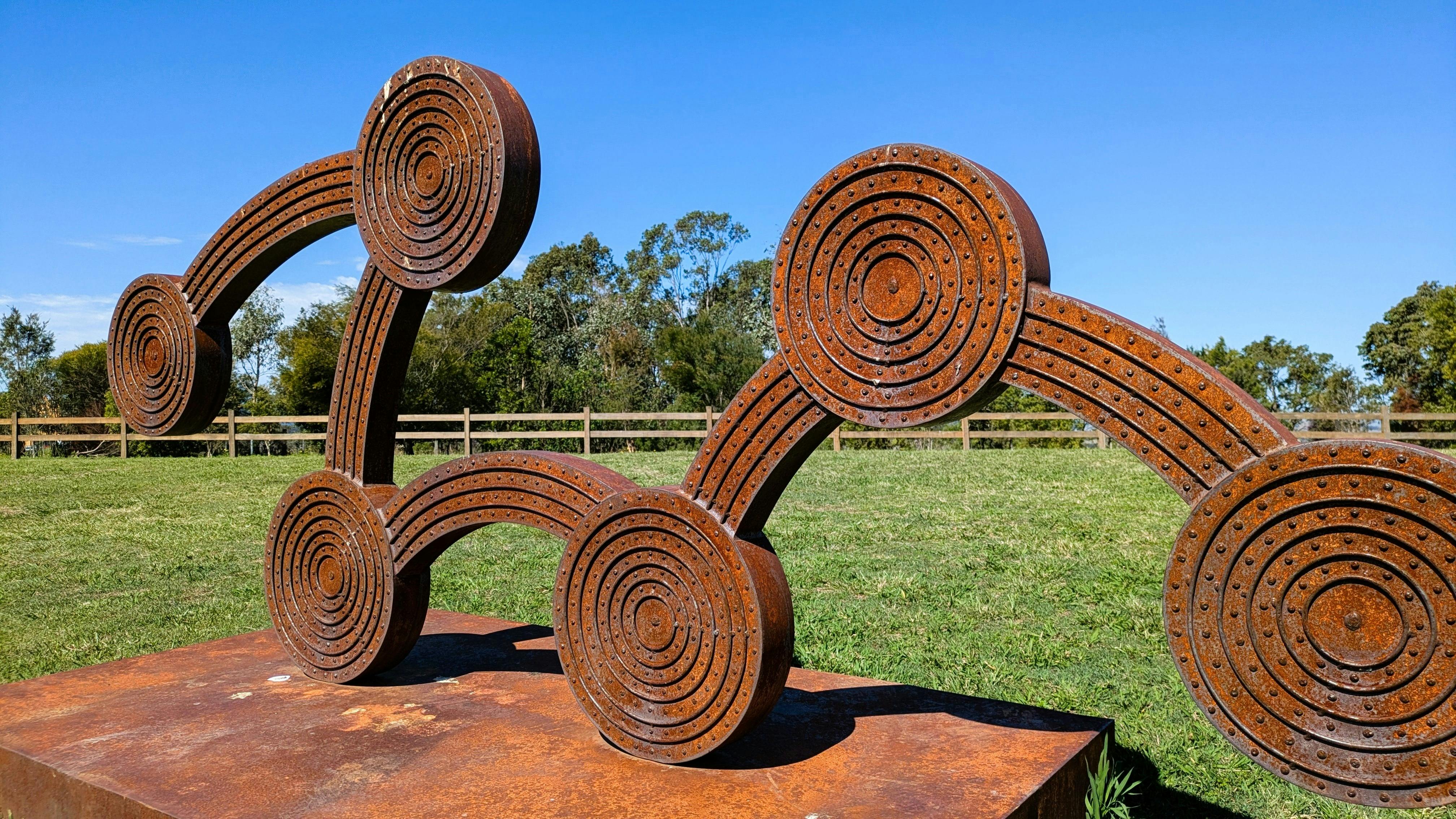
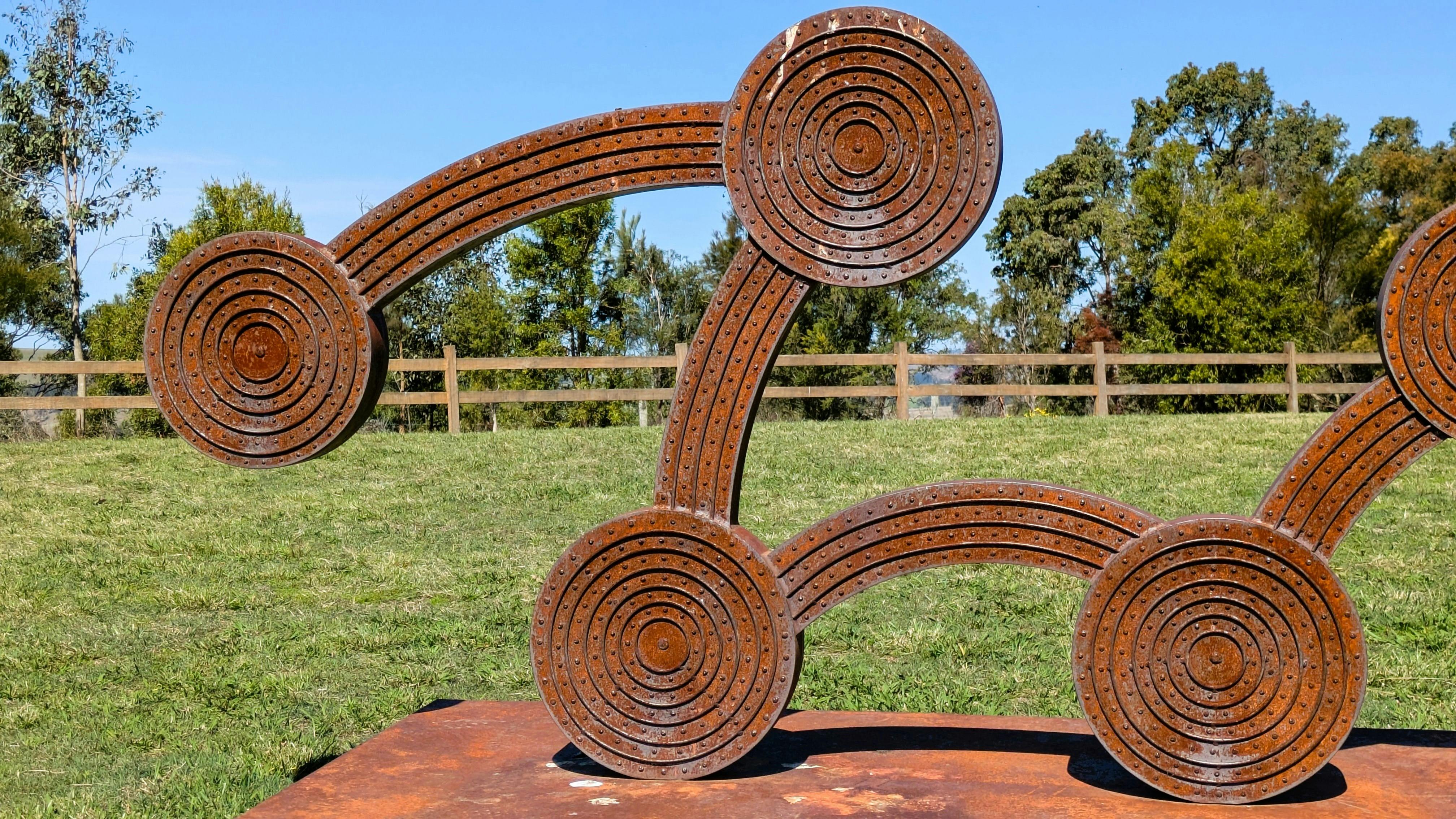
- Explore Tarisse King's "Campsites" sculpture, which vividly embodies the nomadic essence of Indigenous culture.
- Admire the enduring strength of Australian Indigenous stories reflected in the sculpture's metal and rusted finish.
- Connect with the land through natural stone elements that deepen the narrative of history and resilience.
- Experience a profound sense of belonging as you reflect on the journey of past and future in Dungog.
Situated on the Dungog Common, this sculpture by Tarisse King brings her “Campsites” story to life in three-dimensional form. Australian Indigenous culture is well known for its nomadic lifestyle. Tarisse often reflects on the fact that her ancestors would constantly move from one campsite to another to find a better food and water source and for better shelter to suit the seasonal conditions. Her campsites story refers to her time spent travelling across the Northern Territory with her Father, and alludes to active and abandoned campsites, meandering rivers and small tributaries.
The use of metal in her Campsites sculpture reflects the enduring strength and resilience of Australian Indigenous culture, with its stories passed down through generations. Natural stone was chosen to deepen the story’s connection to the land, while the rusted finish evokes the ancient markings and long history these stories carry.
Born in Adelaide, South Australia in 1986, Tarisse is the daughter of the late William King Jungala, a highly influential Indigenous artist. She is of Gurindji heritage. Now residing in New Zealand and a mother of five, Tarisse continues to create, feeling a profound connection between past and future. The past offers history, stability, stories, and roots, while the future brings hope, change, and a sense of belonging to something deeply human.
Images and Video
Features
Tags
This business does not currently offer accessible facilities.
Plan more around this area
 Fosterton, NSW
 Blackwood Hill
Welcome to Blackwood Hill Camp, a serene haven along the scenic Fosterton Loop road.
 Dungog, NSW
 Carriageway Resort
To experience a truly memorable and unique holiday experience, why not book your ticket on one of Carriageway Resort's fully-restored red rattler train cabins!
 Flat Tops, NSW
 Florence Talbot House
Discover Florence Talbot House, your peaceful rural retreat nestled in the beautiful countryside close to Dungog township. This charming country property offers the perfect sanctuary
 Dungog, NSW
 Nerrigundah Cabins
The Cabin is located in Bendolba, a short 10-minute drive out of Dungog towards Chichester Dam. It provides a comfortable, sparkling, clean space to relax.
 Main Creek, NSW
 Bonneydoon
This is a hosted stay through Hipcamp, below is the information provided by the Host regarding their offering.
 Fosterton, NSW
 Fosterton Retreat
Fosterton Retreat is located 10 minutes from Dungog, nestled in the foothills of the Barrington Tops.
 Dungog, NSW
 The Barn Dungog Pastry House
Discover The Barn Dungog Pastry House, where artisan baking meets country charm in the heart of Dungog.

 Dungog, NSW
 Westwood Dungog Providores
Westwood Dungog Providores in Dowling Street, Dungog offer beautiful and local grass-fed beef and lamb, free-range pork and chicken, eggs, cheeses and other specialties.
 Dungog, NSW
 Dungog Barrington Bakery
Experience authentic country baking at Dungog Barrington Bakery, where traditional recipes and warm hospitality create the perfect rural café experience. Step into this charming traditional
 Dungog, NSW
 Royal Hotel Dungog
Royal Hotel Dungog offers quality food and drinks six days a week.
 Dungog, NSW
 Tinshed Brewery
Are you looking for a locally made crafted ale, then look no further than the Tinshed Brewery, they focus on producing great craft beer.
 Stroud Road, NSW
 Gap Hill Wines
Gap Hill Wines. Located just off the Buckett's Way in Stroud Road, just 7km's north of Stroud. We specialise in estate grown, hand picked, quality
