
Dilly Bag Designers
Highlights
- Create a unique Dilly Bag using natural fibres and traditional techniques, celebrating First Nations craftsmanship.
- Explore hands-on design methods that encourage creativity and practical skills in a fun, family-friendly environment.
- Discover the rich history of gathering bags while crafting a functional artwork to take home.
- Enjoy a 20% discount on exhibition tickets when you bundle with your Dilly Bag experience.
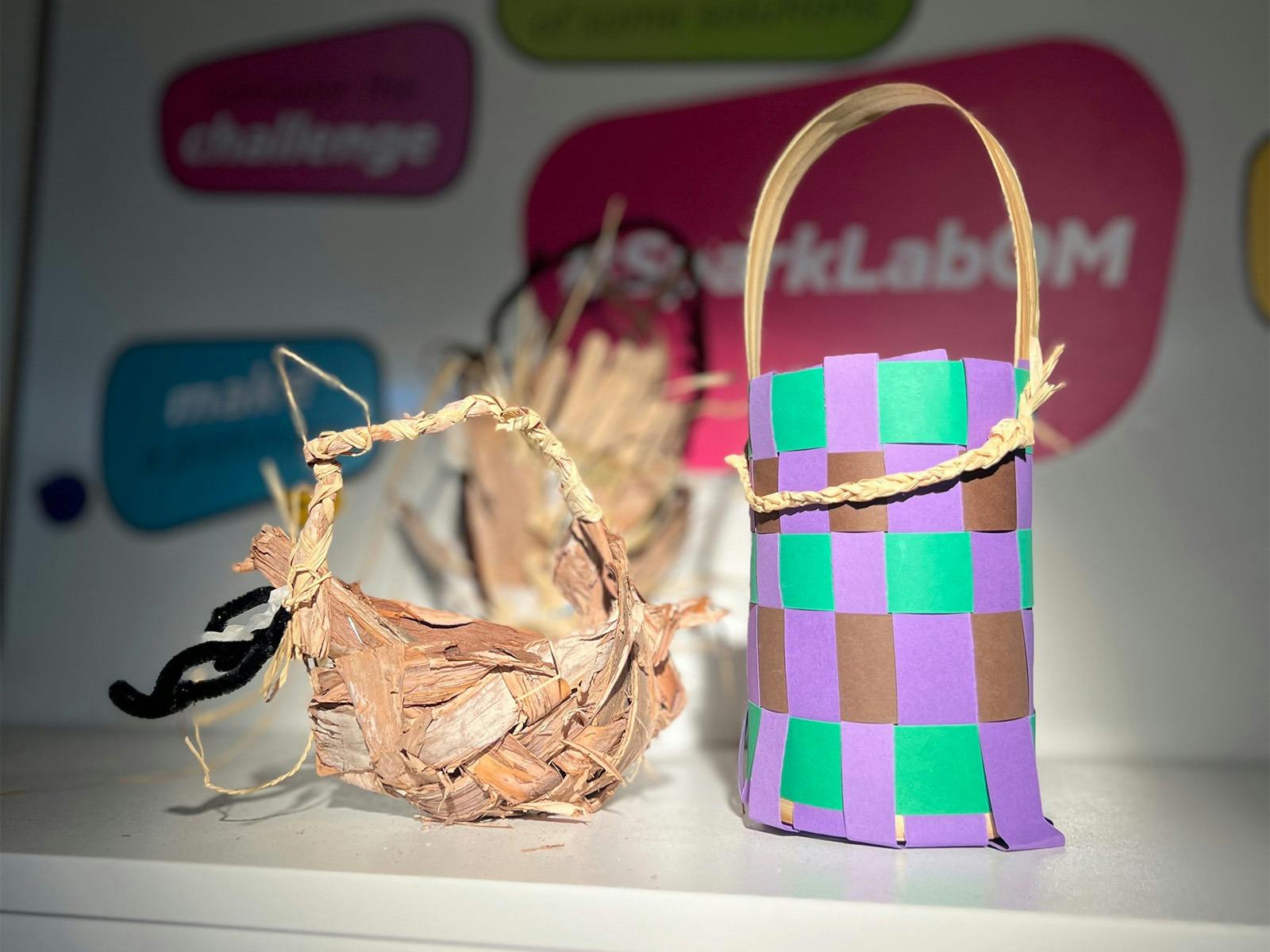
These school holidays, kids can step into the role of designer and make their own Dilly Bag!
Inspired by the traditional gathering bags used by First Nations peoples across Australia, these strong and cleverly crafted bags have been used for thousands of years to carry food, tools, and everyday treasures.
In this hands on, drop in activity, children can think, create, and experiment with different construction methods and materials as they discover how natural fibres, weaving techniques, and thoughtful design contribute to making strong, practical bags for different purposes. Every child will design and create their own unique dilly bag to take home — a functional artwork inspired by Australia’s First Nations knowledge and craftsmanship.
What will you carry in your bag?
*Bundle with an exhibition ticket for a 20% discount to Croc! Lost Giants to Living Legends. Discount automatically applied at checkout.
Images and Video
Dates & times
- Next occurrence: reoccurring
Features
Tags
Actively welcomes people with access needs.
General access

- Offers multiple options for booking – web, email, phone is available.
- Offers a range of contact methods for receiving complaints.
- Companion Cards are accepted.
- Staff are trained in disability awareness.
- Accessibility information and photos, including of a bathroom, room and/or floor plan on their website (can be emailed on request).
- Asks all visitors if there are any specific needs to be met.
- Website meets <a href="https://www.w3.org/WAI/standards-guidelines/wcag/" target="_blank">WCAG 2.0</a> accessibility standards
Communication

Welcomes and assists people who have challenges with learning, communication, understanding and behaviour. (includes people with autism, intellectual disability, Down syndrome, acquired brain injury (ABI), dyslexia and dementia)
- Staff are trained in communicating with people with learning or behavioural challenges.
- Uses Plain English / easy read signage and information (includes menus and emergency information)
- A quiet space is available at the venue/ facility.
Vision

Caters for people who are blind or have vision loss.
- Information in large print is available.
- Digital communication materials (hard copy information also online) is available.
- Uses easy to read fonts in their signage and communication materials (Helvetica and Arial).
- Staff are trained in customer service for people with vision loss (training would incorporate way finding and communicating with people with vision loss).
- Handrails on all stairways
- Exit signs which are visible at a ground level (high level signs are difficult to see in a fire) are available.
Hearing

Caters for people who are deaf or have hearing loss.
- A hearing loop is available.
- Staff are trained in communicating with people who are deaf or have hearing loss.
- Staff are trained in Auslan.
- TVs with captioning option is available.
- Visual alerts for emergencies (Include flashing light) are available.
- A low noise reception areas with hearing loss friendly acoustics and adequate lighting for viewing facial expressions (includes common areas which are free of background noise, background music) is available.
Physical – Wheelchair

Caters for people who use a wheelchair.
- Step free outdoor pathways (includes picnic areas, barbecues and shelters)
- A step free main entrance to the building and/or reception area (includes ramps or slopes with a maximum gradient of 1:14, otherwise are too steep for wheelchairs)
- Lifts with enough space for people using a mobility aid to enter and turn around to use the lift buttons. Buttons are at accessible height.
- An accessible public toilet which is unlocked.
Plan more around this area
 South Brisbane, QLD
 West End Central Apartments
West End Central Apartments are ideally located in Brisbane’s West End, a short walk from the Brisbane Convention and Exhibition Centre.
 South Brisbane, QLD
 Arena Apartments by CLLIX
Arena Apartments gives you the perfect mix of urban village colour plus Brisbane’s best big city attractions.

 South Brisbane, QLD
 Hope Street Apartments by CLLIX
Designed to offer its residents the ultimate in terms of lifestyle, location, and finishes, Hope Street Apartments exemplifies the spirit of innovation and adventure.
 South Bank, QLD
Rydges South Bank
The newly redesigned Rydges South Bank is situated in Brisbane's most enviable location, the South Bank arts and entertainment precinct.
 South Brisbane, QLD
Mantra South Bank
Mantra South Bank offers a range of accommodation options with Hotel Rooms, Studio and One or Two Bedroom Apartments, in the heart of South Bank.


 Brisbane City, QLD
voco Brisbane City Centre
At voco Brisbane City Centre, you’ll find yourself in the heart of one of Brisbane’s most up-and-coming areas, North Quay.
 South Brisbane, QLD
 Marlowe
Today, Marlowe carries on this timeless spirit of hospitality. Marlowe practises the art of making people feel at home.
 West End, QLD
 Pig 'N' Whistle West End
Pig ‘N’ Whistle West End are proud to be Brisbane’s most genuinely British pub. Offering the best hearty English fare around, with Modern Australian flavours.
 South Brisbane, QLD
 Chocolate Elements
Chocolate Elements' small multicultural team of Artisan Chocolatiers are passionate about showcasing quality local, indigenous, Australian ingredients with the finest Belgian couverture.
 South Brisbane, QLD
 Southside
Set amongst the urban oasis of Fish Lane Town Square, Southside serves East-Asian cuisine with a love of Chinese tradition.
 South Brisbane, QLD
 Uncle Don – West End
Uncle Don serves more than 20 Donburi variations and a selection of modern Japanese dishes.
 South Brisbane, QLD
Lyrebird
Lyrebird boasts a contemporary, modern Australian menu highlighting the finest locally sourced ingredients, the Lyrebird is the perfect place to start your evening at QPAC.
