Images and Video
5-7 Montague Street to Colonial Mutual Life Building
Highlights
- Explore the AMP Building's neoclassical Italianate facade, showcasing intricate brickwork and solid cedar doors.
- Admire the Goddess of Peace and Plenty atop the AMP Building, a symbol of resilience in uncertain times.
- Discover the restored Goulburn Post building, reflecting its 1935 heritage and rich journalistic history.
- Wander past the site of the White Horse Hotel, where a life-size wooden horse once drew in curious locals.
Continue down Montague Street and at the traffic lights, continue the tour along Auburn Street.
The AMP Building (1928) was designed by Wright and Appleby Architects. The building is an example of neoclassical Italianate, commercial architecture. Three solid cedar doors and thin Flemishbond brickwork give this building an interesting fac;:ade. The Goddess of Peace and Plenty adorns the top of the building and is by WP McIntosh. The Latin inscription means “a certain friend in uncertainty”.
Next door is The Goulburn Post building (now housing Ray White Goulburn) has been restored to the original 1935 look from an old photograph. The Goulburn Herald was one of Australia’s first country newspapers, later incorporated into the ‘Goulburn Evening Penny Post’. It was then renamed to the Gou I burn Evening Post during the war when the cost rose higher than a penny. The last afternoon print was in October 1977. Today the paper is still published, as the Goulburn Post.
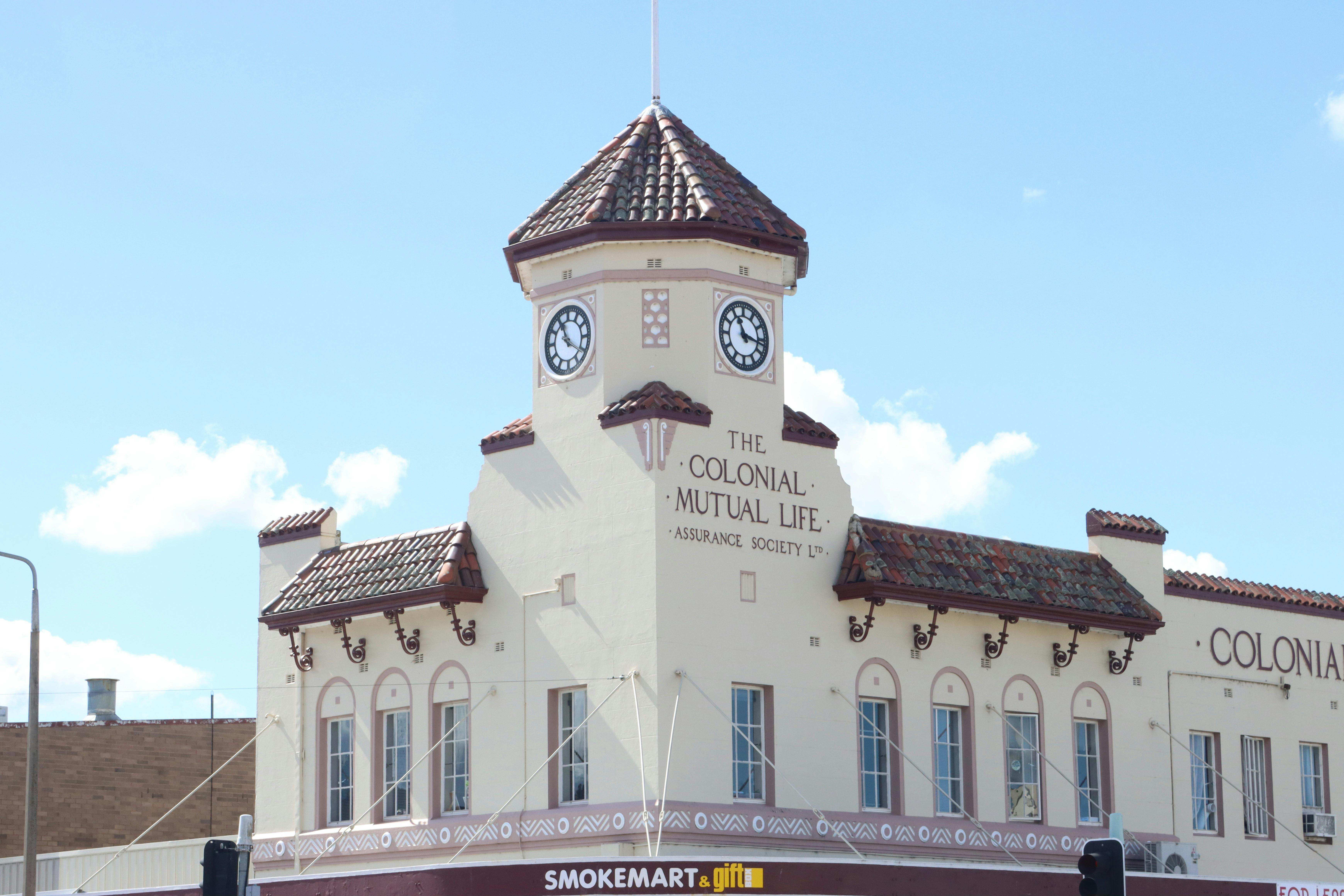
Then on the opposite corner In 1875 on the corner of Clifford and Auburn Streets a building once stood owned by MrT.N. Jacob, a saddler. Mr Jacob installed a life-size wooden white horse on top of his saddlery to increase his sales. After closing down, the building was licensed to Tom Jacob, establishing the White Horse Hotel (1885). Unfortunately, in 1910 it was among a number of hotels de-licensed as a result of the “reduction” vote in the liquor referendum and was closed a year later. The premises was renovated to be occupied by various banks until the 1930s when it was demolished. The Colonial Mutual Life Building (1933), designed by architects Hennessy & Hennessy, was built in its place. Colonial Mutual Life operated here until the office closed in 1979. The site then enjoyed a stint as a local radio station’s studio.
Features
Service facilities
Journey Travel Type
Route Types
Sevice Activity
Operation information
A Self-Guided Heritage Tour of Goulburn
The land that Goulburn was settled on was first passed by Hamilton Hume and John Meehan in 1818. Two years later Governor Macquarie declared the countryside fit for settlement under the name ‘Goulburn Plains’.
The plans for the township were originally laid out closer to the property of Riversdale but were soon relocated to the current location in 1832-3. This was due to the previous locations’ low-lying land being prone to flooding.
After being settled the City benefited from the wool industry, a short-lived nearby gold rush, and the development of the rail system.
On 14th March 1863 Queen Victoria wrote her last royal letters patent and Goulburn was declared the first inland city in Australia. By the 1880s Goulburn was the second biggest city in NSW, behind Sydney. Many of the buildings remaining from this time illustrate that Goulburn was a very wealthy city in its prime.
This tour will give you a brief glance back to some of Goulburn’s fascinating history passing some of the most magnificent architecture for the period in town.
Distance units
Time units
Plan more around this area
 Goulburn, NSW
 The Abbey Motel
Where history and modern luxury are blended perfectly.
 Goulburn, NSW
 Clonsilla Goulburn
This is your dazzling home away from home, perfect for your next country retreat with family and friends.
 Goulburn, NSW
 Goulburn Central Motel
Built in the 1960s, Goulburn Central Motor Lodge was one of the original Travelodge motels.
 Goulburn, NSW
 Quest Goulburn
Quest Apartments Goulburn brings a stunning new accommodation experience for both the business traveller and leisure traveller to the Southern Tablelands.
 Goulburn, NSW
 Astor Hotel | Motel and Astor Suites
The Astor Hotel has 40 rooms, providing clean, comfortable, fully self-contained accommodation at extremely competitive prices.

 Goulburn, NSW
 Southern Railway Hotel
Guests will feel right at home when they step inside this traditional pub hotel.
 Goulburn, NSW
 The Park Cafe Goulburn
The Park Cafe Goulburn is situated on Auburn Street directly opposite Belmore Park.
 Goulburn, NSW
 Goulburn Donut Shop
The Goulburn Donut Shop offers a range of multiple flavoured iced donuts to choose from along with hot cinnamon donuts cooked fresh before your eyes.
 Goulburn, NSW
 Paragon Café
The Paragon Cafe has been serving locals and travelers old-fashioned, good-quality, fresh foods for over 70 years.
 Goulburn, NSW
 Bryant's Pies – Bakery Cafe
Goulburn's famous pie shop, Bryants Pies has been serving Goulburn gourmet pies, treats, bread and Nerissimo roasted coffee since 1851.
 Goulburn, NSW
 Goulburn Workers
The Goulburn Workers has exceptional food at the Brassiere and many facilities for all members and their guests.
 Goulburn, NSW
 The Pizza Kitchen
The Pizza Kitchen offers delicious pizza and pasta made with fresh ingredients.
