Coxs Road Interpretive Trail
Highlights
- Trace the original Coxs Road through the Blue Mountains, experiencing a historic journey from Emu Ford to Bathurst.
- Explore interpretive sites at Glenbrook Park and Blackheath, uncovering stories from Lt. William Cox's journal.
- Discover Aboriginal heritage and artistic expressions along the trail, enriching your understanding of the region's culture.
- Enjoy scenic lookouts and well-maintained facilities, ensuring a comfortable and informative walking experience.
Commissioned to build a road across the Blue Mountains, magistrate Lt. William Cox, with 30 convicts, started on 18 July 1814 at Emu Ford, completing the road to Bathurst on 14 January 1815 – a staggering 101.5 miles through the rugged mountainous country in just six months.
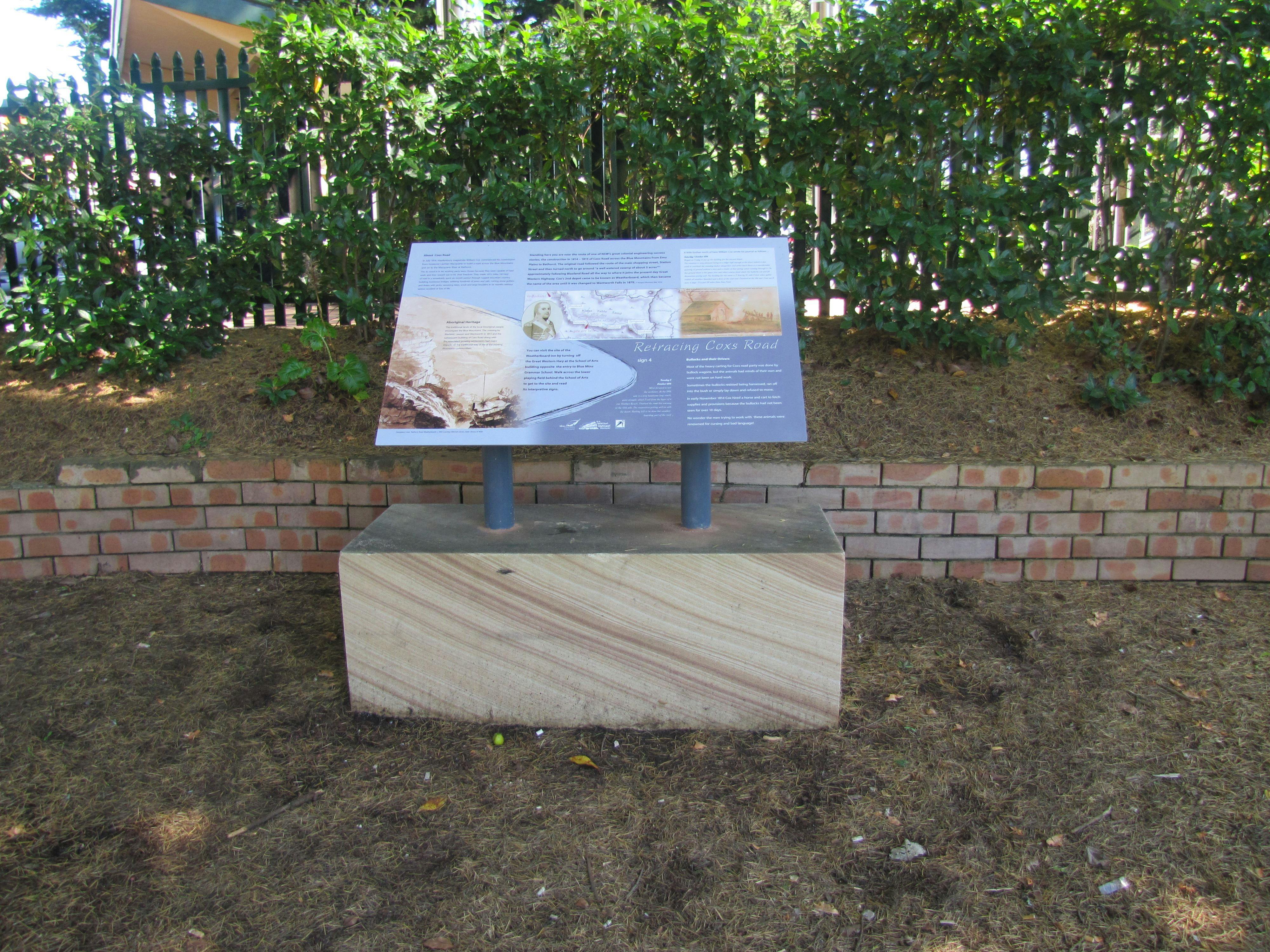
Today you can trace the path of the original Coxs Road which varies little from the current alignment of the Great Western Highway. Explore the interpretive trail at key sites where you can discover stories of the road construction through notes from Cox’s journal, learn of Aboriginal heritage and find paintings and drawings on this remarkable journey.
A Blue Mountains City Council, Blue Mountains Branch of National Trust Bicentenary project.
Key sites are located at: Glenbrook Park, Glenbrook; Manners Park, Springwood; Bulls Camp Reserve, Woodford; Coronation Park, Wentworth Falls; Blackheath Cemetery entry; Blackheath and Mount York.
Images and Video
Features
Activities
Tags
This business does not currently offer accessible facilities.
Plan more around this area
 Blue Mountains National Park, NSW
 Murphys Glen campground
It's time to swap the noise of the city for the sounds of the bush, pack up the car and head for Blue Mountains.
 Warragamba, NSW
 Warragamba RV Short Stay Site
Open seven days a week, the Warragamba RV site offers free 48-hour parking for self-contained recreational vehicles (max length 12.5 metres).

 St Clair, NSW
 Nightcap at Blue Cattle Dog Hotel
The Nightcap at Blue Cattle Dog Hotel offers comfortable and modern accommodation in the Western Sydney suburb of St Clair.
 St Marys, NSW
 Holiday Inn Sydney St Marys
The first thing guests notice when staying with Holiday Inn Sydney St Marys are the genuine, warm smiles and welcoming vibe.
 Blue Mountains National Park, NSW
 Ingar campground
Soothe those frazzled city nerves with a getaway to Ingar campground on Kings Tableland, near Wentworth Falls.
 Colyton, NSW
 Nightcap at Colyton Hotel
Colyton Hotel is an easy 20 minute drive to the Penrith CBD and accessibly from both the M4 and M7 motorways.
 Jamisontown, NSW
 The East Bank
East Bank is a riverside restaurant precinct with eight cafes and restaurants (plus a gym to keep you in shape).
 Emu Plains, NSW
 Cafe at Lewers
Situated in the beautiful heritage gardens of Penrith Regional Gallery and offers an elegant seasonal menu, home baked cakes, great coffee and wholesome meals.
 Penrith, NSW
 Rashays Penrith
Rashays Penrith restaurant is known for its flavourful dishes and fresh ingredients.
 Emu Plains, NSW
 Emu Hall
Penrith’s latest and greatest dining venue. With Insta-worthy cocktails, delicious all-day eats and unbeatable river views.
 Penrith, NSW
 The Log Cabin
Established in 1826, The Log Cabin has long since been a pivotal part of the local Penrith community.
 Penrith, NSW
 Percy Plunkett
A combination of Penrith’s rich history and a love of good food.
