Images and Video
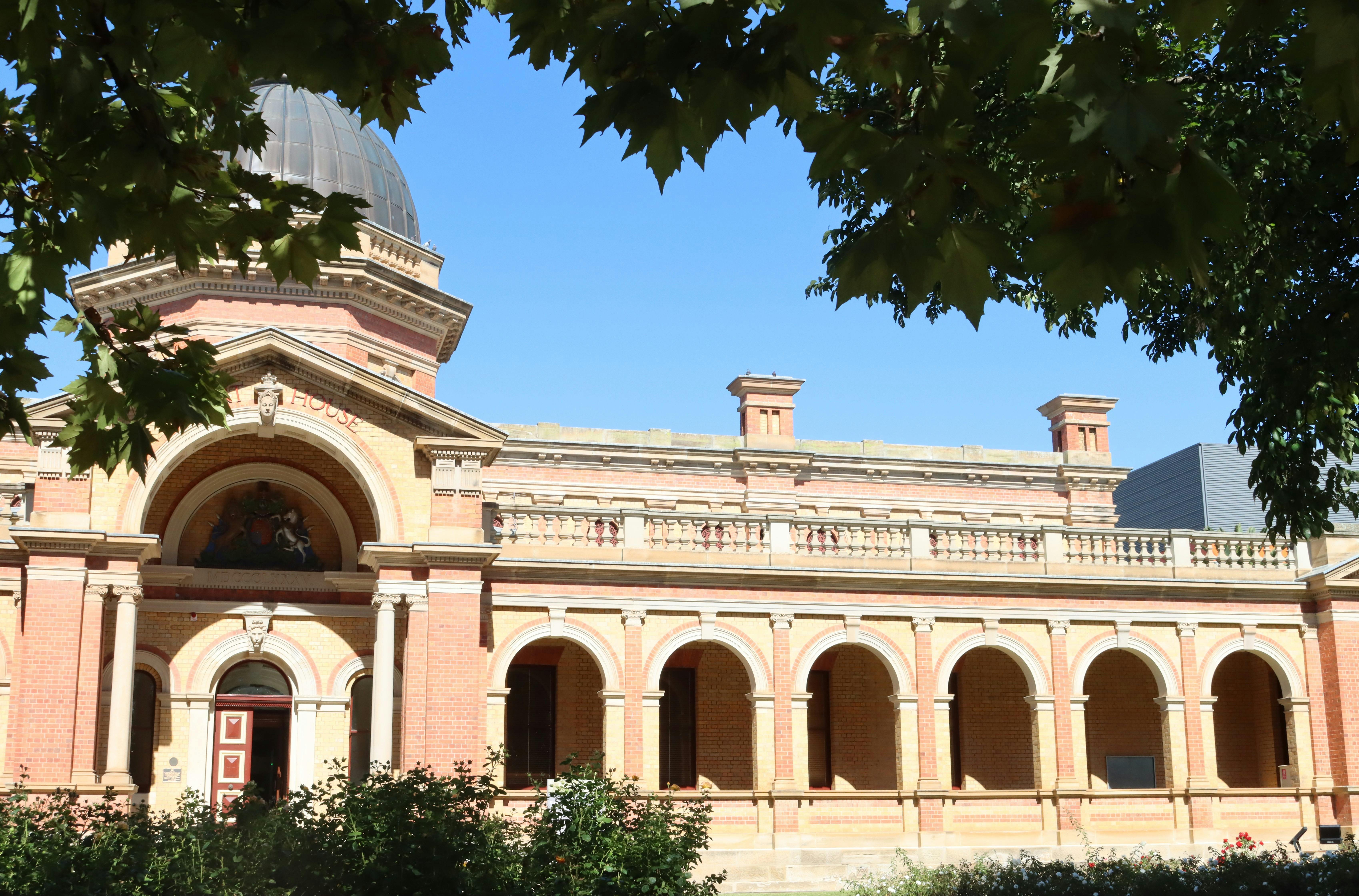
From Argyle Emporium to the old Mechanics Institute Technical School
Highlights
- Explore the stunning Victorian Italianate architecture of the Courthouse, a testament to 19th-century design and elegance.
- Wander along Montague Street to discover the historic Mechanics Institute Technical School, now home to the inviting Cafe 5911.
- Delight in the rich heritage of the City’s Library, established in 1860, offering a glimpse into the past.
- Savour a refreshing break at Cafe 5911, where history meets modern comfort in a charming setting.
From the Argyle Empoium you will continue along sloane street, turning left onto Montague Street with the next stop being the Courthouse.
The Courthouse was designed by James Barnet and opened in 1887 at a cost of £24,593 (around $3.4m today). The Victorian Italianate styled building was touted as one of the most beautiful buildings in “all of Her Majesty’s dominions” by the Chief of Justice of the Colonies. The building is still very much in use today, holding sessions of Local, District and Supreme Court.
Continuing along Montague Street you will see the old Mechanics Institute Technical School which now houses Cafe 5911.
The building where Roses Café is located was originally built as the Technical School building of the Mechanics Institute. It opened in 1889, behind the City’s Library which is now occupied by NAB bank. The Library (1860) also had a museum, conducted lectures, classes, held debating discussions, exhibitions and later technical classes for its subscribers who paid just a shilling a month.
Features
Service facilities
Journey Travel Type
Route Types
Sevice Activity
Operation information
A Self-Guided Heritage Tour of Goulburn
The land that Goulburn was settled on was first passed by Hamilton Hume and John Meehan in 1818. Two years later Governor Macquarie declared the countryside fit for settlement under the name ‘Goulburn Plains’.
The plans for the township were originally laid out closer to the property of Riversdale but were soon relocated to the current location in 1832-3. This was due to the previous locations’ low-lying land being prone to flooding.
After being settled the City benefited from the wool industry, a short-lived nearby gold rush, and the development of the rail system.
On 14th March 1863 Queen Victoria wrote her last royal letters patent and Goulburn was declared the first inland city in Australia. By the 1880s Goulburn was the second biggest city in NSW, behind Sydney. Many of the buildings remaining from this time illustrate that Goulburn was a very wealthy city in its prime.
This tour will give you a brief glance back to some of Goulburn’s fascinating history passing some of the most magnificent architecture for the period in town.
Distance units
Time units
Plan more around this area
 Goulburn, NSW
 Southern Railway Hotel
Guests will feel right at home when they step inside this traditional pub hotel.

 Goulburn, NSW
 Sloane Street Shared Home
This beautiful terrace has everything you need to feel right at home.
 Goulburn, NSW
 Goulburn Central Motel
Built in the 1960s, Goulburn Central Motor Lodge was one of the original Travelodge motels.
 Goulburn, NSW
 Astor Hotel | Motel and Astor Suites
The Astor Hotel has 40 rooms, providing clean, comfortable, fully self-contained accommodation at extremely competitive prices.
 Goulburn, NSW
 The Abbey Motel
Where history and modern luxury are blended perfectly.
 Goulburn, NSW
 Quest Goulburn
Quest Apartments Goulburn brings a stunning new accommodation experience for both the business traveller and leisure traveller to the Southern Tablelands.
 Goulburn, NSW
 Goulburn Donut Shop
The Goulburn Donut Shop offers a range of multiple flavoured iced donuts to choose from along with hot cinnamon donuts cooked fresh before your eyes.
 Goulburn, NSW
 The Pizza Kitchen
The Pizza Kitchen offers delicious pizza and pasta made with fresh ingredients.
 Goulburn, NSW
 The Brasserie at Goulburn Workers
Open daily, there’s something to satisfy any appetite.
 Goulburn, NSW
 Tablelands at the Bowlo
Tablelands at the Bowlo offers a range of fresh and tasty dishes including pastas, burgers and of course their famous Stone Grills.
 Goulburn, NSW
 Goulburn Workers
The Goulburn Workers has exceptional food at the Brassiere and many facilities for all members and their guests.
 Goulburn, NSW
 Tutu Wraps Goulburn
Tutu Wraps at the Tatts offers fresh wraps, tacos, quesadillas and tortilla bowls.
