Gardens Road Cemetery
Highlights
- Explore over 1,200 graves that tell the rich history of Darwin's diverse community from 1919 to 1970.
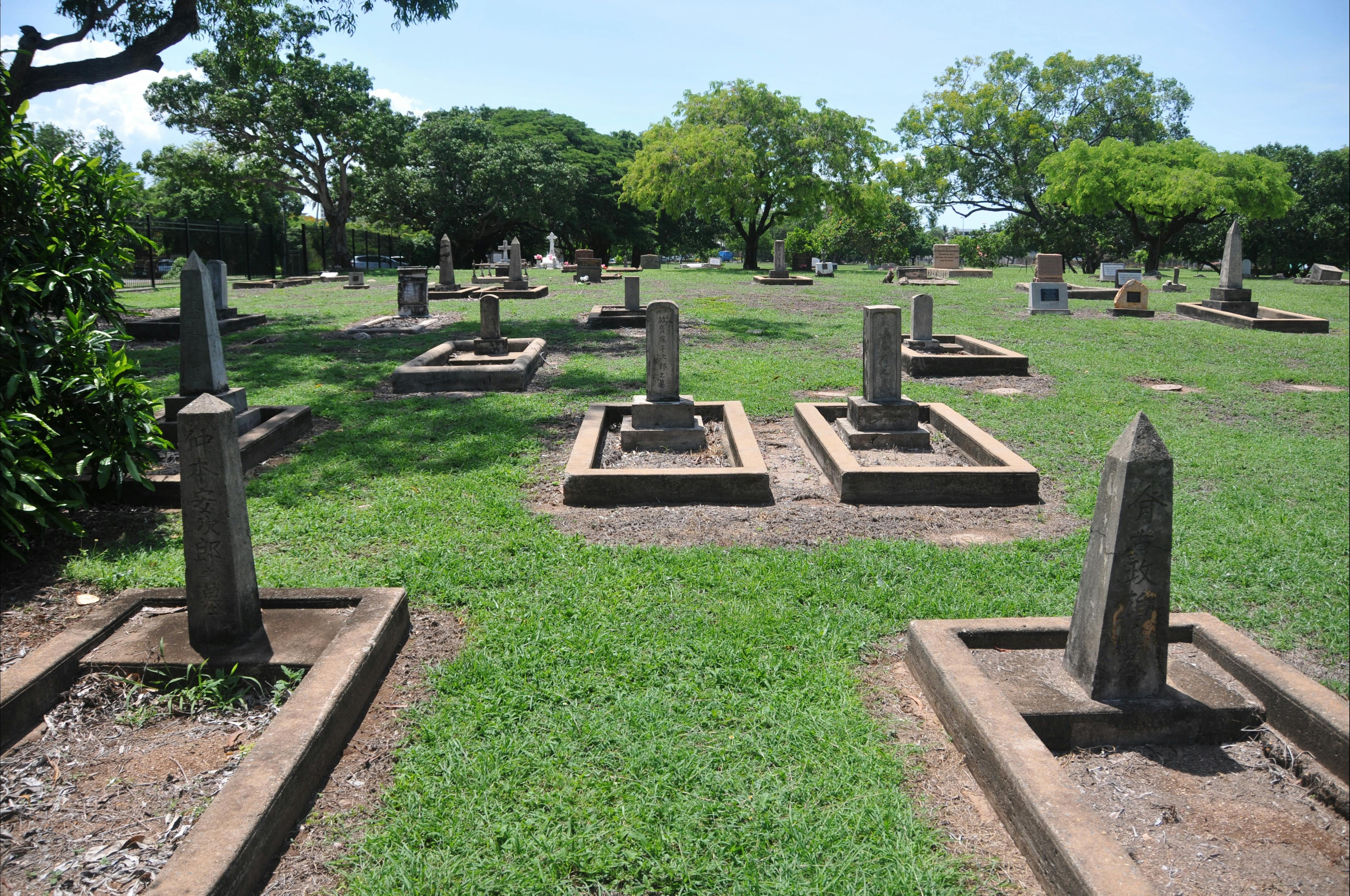
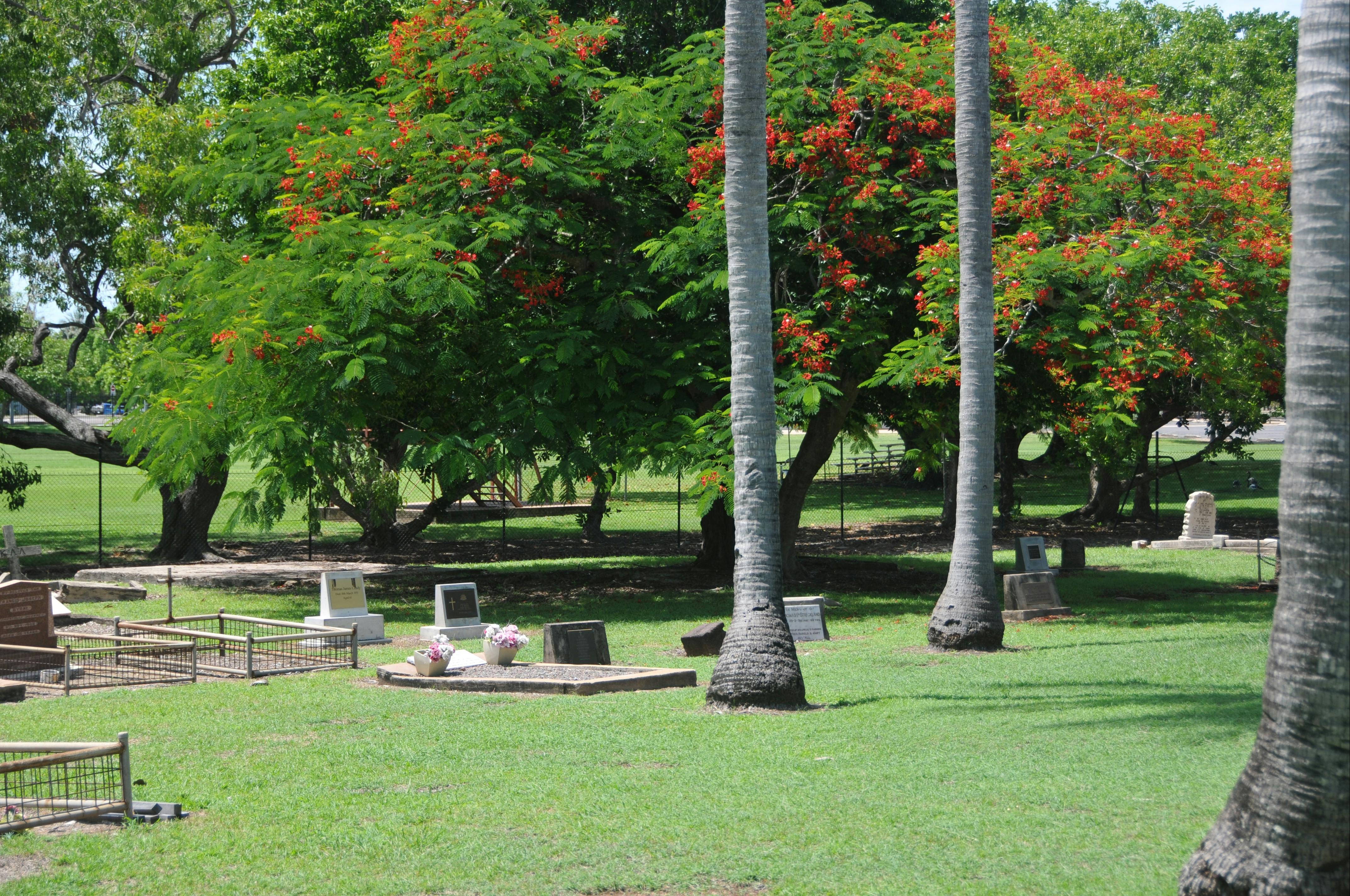
- Wander through a serene landscape filled with unique headstones and epitaphs reflecting various cultural origins.
- Discover the stories of notable locals interred here, marking a significant period of Darwin's development.
- Enjoy a peaceful picnic in the designated area, surrounded by the historical ambiance of the cemetery.
Gardens Cemetery was opened in 1919 after the closure of Palmerston Cemetery on Goyder Road and was Darwin’s main cemetery up until 1970. There are many different types of graves, headstones and epitaphs, and Darwin City Council’s records list over 1,200 graves. Many notable people from a period of rapid development in Darwin (1920s-1970s) are buried in the cemetery. Many of the memorials indicate ethnic origins, family associations, and circumstances of death and thus comprise an important record of Darwin’s community spanning more than six decades. Cultural groups represented in the cemetery include Greeks, Chinese, Japanese, Filipinos, Thursday Islanders as well as Australians of British descent. A number of graves of returned servicemen were moved to Adelaide River for reburial at the Adelaide River War Memorial Cemetery in 1944. Gardens Cemetery was succeeded in 1970 by the McMillans Road Cemetery, though a small number of burials have continued to take place at Gardens Cemetery.
Images and Video

Features
Activities
Actively welcomes people with access needs.
Vision

Caters for people who are blind or have vision loss.
Hearing

Caters for people who are deaf or have hearing loss.
Physical – Mobility

Caters for people with sufficient mobility to climb a few steps but who would benefit from fixtures to aid balance. (This includes people using walking frames and mobility aids)
Plan more around this area
 Darwin, NT

Mantra Pandanas
Live it up in spacious apartment accommodation with luxury hotel services and a tranquil tropical edge.

 Darwin City, NT
Darwin City Hotel
A locally-built, family-owned hotel located in the very heart of Darwin Central Business District.

 Darwin City, NT
 DCH on Mitchell
DCH on Mitchell, the newest hotel in Darwin managed and operated by Darwin City Hotel.
 Darwin City, NT
 Luma Luma Serviced Apartments
Luma Luma Holiday Apartments offer budget accommodation in Darwin at affordable rates. A family-owned business, located in the heart of Darwin city.
 Darwin City, NT
Rydges Darwin Central
Seek sanctuary in the boutique style of Darwin Central when you've over-indulged in the shopping, art, nightlife and natural attractions of Darwin.
 Darwin City, NT
 Oaks Darwin Elan Hotel
Ideally positioned in the heart of Darwin's CBD, Oaks Darwin Elan Hotel is just minutes from the Darwin Waterfront Precinct and the City.
 Darwin, NT
The Vue
The Vue is a contemporary bistro, buffet and bar offering a totally unique interactive dining experience set against the stunning backdrop of the Arafura Sea.
 DARWIN, NT
il Piatto
Enjoy a view of the ocean while you feast on Italian fare and vino with friends, or watch the secret workings of the chefs.
 Darwin, NT
 Burnett House
Burnett House is a historic building that forms part of the Myilly Point Heritage Precinct in Darwin, Northern Territory.
 The Gardens, NT
 Eva’s Botanic Gardens Café
Boasting a location like no other in the city, in the Wesleyan Church at the Darwin Botanical Gardens, Eva's Cafe offers a truly unique cafe.
 Darwin City, NT
 Nirvana Restaurant
Welcome to Nirvana, where you are taken on a culinary journey to the exotic lands of Thailand, India, and Malaysia.
 Darwin City, NT
 Kopi Stop
Proudly serving ONA Coffee, Simple Food. A little bit of Singapore in Darwin. Famous for the Singapore Breakfast.
