
Glacier Rock
Highlights
- Explore the 500 million-year-old Glacier Rock, revealing ancient glacial history on the Fleurieu Peninsula.
- Marvel at the unique grooves and crescent-shaped marks, showcasing the icecap's movement from southeast to northwest.
- Wander along the Inman River bed, where glacial pavements offer a tactile connection to Earth's past.
- Visit the site that attracted renowned geologists, enriching your understanding of Australia's geological heritage.
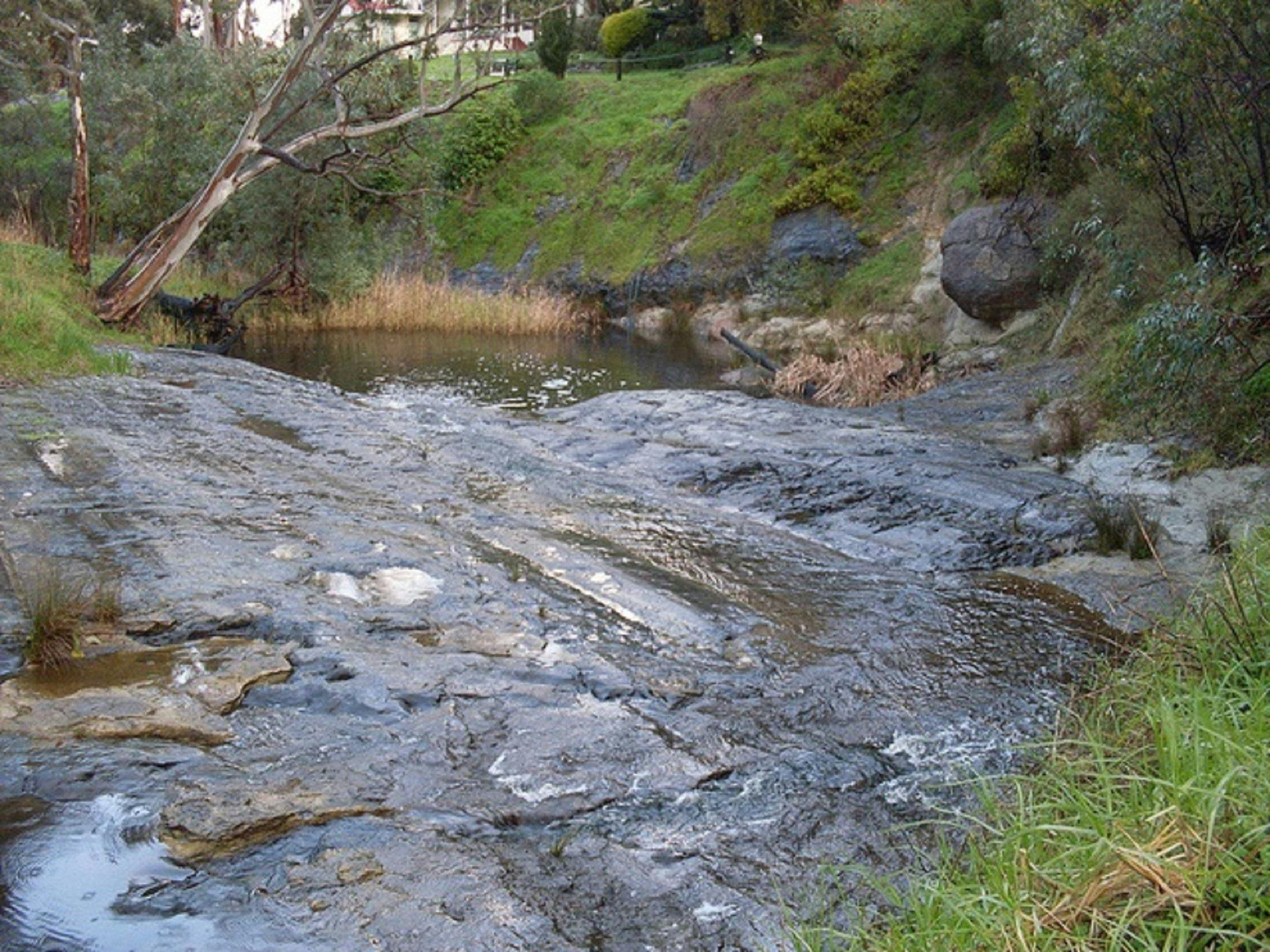
Glacier Rock, also known as Selwyn’s Rock, is a ~280 million year old Glacial Pavement carved into 510 million year old bedrock, exposed in the Inman River bed below the cafe. This is the largest of several glacial pavements created on the Fleurieu Peninsula by the Permian Ice Age, and one of the largest glacial pavements in the world. The grooves, scratches and crescent shaped marks on the rock surface indicate the icecap moved from southeast to northwest here.
The riverbank above Glacier Rock contains boulders and rock debris dumped by the melting icecap, including granites from Victor Harbor.
The first European recording of Glacier Rock was in 1859 by ARC Selwyn, a geologist working for the South Australian Government. It was the first European recorded discovery of glaciations in Australia. It was then rediscovered in 1897 by famous geologists Sir David Edgeworth and Dr Walter Howchin, from Sydney and Adelaide Universities.
Glacier Rock attracts geologists from all over the world.
Images and Video
Features
Tags
This business does not currently offer accessible facilities.
Plan more around this area
 Inman Valley, SA
 Pear Tree Hollow
Pear Tree Hollow Bed and Breakfast is creative, country chic and rustic styling and a little bit quirky!
 Encounter Bay, SA
 Ocean Views Four Bedroom Home on One Acre
Experience panoramic sea views from this spacious, pet-friendly 4-bedroom, 2-bathroom holiday home set on just under 1 acre of fully fenced land.
 Waitpinga, SA
 Victors Views
This is a hosted stay through Hipcamp, below is the information provided by the Host regarding their offering. Welcome to Victor Views, 14 stunning…
 Victor Harbor, SA
 Cooinda Retreats – RV and Camp Stay
Cooinda Retreats is pleased to offer the newest addition to nature based camping
 Encounter Bay, SA
 Casa Del Mar
Perched above Encounter Bay on a private coastal estate, Casa Del Mar is a rare retreat with sweeping views from The Bluff to The Coorong.
 Victor Harbor, SA
 Wren House Victor Harbor
Wren House in Victor Harbor offers a serene, eco-friendly escape with breathtaking hillside views. The spacious open-plan living and dining areas, equipped with a modern
 Inman Valley, SA
 Belicious Waffle House and Tea Room
Belicious Waffle House and Tea Room is a European-style cafe in the heart of Inman Valley, located next to the iconic Glacier Rock.

 Hindmarsh Valley, SA
 Swagman Country Dining
The Swagman Chargrill is a ‘slow food experience. Take the time to savour our lovingly prepared food in the company of friends and family.
 Victor Harbor, SA
 4ore at Victor Harbor Golf Course
4ore is a dining room and function space at Victor Harbor Golf Club.
 Hindmarsh Valley, SA
 Cut Hill Wall Distillery
Cut Hill Distillery, located on the picturesque Fleurieu Peninsula in South Australia, is dedicated to producing exceptional grain-based, double-distilled whiskies.
 Waitpinga, SA
 Moo’s Distillery
Moo’s Distillery is situated in the heart of the Waitpinga Valley, Victor Harbor, on a picturesque farm.
 Victor Harbor, SA
 Planted Coffee House
Planted Coffee House believe the best conversations happen over a perfect brew. Nestled in the heart of the Fleurieu Peninsula
