Horrie
Highlights
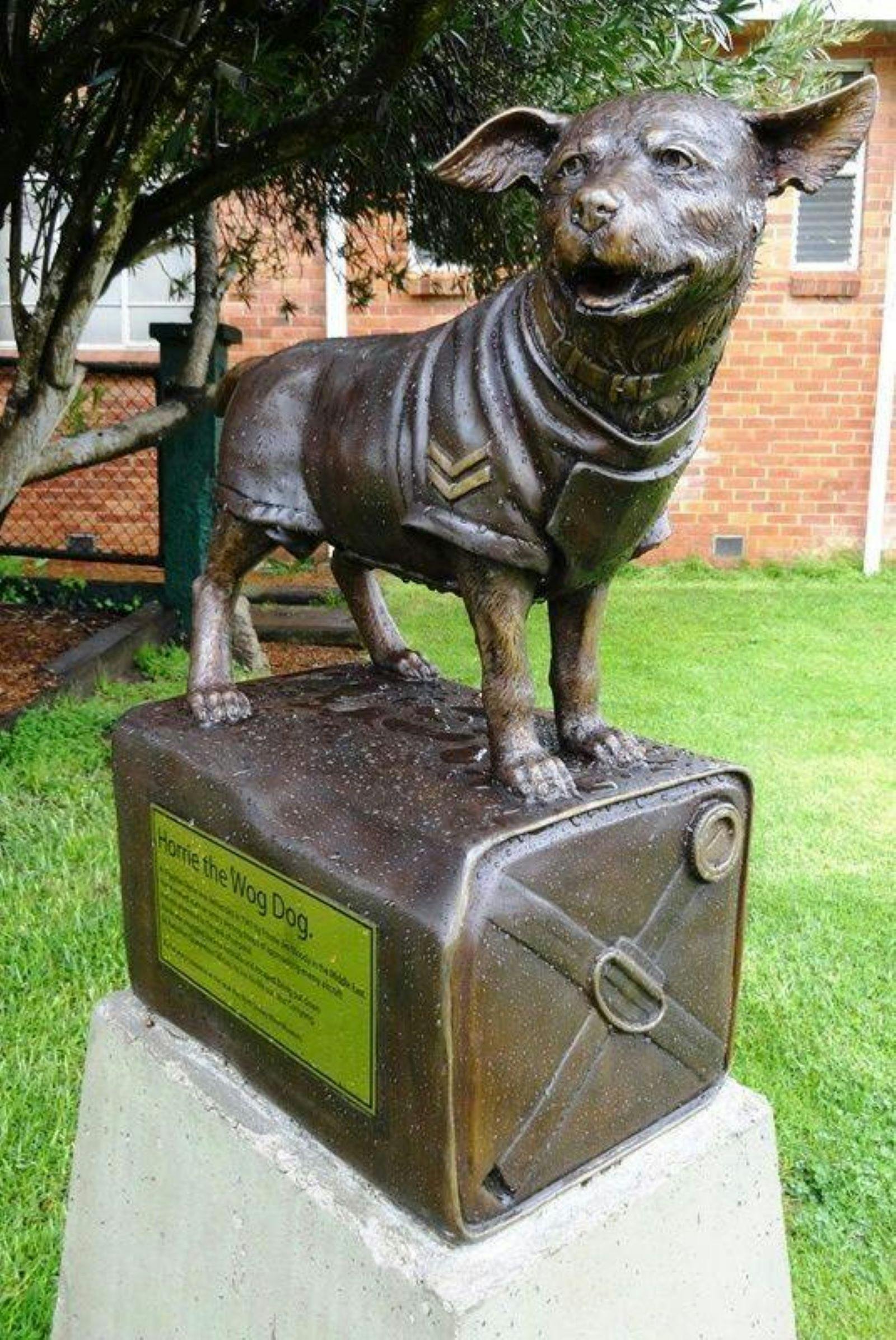
- Explore the statue of Horrie in Corryong Memorial Garden, celebrating a beloved war dog and his remarkable journey.
- Discover the rich history of Horrie at the Australian War Memorial, featuring his uniform and travelling pack.
- Wander the Chauvel Border Light Horse Trail, immersing yourself in the landscapes that shaped Horrie's adventures.
- Reflect on the touching story of loyalty and bravery that resonates through the pages of 'Horrie the War Dog'.
The beloved story of Horrie begins in early 1941 in Egypt. As a pup, Horrie was found by Private Jim Moody and became the unofficial mascot of the 2/1st Machine Gun Battalion, traveling through Egypt, Greece, Crete, Palestine, and Syria. Intelligent and easily trained, Horrie acted as a guard dog and often provided early warnings of enemy aircraft.
When Moody returned to Australia in 1942, he smuggled Horrie ashore in a modified travelling pack. Horrie lived in Australia for three years before disaster struck.
Horrie’s story was about to be published in a book by Ion Idriess, ‘Horrie the wog-dog: with the AIF in Egypt, Greece, Crete and Palestine’ (Sydney: Angus and Robertson, 1948) with Moody offering the publicity Horrie would bring, to assist the Red Cross Society’s fund raising efforts. This alerted quarantine officials to Horrie’s history. They demanded Horrie be surrendered for euthanasia.
Anthony Hill’s book ‘Animal Heros’ suggest a different ending, suggesting a look-alike dog was surrendered instead and that Horrie lived out his life near Corryong, Victoria.
Horrie’s uniform, made from a soldier’s service dress tunic, and the travelling pack used to smuggle him into Australia are now part of the Australian War Memorial’s collection.
Visit the statue of Horrie in the Corryong Memorial Garden, a key feature of the Chauvel Border Light Horse Trail.
Images and Video
Actively welcomes people with access needs.
Plan more around this area
 Corryong, VIC
 Corryong Country Inn
Let your hosts spoil you with country hospitality while you are staying at the Corryong Country Inn. The well appointed ground floor motel units are

 Corryong, VIC
 Milton Boutique Accommodation
The Milton Boutique Accommodation is located in the historic town of Corryong, featuring stylish and modern apartments.
 Corryong, VIC
 Poppy's Short Stay Accommodation
Poppy's is a luxury short stay accommodation, set in a premier location within a quiet street in the heart of Corryong, Victoria. This newly renovated
 Corryong, VIC
 Colac Colac Caravan Park
Colac Colac Caravan Park is located six kilometres from Corryong on the Murray Valley Highway.
 Towong, VIC
 Riverview Lodge
Riverview Lodge is a luxury bed and breakfast located in the beautiful Upper Murray Valley.
 Khancoban, NSW
 Alpine Inn, Khancoban
The Alpine Inn in Khancoban has recently reopened after a top to toe renovation of the resort. Featuring 36 immaculately renovated rooms.
 CORRYONG, VIC
 The Odd One Brewhouse Corryong
The Odd One Brewhouse is a fun and welcoming destination for both visitors to the Upper Murray and locals looking for something a little different.
 Khancoban, NSW
 Pickled Parrot Providore
The Pickled Parrot Providore features locally sourced fruit and veg and locally produced gourmet products.
