
Precious
Highlights
- Explore thousands of remarkable items at the Museum of Brisbane, showcasing the art of assemblage and storytelling.
- Discover awe-inspiring collections from over 30 public and private sources, highlighting Brisbane's rich cultural heritage.
- Immerse yourself in the playful world of textiles, tin-toys, and marine treasures that spark joy and curiosity.
- Engage with the stories of prolific collectors, revealing what makes a keepsake truly Precious in Brisbane's vibrant scene.
What makes a collection?
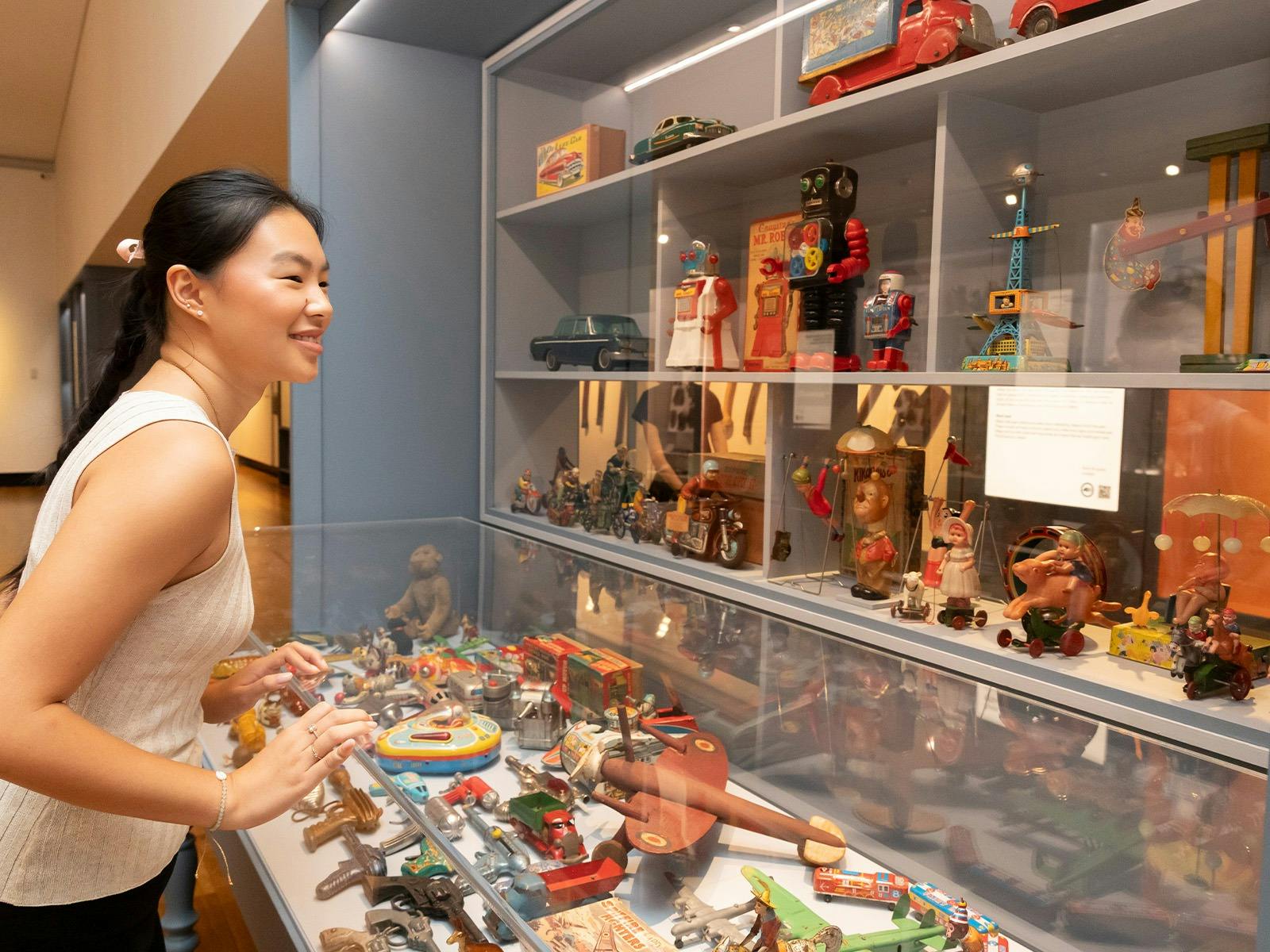
Museum of Brisbane is giving you the keys to some of the most awe-inspiring collections across our amazing city. An irresistible array of breathtaking curiosities, Precious brings together thousands of remarkable items from more than 30 public and private collections.
From textiles to tin-toys, micro-architectural marvels to marine treasures, this exhibition is a joyful celebration of the art of assemblage. They invite you to immerse yourself into the incredible stories of some of the prolific collectors of Brisbane, and get to know what makes a keepsake and collectible truly Precious.
Images and Video
Dates & times
- Next occurrence: reoccurring
Features
Tags
Actively welcomes people with access needs.
General access

- Offers multiple options for booking – web, email, phone is available.
- Offers a range of contact methods for receiving complaints.
- Companion Cards are accepted.
- Employs people with disabilities.
- Staff are trained in disability awareness.
- Accessibility information and photos, including of a bathroom, room and/or floor plan on their website (can be emailed on request).
- Asks all visitors if there are any specific needs to be met.
- Website meets <a href="https://www.w3.org/WAI/standards-guidelines/wcag/" target="_blank">WCAG 2.0</a> accessibility standards
- Advise tour guides of the access needs of guests at the time of booking (includes pick up and drop off requirements)
- Assistance with booking arrangements (includes providing clear itineraries with written instructions on what to do at various destinations)
Communication

Welcomes and assists people who have challenges with learning, communication, understanding and behaviour. (includes people with autism, intellectual disability, Down syndrome, acquired brain injury (ABI), dyslexia and dementia)
- Staff are trained in communicating with people with learning or behavioural challenges.
- Uses Plain English / easy read signage and information (includes menus and emergency information)
- A quiet space is available at the venue/ facility.
Vision

Caters for people who are blind or have vision loss.
- Uses easy to read fonts in their signage and communication materials (Helvetica and Arial).
- Staff are trained in customer service for people with vision loss (training would incorporate way finding and communicating with people with vision loss).
- Raised tactile buttons in lifts are available.
- Handrails on all stairways
Hearing

Caters for people who are deaf or have hearing loss.
- Staff are trained in communicating with people who are deaf or have hearing loss.
- Volume controlled phones are available.
- Visual alerts for emergencies (Include flashing light) are available.
- A low noise reception areas with hearing loss friendly acoustics and adequate lighting for viewing facial expressions (includes common areas which are free of background noise, background music) is available.
Physical – Mobility

Caters for people with sufficient mobility to climb a few steps but who would benefit from fixtures to aid balance. (This includes people using walking frames and mobility aids)
- Grab rails in the bathroom
- Seating in common areas including reception area
Physical – Wheelchair

Caters for people who use a wheelchair.
- Step free outdoor pathways (includes picnic areas, barbecues and shelters)
- A doorbell or intercom at an accessible height and display a contact number (accessible height is 900mm-1100 mm)
- A step free main entrance to the building and/or reception area (includes ramps or slopes with a maximum gradient of 1:14, otherwise are too steep for wheelchairs)
- Step free access to restaurant, lounge and bar
- Step free access to the conference or function room
- Accessible seating areas in theatrette
- Lifts with enough space for people using a mobility aid to enter and turn around to use the lift buttons. Buttons are at accessible height.
- Doorways which are easy to open and have lever handles (doorways 850mm or wider when open and not heavy).
- An accessible public toilet which is unlocked.
- A wheelchair/scooter charging station (power point) in an accessible location is available.
- At least one wheelchair accessible parking space with wheelchair accessible signage clearly displayed (International standards are 3200mm wide x 2500 mm high).
- Wheelchair accessible transport options available in the general vicinity (provide information on name of the operator, phone and website link to individual providers for private vehicles, community transport train, mini vans, hire cars, buses, taxis, ferry, tram, light rail etc in their access statement).
Allergies and intolerances

Caters for people with allergies and intolerances.
- Modify their cooking and cleaning practices to cater for people with food allergies or chemical intolerances (could include menus with meals free from: nuts, dairy, seafood, eggs, gluten etc).
- Complies with The Food Authority requirements for allergy management in food preparation.
- Equipment to respond to anaphylactic shock such as epi–pens and defibrillator.
Access & Inclusion

An access and inclusion statement is available on the business website.
- https://www.museumofbrisbane.com.au/visit-us/access/
Plan more around this area
 Brisbane City, QLD
 Adina Apartment Hotel Brisbane Anzac Square
Adina Apartment Hotel Brisbane Anzac Square is an award-winning heritage property that is right in the heart of the city.
 Brisbane City, QLD
 Manor Apartment Hotel
The Manor Apartment Hotel is a boutique four-star hotel located in the heart of Brisbane Central Business District, offering complimentary gourmet breakfast and free WiFi.

 Brisbane City, QLD

Sofitel Brisbane Central
Sofitel Brisbane Central’s luxurious interior spaces provide a level of comfort and sophistication that you won’t find in other hotel accommodation near Brisbane’s CBD.

 Spring Hill, QLD
 The Inchcolm by Ode Hotels
The Inchcolm captivates with irresistible gravity from its perch above Brisbane’s CBD.

 Brisbane City, QLD
 InterContinental Brisbane
Perfectly positioned moments from Queen Street Mall, InterContinental Brisbane rises as an icon—Australia's only hotel designed by visionary modernist architect Harry Seidler.
 Brisbane City, QLD
 Oaks Brisbane Aurora Suites
Oaks Aurora soars 69 storeys above Brisbane with superb city and river views from the apartment balconies.
 Brisbane City, QLD
 The Gresham Bar
With the only heritage bar license in Queensland, The Gresham is steeped in rich history and has maintained the building’s original character and architecture.
 Brisbane City, QLD
 Central
Central is a Hong Kong inspired restaurant and basement dumpling bar that spotlights the artistry and energy of Cantonese cooking.
 Brisbane City, QLD
 Winghaus Edward Street
WingHAÜS by Bavarian is the wing-packed, sauce-smacked spinoff of Australia’s fun-loving The Bavarian family.
 Brisbane, QLD
 Pig 'N' Whistle Riverside
Welcome to Pig ‘N’ Whistle Riverside, ‘Brisbane’s Home of Football’, the go to dance floor at the end of the night.
 Brisbane City, QLD
 Opa Bar and Mezze
A taste of Santorini on Brisbane's riverfront.
 Brisbane City, QLD
 Massimo Restaurant and Bar
Devour Eagle Street’s most authentic Italian cuisine along the Brisbane riverfront, at Massimo Restaurant and Bar.
