
Queensland Museum Kurilpa Mini Museum Explorers
Highlights
- Explore real museum objects that ignite curiosity in young minds aged 3 to 5 years.
- Engage in STEM-inspired activities that foster creativity and critical thinking skills.
- Join the Croc Hunt and discover the wonders of reptiles in a fun, interactive setting.
- Participate in stories and movement-based play that enhance social learning and cooperation.
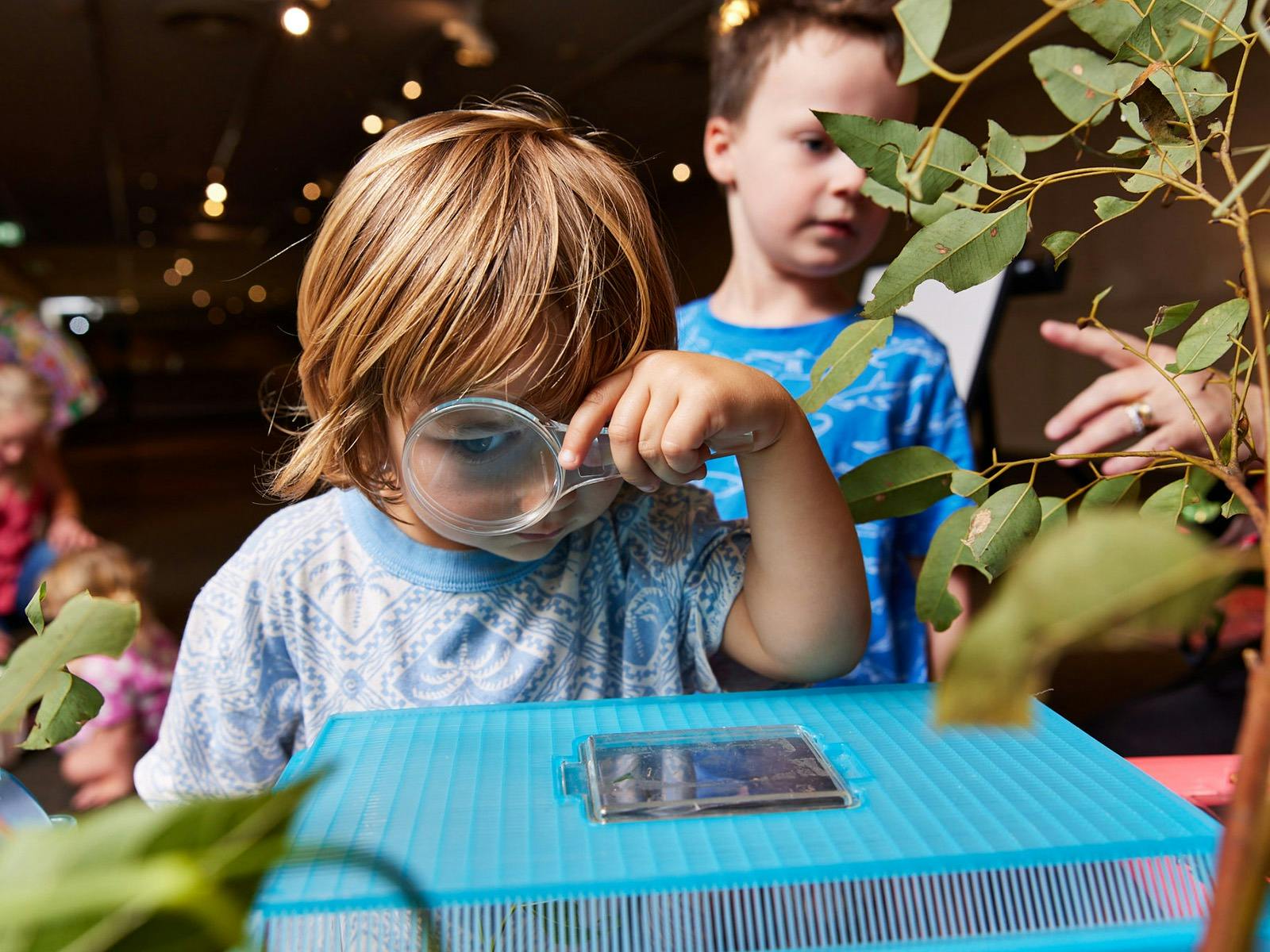
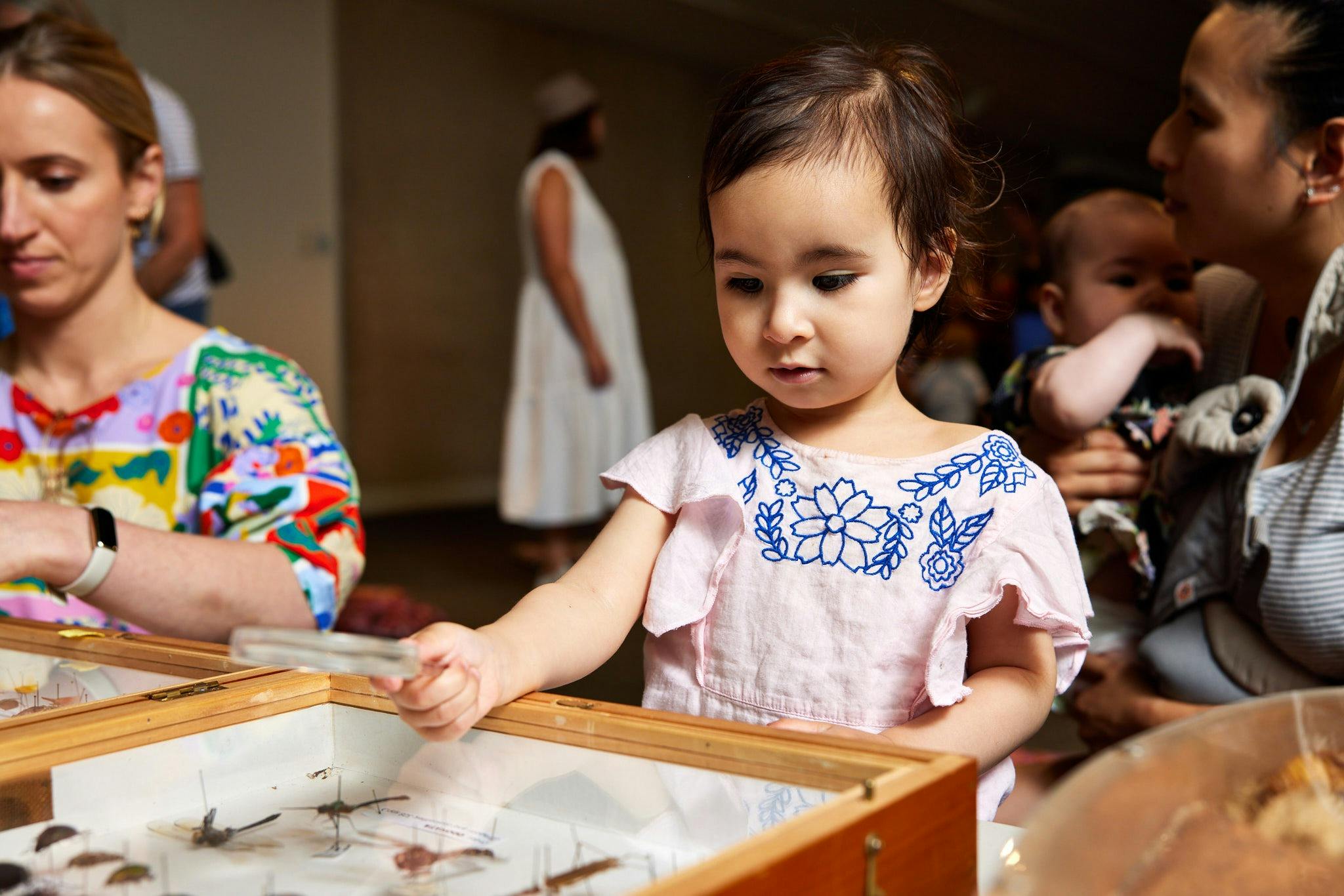
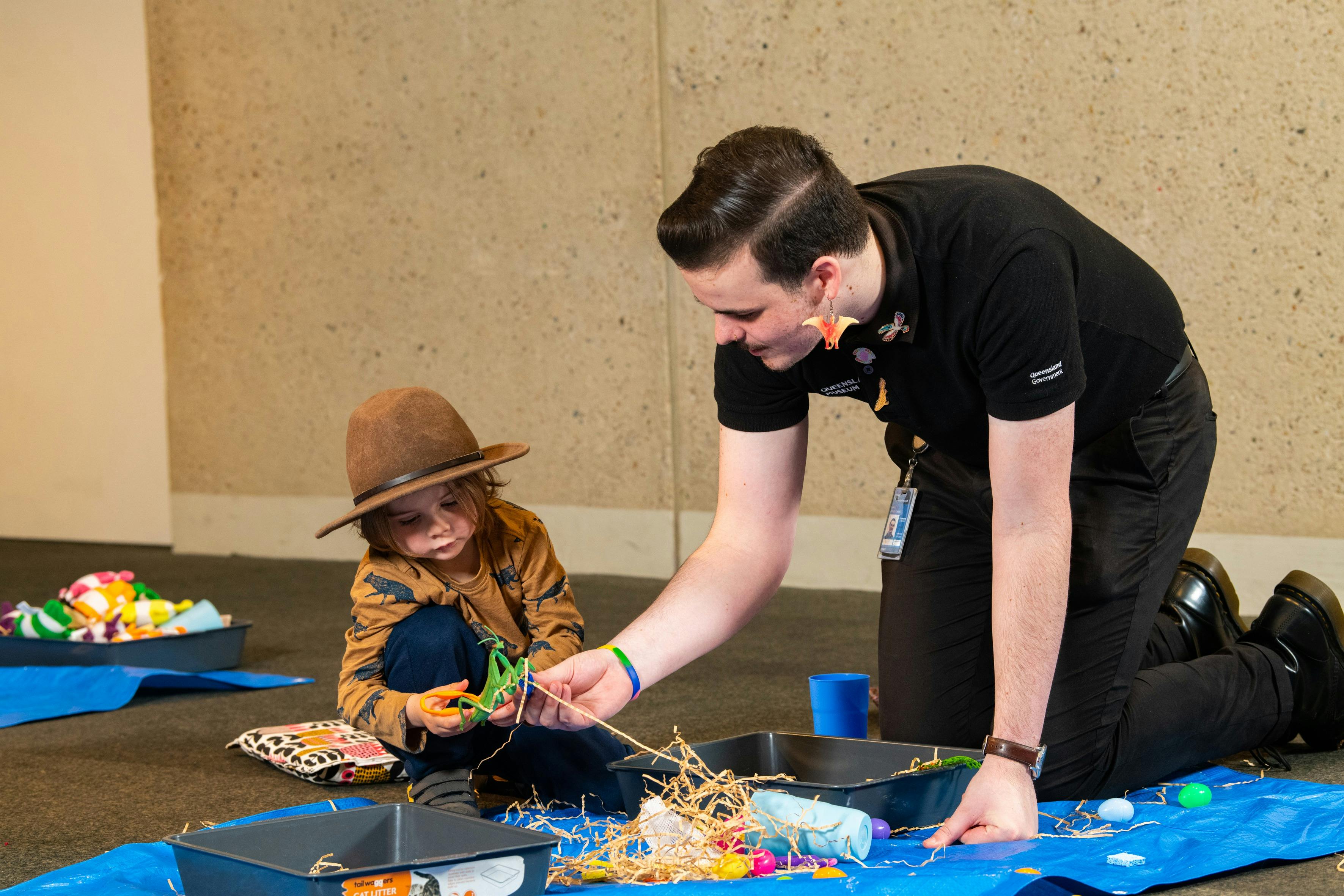
Step into a world of wonder with Mini Museum Explorers, their early learning program designed for curious minds aged 3 to 5 years. Children will have the opportunity to touch and explore real museum objects, engage in STEM inspired activities and participate in stories, songs and movement-based play in a fun and social learning environment.
Activities and Dates
Going on a Croc Hunt
Do you like crocodiles? What makes a crocodile such an amazing animal? Join in for a Croc Hunt! The museum has a few crocodiles lurking around. Will you find one?
Tuesday 05 May 10-10:30am & 10:45-11:15am
Tuesday 12 May 10-10:30am & 10:45-11:15am
Reptiles Rock
These sessions introduce the Mini Museum Explorers to the many different types of reptiles. Crocodiles are one type can you think of any others? What makes a reptile a reptile?
Tuesday 19 May 10-10:30am & 10:45-11:15am
Tuesday 26 May 10-10:30am & 10:45-11:15am
Scales and Tails
Through stories and activities, Mini Museum Explorers will look at reptiles features and how they are different to other animals. Is a kangaroo a reptile? Is a crocodile furry or smooth?
Tuesday 02 June 10-10:30am & 10:45-11:15am
Tuesday 09 June 10-10:30am & 10:45-11:15am (Auslan interpreted)
Images and Video
Dates & times
- Next occurrence: reoccurring
Accreditations
- QLD – Best of Queensland Experience Product
- QLD – Brisbane Economic Development Agency (BEDA)
Features
Tags
Actively welcomes people with access needs.
General access

- Offers multiple options for booking – web, email, phone is available.
- Offers a range of contact methods for receiving complaints.
- Companion Cards are accepted.
- Staff are trained in disability awareness.
- Accessibility information and photos, including of a bathroom, room and/or floor plan on their website (can be emailed on request).
- Asks all visitors if there are any specific needs to be met.
- Website meets <a href="https://www.w3.org/WAI/standards-guidelines/wcag/" target="_blank">WCAG 2.0</a> accessibility standards
Communication

Welcomes and assists people who have challenges with learning, communication, understanding and behaviour. (includes people with autism, intellectual disability, Down syndrome, acquired brain injury (ABI), dyslexia and dementia)
- Staff are trained in communicating with people with learning or behavioural challenges.
- Uses Plain English / easy read signage and information (includes menus and emergency information)
- A quiet space is available at the venue/ facility.
Vision

Caters for people who are blind or have vision loss.
- Information in large print is available.
- Digital communication materials (hard copy information also online) is available.
- Uses easy to read fonts in their signage and communication materials (Helvetica and Arial).
- Staff are trained in customer service for people with vision loss (training would incorporate way finding and communicating with people with vision loss).
- Handrails on all stairways
- Exit signs which are visible at a ground level (high level signs are difficult to see in a fire) are available.
Hearing

Caters for people who are deaf or have hearing loss.
- A hearing loop is available.
- Staff are trained in communicating with people who are deaf or have hearing loss.
- Staff are trained in Auslan.
- TVs with captioning option is available.
- Visual alerts for emergencies (Include flashing light) are available.
- A low noise reception areas with hearing loss friendly acoustics and adequate lighting for viewing facial expressions (includes common areas which are free of background noise, background music) is available.
Physical – Wheelchair

Caters for people who use a wheelchair.
- Step free outdoor pathways (includes picnic areas, barbecues and shelters)
- A step free main entrance to the building and/or reception area (includes ramps or slopes with a maximum gradient of 1:14, otherwise are too steep for wheelchairs)
- Lifts with enough space for people using a mobility aid to enter and turn around to use the lift buttons. Buttons are at accessible height.
- An accessible public toilet which is unlocked.
Plan more around this area
 Brisbane, QLD
W Brisbane
W Brisbane lights up the Brisbane River foreshore, bringing bold design and playful luxury to the western end of the Central Business District.
 Brisbane City, QLD
Hotel Indigo Brisbane
Hotel Indigo offers guests the opportunity to delve deep into the inner-Brisbane neighbourhood with easy access to central business hubs.

 Brisbane City, QLD
Meriton Suites Herschel Street, Brisbane
Meriton Serviced Apartments Brisbane on Herschel Street is the highest accommodation option available in Brisbane. Offering 259 luxury apartments with simply stunning views.
 Brisbane City, QLD
 Park Regis North Quay
Park Regis North Quay is ideally positioned overlooking the Brisbane River with spectacular views over the city and across to South Bank.
 Brisbane City, QLD

ibis Styles Brisbane
ibis Styles Brisbane Elizabeth Street is full of life; a hotel designed for Brisbane, and inspired by Brisbane.


 Brisbane City, QLD
 Adina Apartment Hotel Brisbane
The Adina Apartment Hotel Brisbane is a beautiful hotel in a heritage-listed building at 171 George Street.
 South Brisbane, QLD
 Marlowe
Today, Marlowe carries on this timeless spirit of hospitality. Marlowe practises the art of making people feel at home.
 West End, QLD
 Pig 'N' Whistle West End
Pig ‘N’ Whistle West End are proud to be Brisbane’s most genuinely British pub. Offering the best hearty English fare around, with Modern Australian flavours.
 South Brisbane, QLD
 Chocolate Elements
Chocolate Elements' small multicultural team of Artisan Chocolatiers are passionate about showcasing quality local, indigenous, Australian ingredients with the finest Belgian couverture.
 South Brisbane, QLD
 Southside
Set amongst the urban oasis of Fish Lane Town Square, Southside serves East-Asian cuisine with a love of Chinese tradition.
 South Brisbane, QLD
 Uncle Don – West End
Uncle Don serves more than 20 Donburi variations and a selection of modern Japanese dishes.
 South Brisbane, QLD
Lyrebird
Lyrebird boasts a contemporary, modern Australian menu highlighting the finest locally sourced ingredients, the Lyrebird is the perfect place to start your evening at QPAC.
