Great Ocean Road Story
Highlights
- Explore the Great Ocean Road Heritage Centre to uncover the rich history of Australia's most famous road.
- Discover the sacrifices of over 3000 soldiers who built this engineering marvel along Victoria's stunning coastline.
- Marvel at the breathtaking views while learning about the road's impact on local communities since 1932.
- Enjoy modern facilities like electric vehicle charging points and a gift shop at the Lorne Visitor Centre.
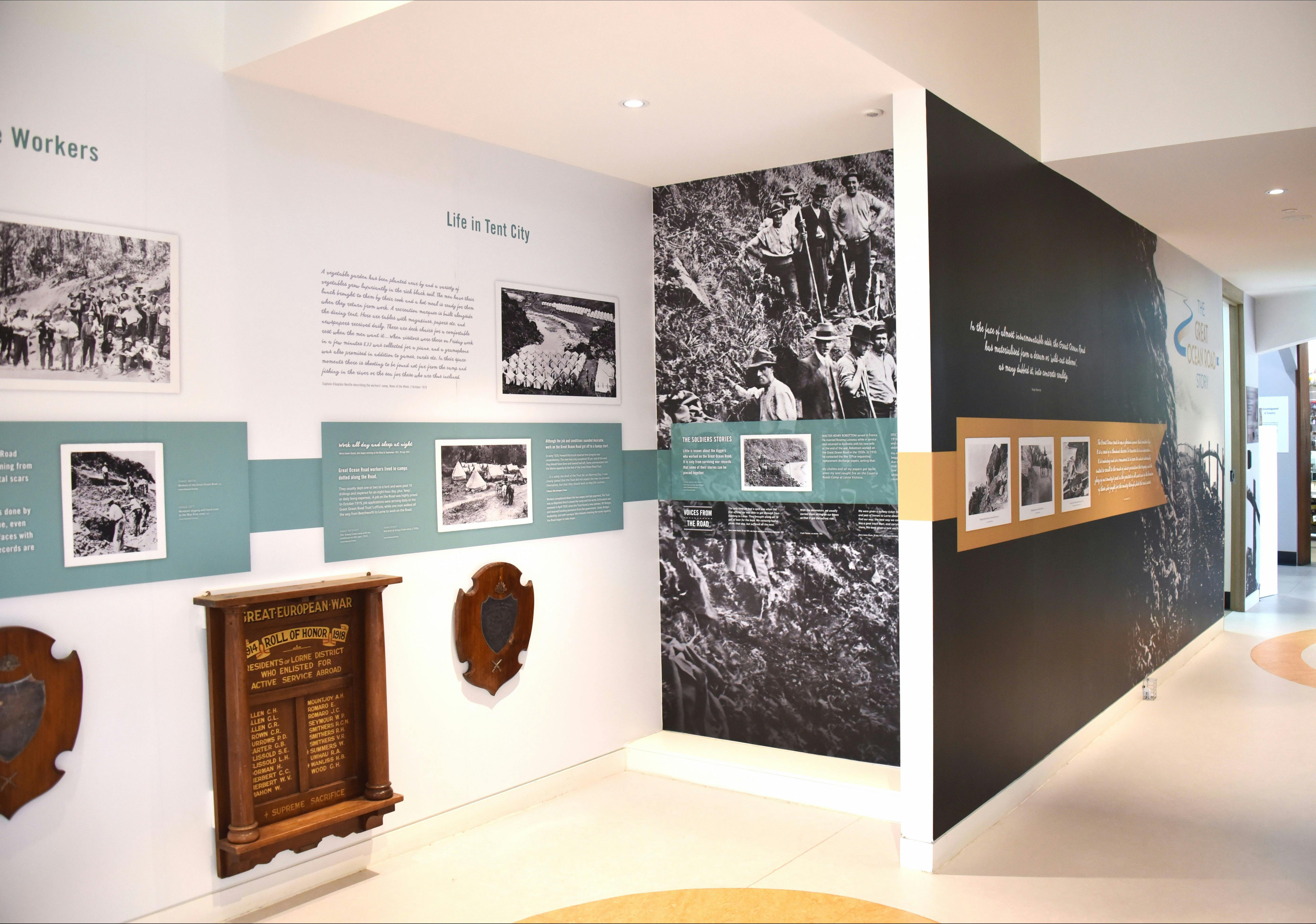
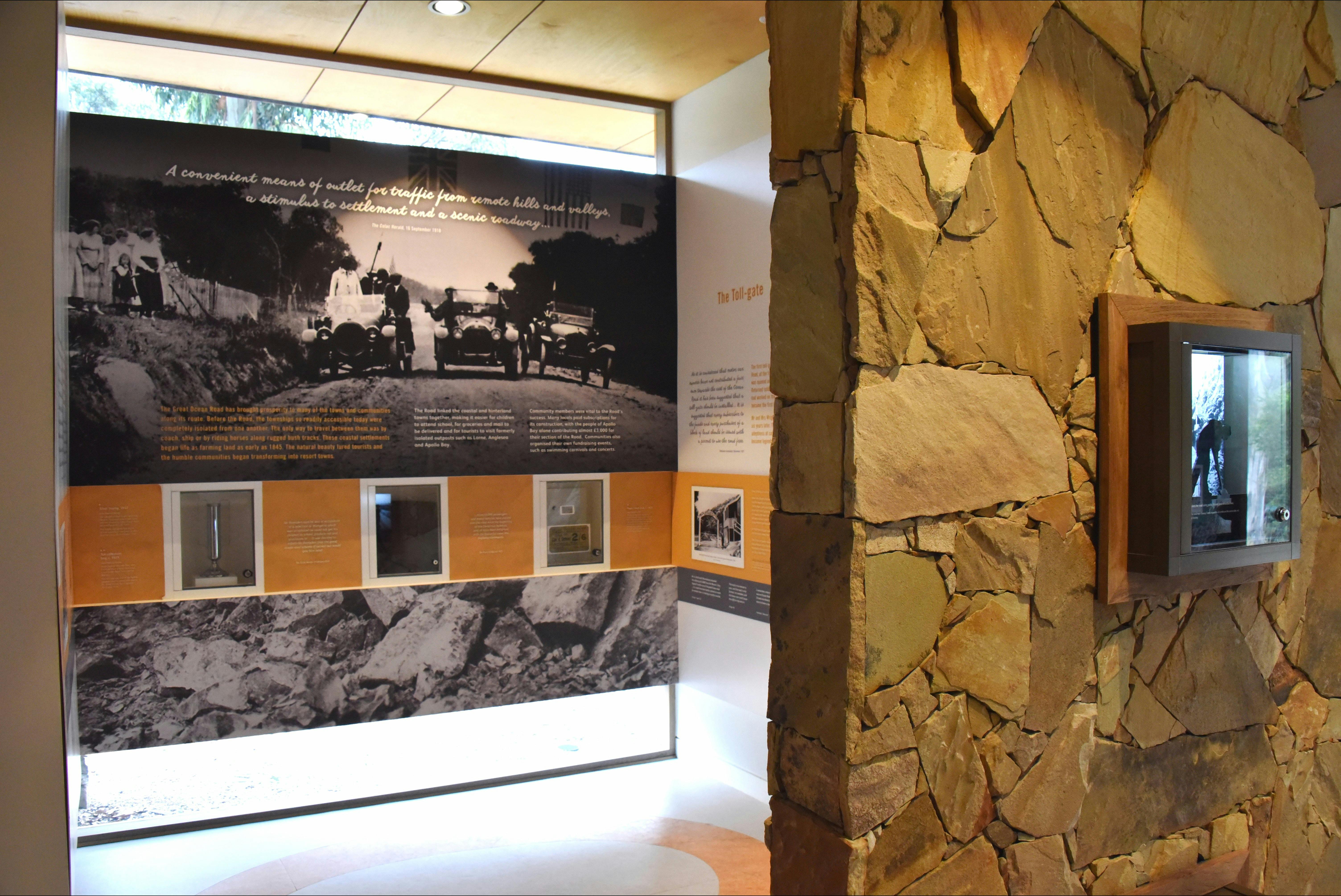
Experience The Great Ocean Road Story: Building Australia’s Most Famous Road. This purpose built permanent exhibition in the newly constructed Great Ocean Road Heritage Centre is located in the Lorne Visitor Centre.
The Great Ocean Road is a memorial to the lost lives and sacrifices of the Australian diggers in world war one. More than 3000 returned soldiers built the road from 1919 onwards, conquering steep cliffs, rugged terrain and dangerous weather so that the isolated towns along Victoria’s stunning western coastline could be joined together.
Since its official opening in 1932, the Great Ocean Road has breathed life into the local communities along it and become a mecca for tourists. It is a engineering marvel.
Come and experience the Great Ocean Road Story.
Images and Video

Accreditations
-
 Visitor Information Centre National Accreditation
- Australian Museums and Galleries Association
- Regional Tourist/Tourism Association/Organisation
- Visitor Information Centre
Features
Tags
Actively welcomes people with access needs.
General access

- Offers multiple options for booking – web, email, phone is available.
- Offers a range of contact methods for receiving complaints.
- Companion Cards are accepted.
- Assistance with booking arrangements (includes providing clear itineraries with written instructions on what to do at various destinations)
Communication

Welcomes and assists people who have challenges with learning, communication, understanding and behaviour. (includes people with autism, intellectual disability, Down syndrome, acquired brain injury (ABI), dyslexia and dementia)
- Staff are trained in communicating with people with learning or behavioural challenges.
- Uses Plain English / easy read signage and information (includes menus and emergency information)
- A quiet space is available at the venue/ facility.
Physical – Mobility

Caters for people with sufficient mobility to climb a few steps but who would benefit from fixtures to aid balance. (This includes people using walking frames and mobility aids)
- Uses floors/coverings which are slip resistant, firm and smooth
- Grab rails in the bathroom
- Seating in common areas including reception area
Physical – Wheelchair

Caters for people who use a wheelchair.
- Step free outdoor pathways (includes picnic areas, barbecues and shelters)
- A step free main entrance to the building and/or reception area (includes ramps or slopes with a maximum gradient of 1:14, otherwise are too steep for wheelchairs)
- An accessible public toilet which is unlocked.
- A wheelchair/scooter charging station (power point) in an accessible location is available.
Plan more around this area
 Lorne, VIC
 Lorne Foreshore Caravan Park
The Lorne Foreshore Caravan Park is set across five fantastic camp grounds on the Great Ocean Road in Lorne with beachfront and riverside locations.
 Lorne, VIC
 Glamping at Lorne Foreshore Caravan Park
Located along the Great Ocean Road in the picturesque coastal town of Lorne, 2 hours' drive from Melbourne, Lorne Foreshore Caravan Park is the perfect
 Lorne, VIC
Cumberland Lorne
Cumberland Lorne is located in the heart of Lorne on the spectacular Great Ocean Road in Victoria, under two hours drive from Melbourne. Directly opposite
 Lorne, VIC
Mantra Lorne
The only beachfront property in Lorne, Mantra Lorne is tastefully built around the oldest permanently operating guesthouse in Victoria.

 Lorne, VIC
 escape @ 83 Great Ocean Road Apartments
Stunning Location and Views, an enviable position on the Great Ocean Road overlooking Loutitt Bay & Beach, 360 degree views, Lorne Pier to Aireys Inlet
 Lorne, VIC
 Lorne Beach Accom
The beautiful relaxed energy of Lorne Beach Accom apartments will have you breathing easy, and letting go. Feel at home with your friends and family.
 Lorne, VIC
 Grand Pacific Hotel
Imagine a place where generations of families have shared laughter, stories, and unforgettable moments. Welcome to the iconic Grand Pacific Hotel in Lorne, Victoria.

 Kennett River, VIC
Kafe Koala General Store
Kafe Koala General Store is based on the Great Ocean Road in the hamlet of Kennett River: gateway to the Otways National Park, home to
