Bridestowe Lavender Estate
Highlights
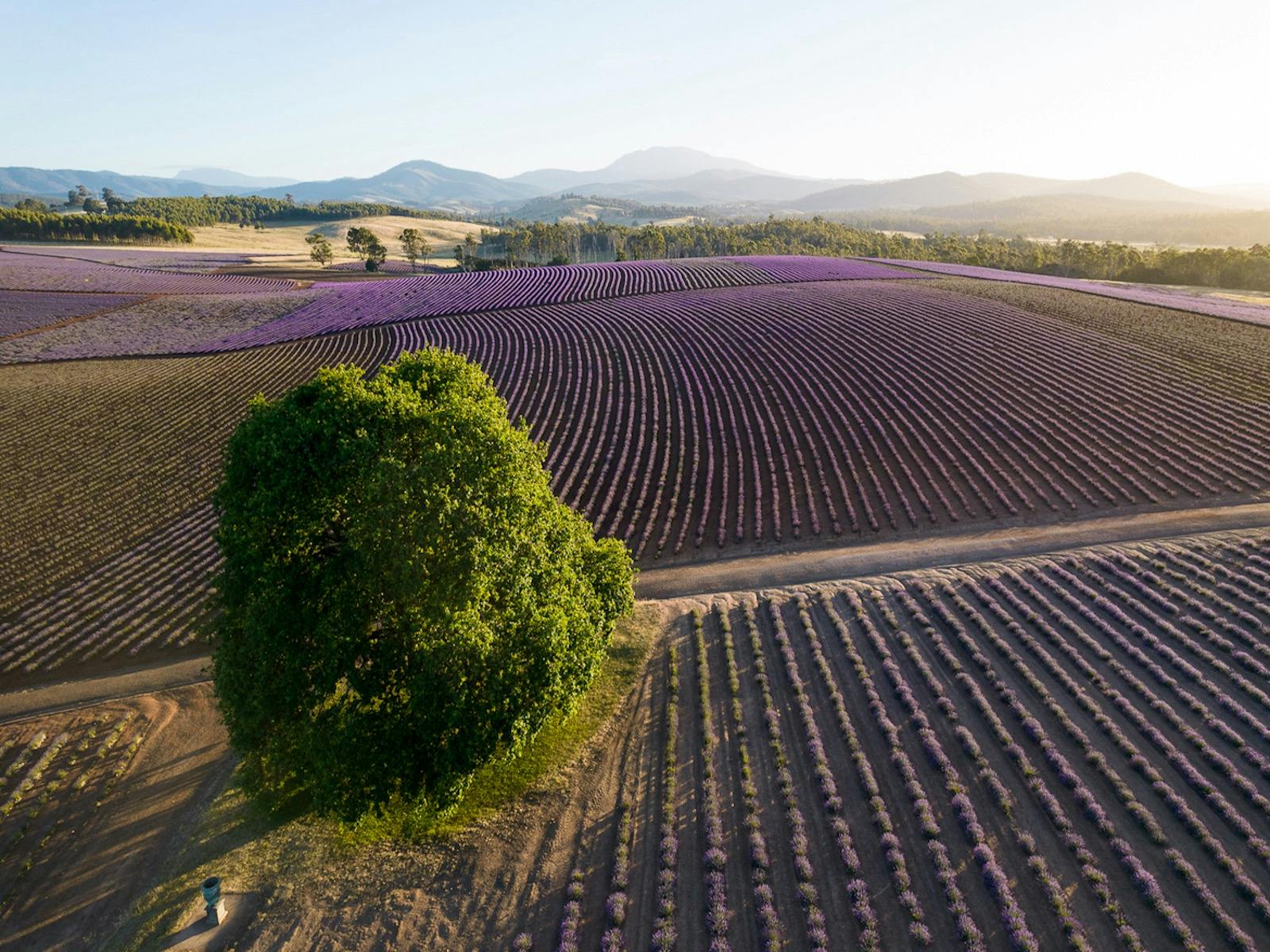
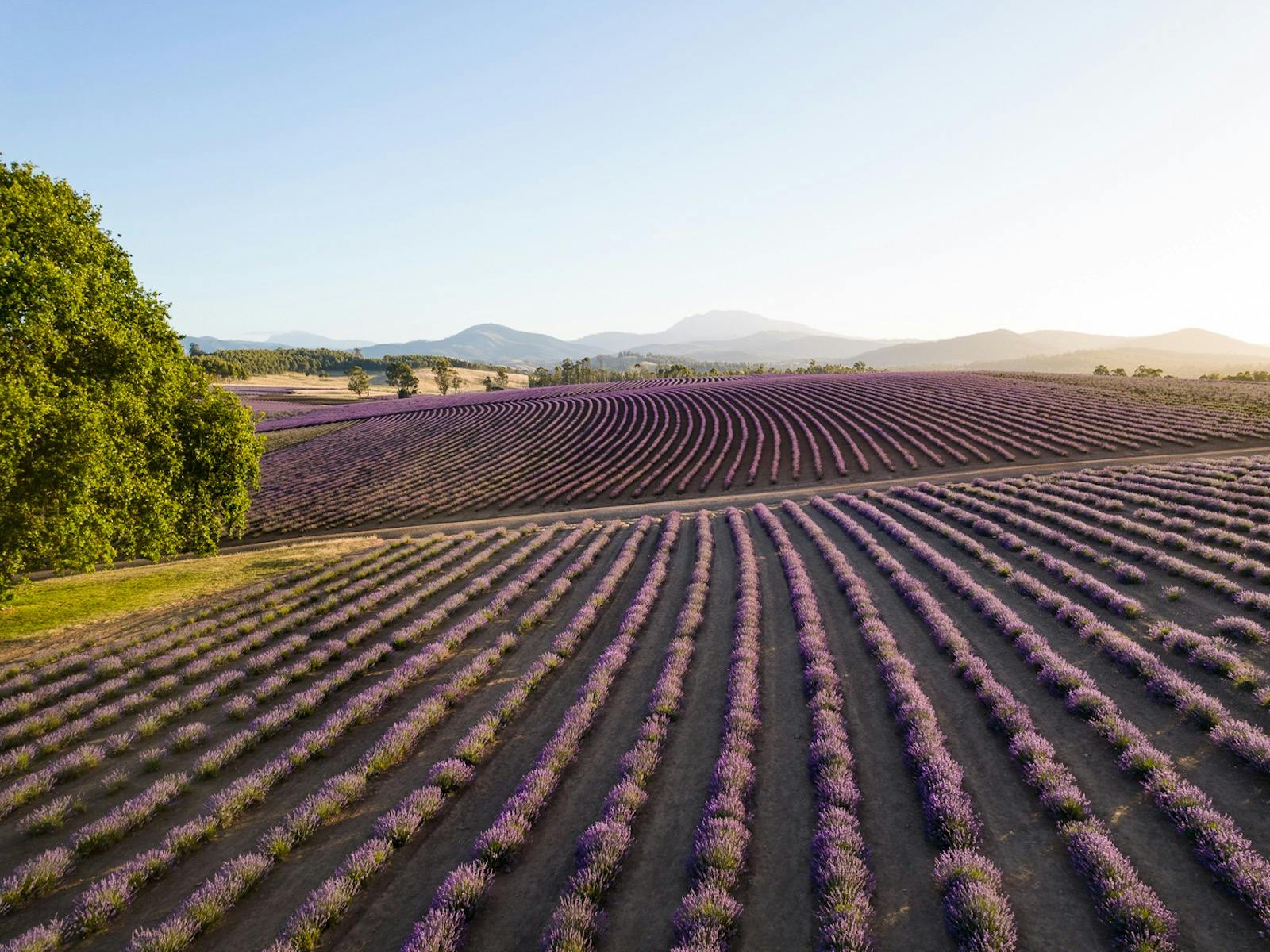
- Explore the vibrant lavender fields in bloom during December and January, offering breathtaking views and fragrant air.
- Savour lavender-inspired delicacies at the Woodcroft Cafe, featuring signature lavender ice-creams and seasonal meals.
- Discover unique lavender products at the visitor centre, perfect for gifts or a touch of Tasmania at home.
- Wander through ornamental gardens and native bushland, all set against the stunning backdrop of Mount Arthur.
Bridestowe Lavender Estate is one of Tasmania’s premier tourist destinations, located a 50-minute drive from Launceston in Tasmania’s scenic North East. Bridestowe Lavender Estate is the largest lavender farm in the Southern Hemisphere, famous for the spectacular view of the lavender in bloom in December and January.
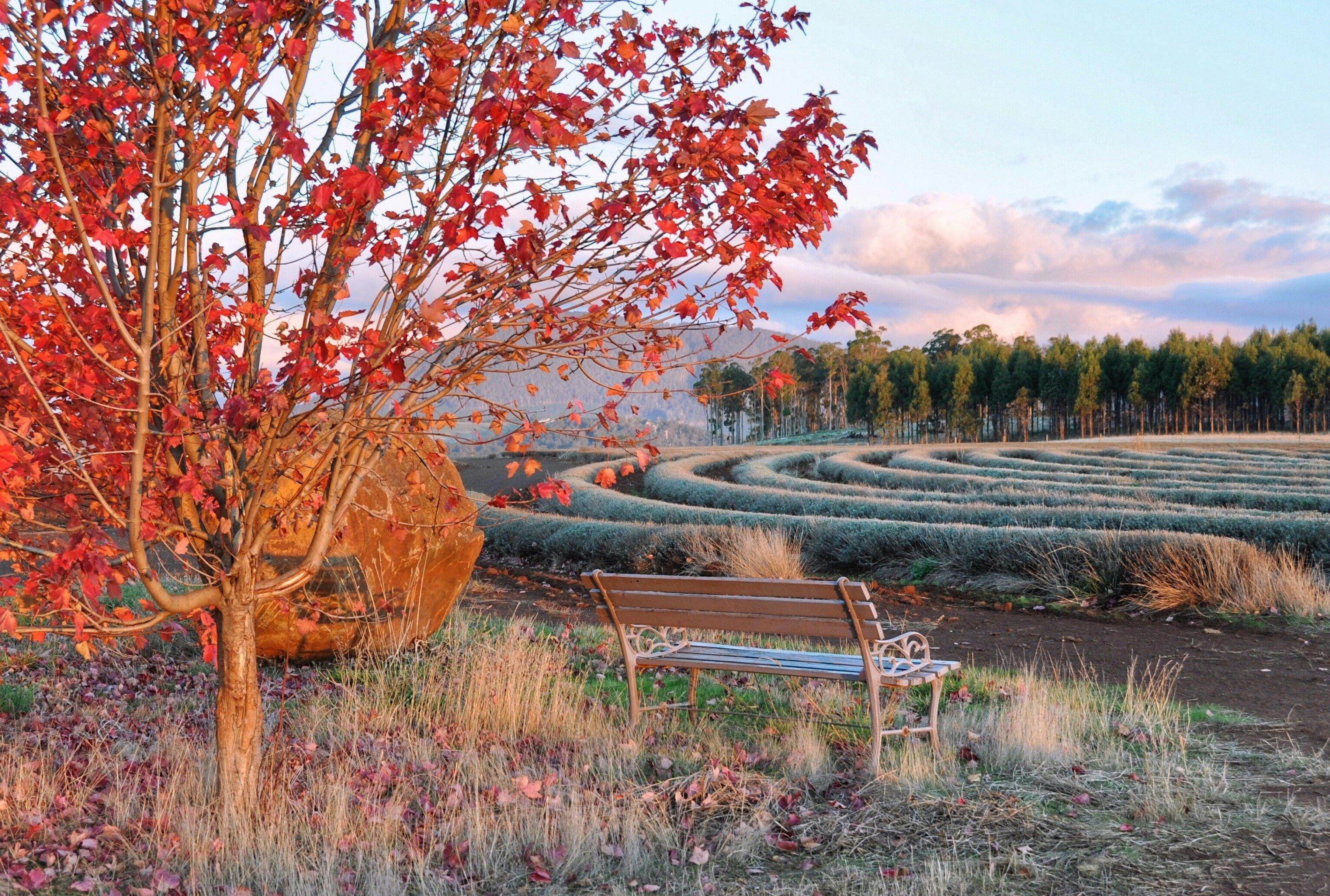
Visitors are welcomed to the Estate all year round to see the seasons of Tasmania beautifully reflected in the ornamental gardens, manicured fields and native bushland set against the striking backdrop of Mount Arthur.
The visitor centre is stocked with unique products containing Bridestowe’s famous lavender oil and dried flower. An extensive range of fragrant Australian-made gifts created for the bath, body and home and, of course, the world-famous Bobbie the Bear.
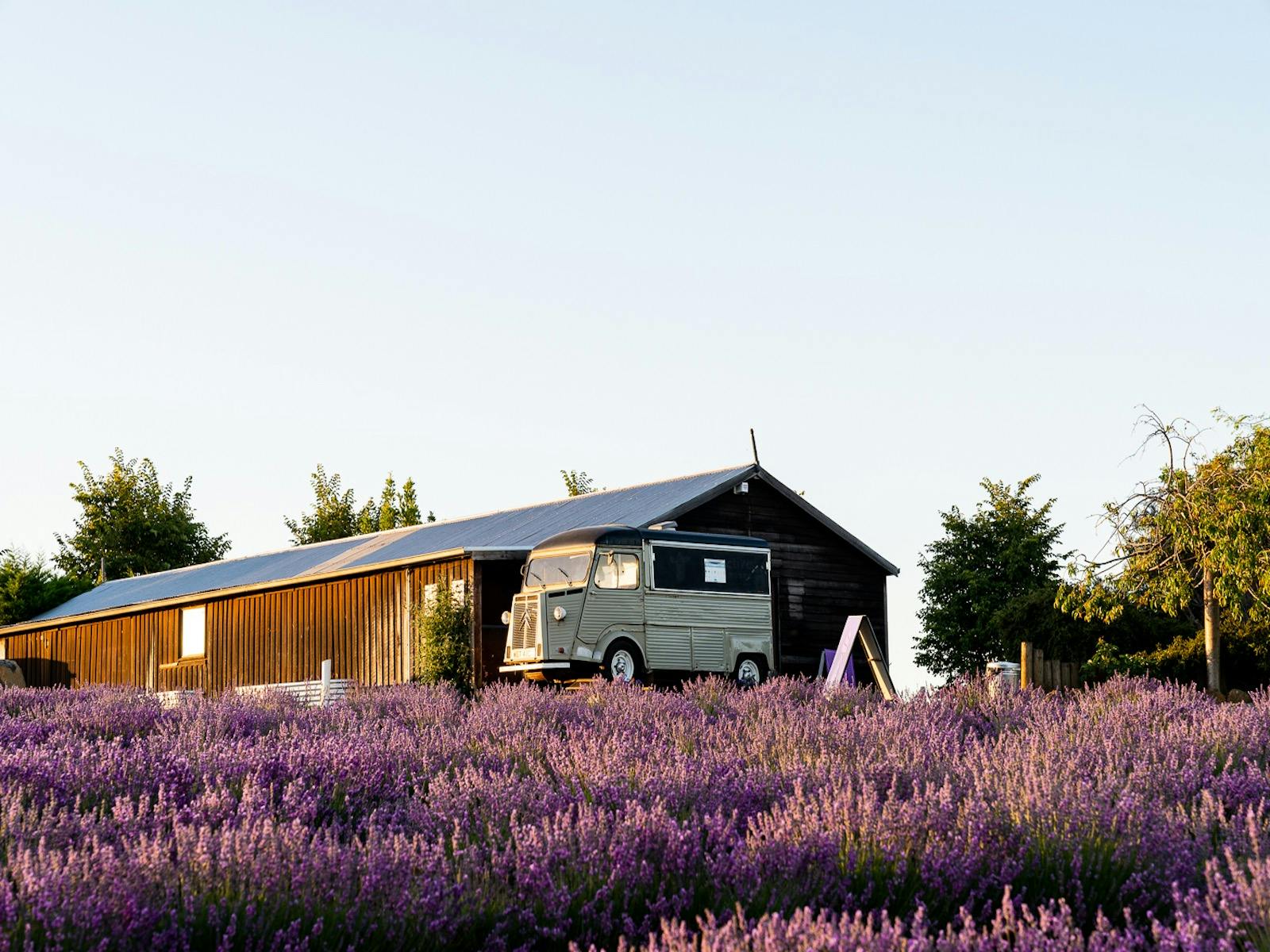
The Woodcroft Cafe offers a delicious range of lavender inspired delicacies including our signature range of lavender ice-creams and light seasonal meals. You can take home the experience with a purchase from Bridestowe’s gourmet range, which includes seasonal lavender flower honey, artisan jams, gourmet loose leaf teas and culinary lavender, which is used in many of foods available in the cafe.
An entry fee of $20 per adult applies during the “Festival of Flowers” – 1st December to 31st January. Under 16s welcome free of charge. Entry to the Estate is free from February to November.
Images and Video







Accreditations
-
 Quality Tourism Accreditation
-
Sustainable Tourism Accreditation by ATIC
- Australian Tourism Export Council
- Regional Tourist/Tourism Association/Organisation
- Visitor Information Centre
Features
Activities
Current offers

Behind-the-scenes farm RTV tour
Ride through 120 acres of lavender rows on a private all-terrain vehicle with one of our senior estate guides. Access areas normally closed to visitors: historic processing facilities, production rooms where you’ll learn about lavender’s uses and the furthest fields where winter’s quiet reveals the estate’s scale. The lavender won’t be blooming, but winter offers clearer views across the rolling landscape.
Actively welcomes people with access needs.
General access

- Offers multiple options for booking – web, email, phone is available.
- Offers a range of contact methods for receiving complaints.
- Companion Cards are accepted.
- Employs people with disabilities.
- Staff are trained in disability awareness.
- Advise tour guides of the access needs of guests at the time of booking (includes pick up and drop off requirements)
- Assistance with booking arrangements (includes providing clear itineraries with written instructions on what to do at various destinations)
Communication

Welcomes and assists people who have challenges with learning, communication, understanding and behaviour. (includes people with autism, intellectual disability, Down syndrome, acquired brain injury (ABI), dyslexia and dementia)
- Staff are trained in communicating with people with learning or behavioural challenges.
- Uses Plain English / easy read signage and information (includes menus and emergency information)
- A quiet space is available at the venue/ facility.
Vision

Caters for people who are blind or have vision loss.
- Information in large print is available.
- Digital communication materials (hard copy information also online) is available.
- Staff are trained in customer service for people with vision loss (training would incorporate way finding and communicating with people with vision loss).
- An appropriate area for toileting an assistance dog is available.
- Handrails on all stairways
- Exit signs which are visible at a ground level (high level signs are difficult to see in a fire) are available.
Hearing

Caters for people who are deaf or have hearing loss.
- Staff are trained in communicating with people who are deaf or have hearing loss.
- Visual alerts for emergencies (Include flashing light) are available.
Physical – Mobility

Caters for people with sufficient mobility to climb a few steps but who would benefit from fixtures to aid balance. (This includes people using walking frames and mobility aids)
- Grab rails in the bathroom
- Seating in common areas including reception area
Physical – Wheelchair

Caters for people who use a wheelchair.
- Step free outdoor pathways (includes picnic areas, barbecues and shelters)
- A step free main entrance to the building and/or reception area (includes ramps or slopes with a maximum gradient of 1:14, otherwise are too steep for wheelchairs)
- Step free access to restaurant, lounge and bar
- Step free access to the conference or function room
- Doorways which are easy to open and have lever handles (doorways 850mm or wider when open and not heavy).
- An accessible public toilet which is unlocked.
- A wheelchair accessible toilet / shower and change room is available.
- Wheelchair access to amusements and activities including boats and bush trails (includes tour rides, skyways, trolley cars, flying fox, amusement rides and boating).
- A wheelchair/scooter charging station (power point) in an accessible location is available.
- At least one wheelchair accessible parking space with wheelchair accessible signage clearly displayed (International standards are 3200mm wide x 2500 mm high).
- Wheelchair accessible transport options available in the general vicinity (provide information on name of the operator, phone and website link to individual providers for private vehicles, community transport train, mini vans, hire cars, buses, taxis, ferry, tram, light rail etc in their access statement).
Physical – High support needs

Caters for people with high support needs who travel with a support person.
- A place to store medical equipment (eg oxygen).
Allergies and intolerances

Caters for people with allergies and intolerances.
- Modify their cooking and cleaning practices to cater for people with food allergies or chemical intolerances (could include menus with meals free from: nuts, dairy, seafood, eggs, gluten etc).
- Staff are trained to respond to allergic reactions.
- Complies with The Food Authority requirements for allergy management in food preparation.
Plan more around this area
 Lilydale, TAS

Cherry Top Farmstay – Boutique Eco Village
Cherry Top self-contained accommodation is a quiet family farmstay or country getaway in Lilydale.

 Weymouth, TAS
 Shack In The Dunes
Shack in the Dunes is located in the quite coastal village of Weymouth, a raw and unspoiled corner of Tasmania.
 Targa, TAS
 Myrtle Park Recreation and Camping Grounds
Myrtle Park is approximately 35 kilometres from Launceston and 30 kilometres from Scottsdale on the Tasman Highway (A3). Multiple facilities are located onsite including barbecues
 Weymouth, TAS
 Drift Beach Shack
Drift is a unique lovingly restored 50s beach shack, set in the idyllic seaside hamlet of Weymouth, North East Tasmania.
 Patersonia, TAS
 Strathaven
This is a hosted stay through Hipcamp, below is the information provided by the Host regarding their offering. Our property is located at the foot
 Karoola, TAS
 Hilltop Escape
Whether it’s for romance, relaxation, or reconnection, Hilltop Escape offers you the perfect blend of luxury, comfort, and nature.
 Scottsdale, TAS
Little Rivers Brewing Co.
Little Rivers Brewing Co. is a taphouse, done differently.

 Bridport, TAS
 The Bridport Cafe
They are a licenced cafe in the beautiful seaside village of Bridport, open 7 days offering a great breakfast and lunch menu.
 Scottsdale, TAS
 The House Paddock
The House Paddock is an artisan grocer, homewares and cafe store which prides itself on providing quality produce, products and service.
 Scottsdale, TAS
 Darby-Norris Distillery featuring 2Birdz Liquor Co.
Darby-Norris Distillery featuring 2Birdz Liquor Co, is a hand-crafted, artisan, family-owned micro distillery in Scottsdale, Tasmania.
 Pipers Brook, TAS
Dalrymple Vineyards
Dalrymple Vineyards is located in the Tamar Valley at Pipers Brook, Northern Tasmania.
 Pipers River, TAS
 Delamere Vineyard
Delamere is a small, family vineyard in the Pipers Brook wine region of northern Tasmania.
