Images and Video


Clarence Town
Highlights
- Explore the historic Deptford Shipyards, where Australia's first ocean-going paddle steamer, the William IV, was launched.
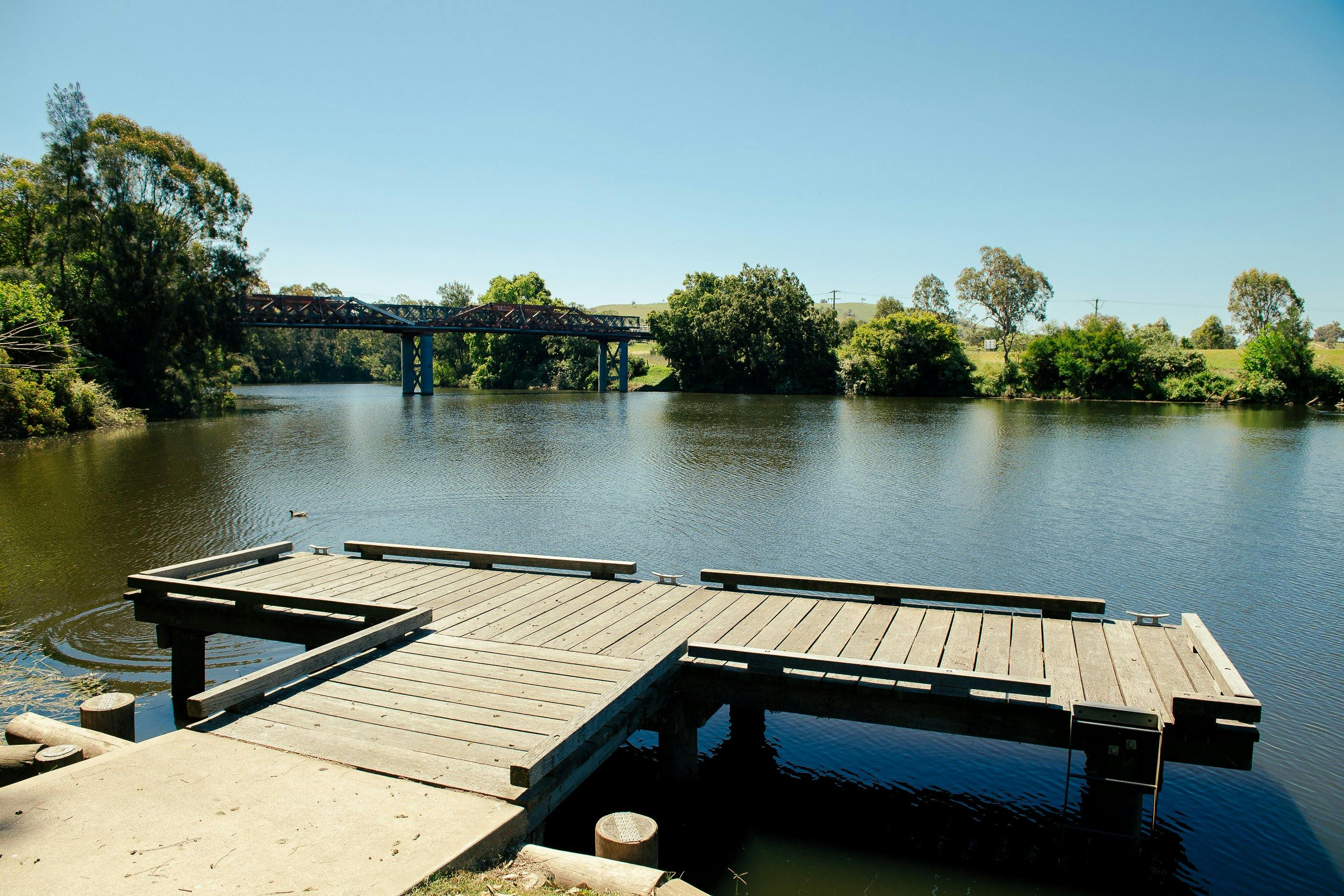
- Wander along the scenic banks of the Williams River, soaking in the tranquil atmosphere of this charming village.
- Discover the rich maritime history of Clarence Town, once a bustling hub for vessel construction in the 19th century.
- Experience the local heritage at the site formerly known as Erringhi, meaning 'place of wild ducks' in Aboriginal language.
Clarence Town is a small village nestled on the banks of the Williams River. The township is most famous for building and launching the William IV paddle steamer in 1831, although the town was still called Erringhi at this time. The town was later renamed in 1832 after the Duke of Clarence, who became King William IV in 1830.
Clarence Town’s main claim to fame was that this was the spot where, in 1831, Australia’s first ocean-going paddle steamer (called the William IV) was built and launched.
Marshall and Lowe produced many vessels over the years, mostly under 50 tons, reaching a commercial peak in the 1870s and closing in the 1890s.
Clarence Town was initially known as Erringhi. Presumably the Aboriginal name for the site, it is thought to mean ‘place of wild ducks’. The settlement was situated at what is now the southern end of town by the Williams River where there was a wharf and where William Lowe and James Marshall established the Deptford Shipyards in 1830. The village was renamed in 1832 after the Duke of Clarence (who became King William IV in 1830). A prosperous town by mid-century it was much bigger than Dungog.
Itinerary highlights
Erringhi Hotel
In 1913 the Erringhi Hotel was built, it was erected on the site of the Crown Inn.
An outstanding two-storey hotel building of fibro and weatherboard dado at each level.
With a complex but symmetrical roof form, the main roof continues down over the top balcony, with central gablet, and two large gables above. It has a corrugated iron roof with crested wave finials, featuring louvred vents, decorative timber on gables, cast iron posts and brackets. The upstairs balcony has elaborate cast-iron lacework as well as on the eaves of the posts.
Very little survives of the town’s original hotels. Built in the early twentieth century this building took over the town’s hotel trade.
It’s significance to the Town are the special architectural interest and major streetscape contribution. Largest and most ostentatious building in the town.
Former Post Office
The Post Office was established in 1845, which was quite late relative to other local businesses in the town centre. The present building was erected in 1879 and was opened for business in 1880 and is sadly no longer in use.
It is one of the oldest and best preserved buildings in town despite alterations. It has a porch with cast-iron trim around the pillars and arched windows on the upper storey emphasised by semi-circular cement mouldings and distinct ledges.
A fine building, attractively proportioned, making an important contribution to the Streetscape and the towns identity. It is a reminder that once, the town was an important rural centre.
Former Courthouse and Police Station
The first watchouse and lock-up were completed in 1854. Located on a large block of land, and designed by noted Colonial Architect, James Barnet, the Courthouse (and former police station) were erected in 1869 and is now a local history museum, open every second Saturday from 10.00 a.m. – 3.00 p.m. It is a small timber building with a very steeply pitched roof with distinct gables. The veranda roof is hipped and supported by timber columns. Next door is a pink police station residence with brown quoins which dates from the same period.
Tour details
This business does not currently offer accessible facilities.
Operation information
Go Drivin – The Hunter Region
Welcome to Go Drivin, your ultimate companion for unforgettable road trips, day tours, and day trips. Their self-guided, experiential journeys turn every drive into an adventure that feels like you have your own personal tour guide. With their free app and website, explore and engage with the rich tapestry of the Hunter Region.
Explore must-visit destinations like Cessnock, known for its thriving wine industry and picturesque vineyards; Kurri Kurri, famous for its striking murals and charming small-town feel; Dungog, a gateway to outdoor adventures with lush national parks; Barrington Tops, offering stunning views and diverse wildlife; Paterson, rich in colonial history and scenic countryside; Tocal, home to the historic Tocal Homestead and beautiful rural landscapes; Lovedale, a haven for wine lovers with boutique wineries and gourmet food; Greta, a quaint village with a cozy, community vibe; and Branxton, a blend of rural charm and modern conveniences.
Whether it’s a spontaneous day tour or an epic road trip, Go Drivin offers a seamless self-guided hands-free experience, reducing anxiety and boosting enthusiasm. Embrace the adventure of learning something new at every stop along the way and make unforgettable memories.
Discover the joy of exploring with Go Drivin, where every journey is not just a drive—it’s an invitation to connect with the essence of each destination. Download their free app or visit their website and start your adventure!
Memberships
- Regional Tourist/Tourism Association/Organisation
- Visitor Information Centre
Plan more around this area
 Clarence Town, NSW
 Williams River Holiday Park
Williams River Holiday Park is a camping spot right on the river. This is a peaceful setting and the natural landscape is very beautiful.

 Clarence Town, NSW
 Clarries Green Farm Stay
New Cottages situated on a small farm on the Williams River at Clarence Town.
 Glen William, NSW
 Roscrea Homestead
Roscrea is a four bedroom homestead set in a private and tranquil setting on a working beef cattle property at Glen William.
 Limeburners Creek, NSW
 Ocean & Earth Farmstay
This is a hosted stay through Hipcamp, below is the information provided by the Host regarding their offering. Situated on a picturesque 200 acres…
 Twelve Mile Creek, NSW
 Bucketts Way Camp n Stay
Once set up, ramble around the property and enjoy the ambience of the beautiful tree-studded campground.
 Eagleton, NSW
 The Wildflower Cottage
The Urban Connection Farm Cottage is great for friends, families or couples looking for a country break.
 Dungog, NSW
 Royal Hotel Dungog
Royal Hotel Dungog offers quality food and drinks six days a week.
 Dungog, NSW
 Tinshed Brewery
Are you looking for a locally made crafted ale, then look no further than the Tinshed Brewery, they focus on producing great craft beer.
 Morpeth, NSW
 The Royal Hotel
The Royal is a beautifully renovated hotel, centrally located on the main street of Morpeth.
 Dungog, NSW
 The Barn Dungog Pastry House
Discover The Barn Dungog Pastry House, where artisan baking meets country charm in the heart of Dungog.
 Dungog, NSW
 Dungog Memorial Bowls Sport and Recreation Club
Whether you want to eat, drink, have fun, relax, or have a game of Bowls Dungog Memorial Bowling Club is the place you're looking for.
 Morpeth, NSW
 Eureka Tasting Room
Join in for an unforgettable experience at the Eureka Tasting Room in historic Morpeth, with beautifully crafted artisan spirits at exceptional value.
