
Kuti Shack
Highlights
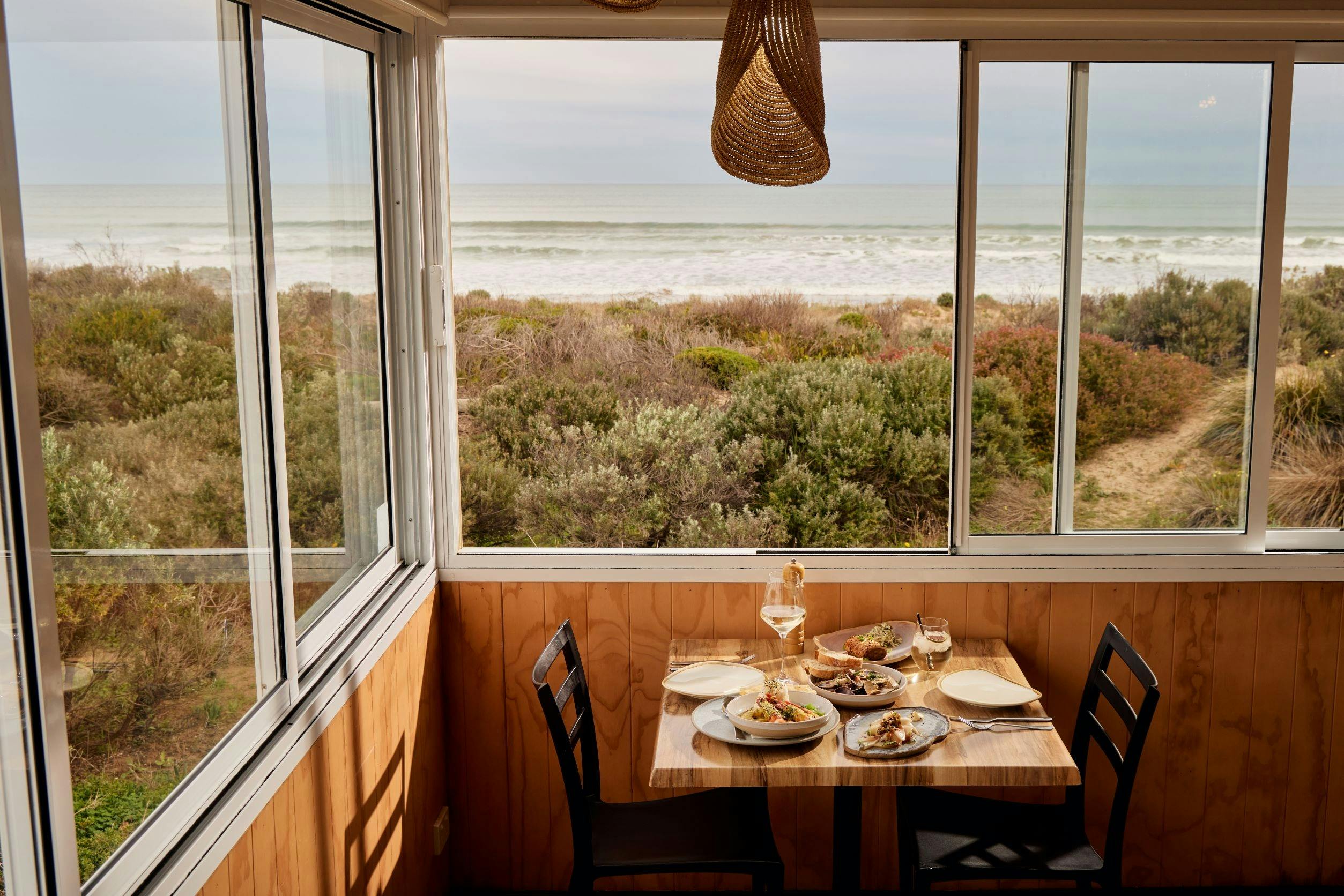
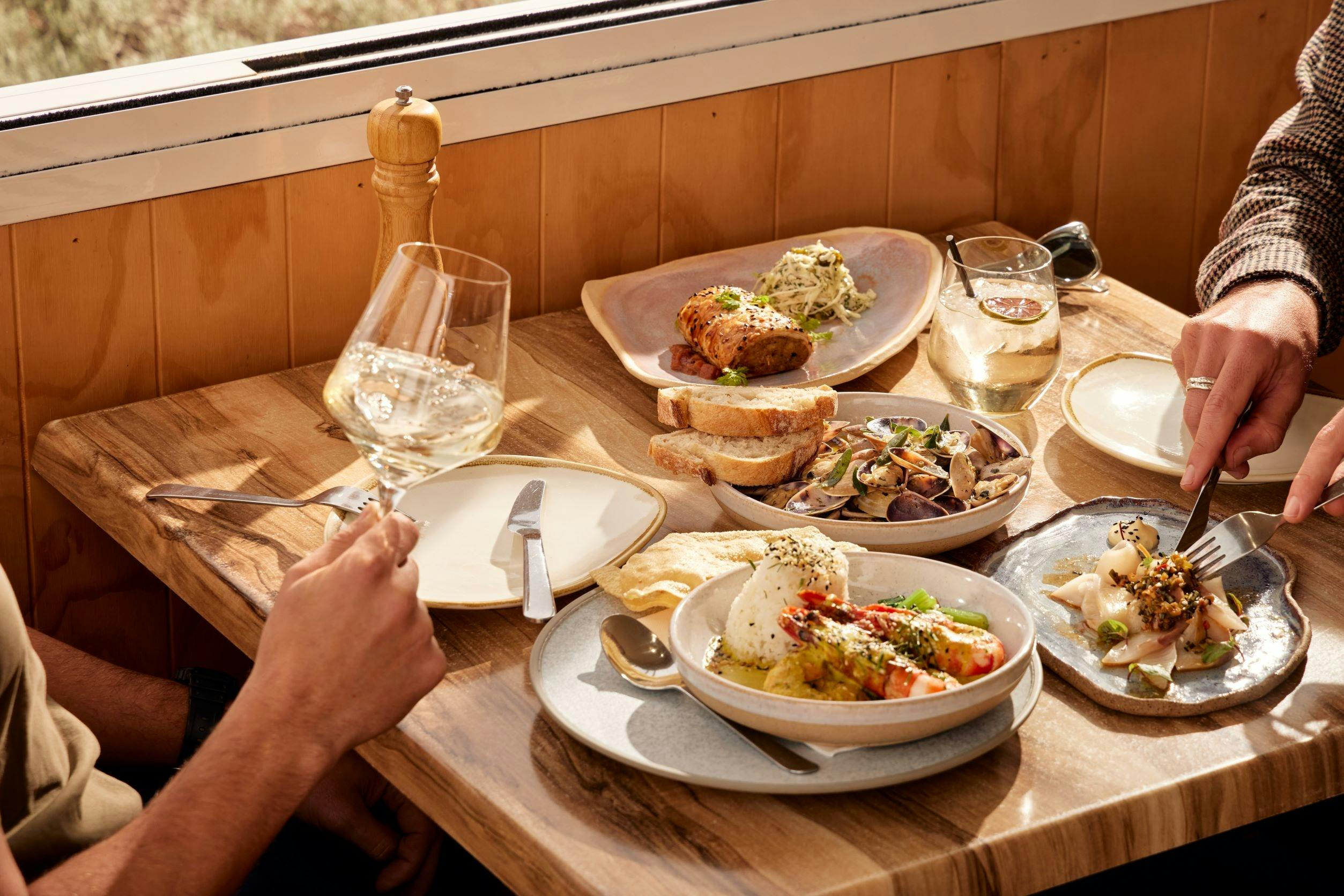
- Savour fresh, local seafood while enjoying the ocean breeze at Kuti Shack in Goolwa.
- Watch surfers ride the waves as you dine in a relaxed, seaside atmosphere.
- Experience indigenous artwork that reflects the rich cultural connection to the land.
- Enjoy a menu that adapts to seasonal catches, highlighting sustainable seafood choices.
Kuti Shack is located in the dunes on Ngarrindjeri land at Goolwa, South Australia. The sea breeze flows through the open windows, watch surfers in the waves and listen to the surf roar.
The restaurant is a seaside shack, with indigenous artwork and weavings showing connection to place.
The menu is predominately seafood, all local.
The relationship between producers and chefs is paramount. The menu changes frequently as the catch and seasons change. By-catch, underutilized species and sustainability drive the seafood offerings.
‘Kuti’ is pipi in Ngarrindjeri and the shellfish always has a place on the menu, they are what Goolwa is famous for and is a quintessential tourism experience when visiting the region. Kuti Shack endeavours to be friendly, unpretentious, a place for everyone to enjoy the incredible produce of South Australia.
Images and Video
Features
Tags
Actively welcomes people with access needs.
General access

- Offers multiple options for booking – web, email, phone is available.
- Offers a range of contact methods for receiving complaints.
- Staff are trained in disability awareness.
- Accessibility information and photos, including of a bathroom, room and/or floor plan on their website (can be emailed on request).
- Advise tour guides of the access needs of guests at the time of booking (includes pick up and drop off requirements)
- Assistance with booking arrangements (includes providing clear itineraries with written instructions on what to do at various destinations)
Communication

Welcomes and assists people who have challenges with learning, communication, understanding and behaviour. (includes people with autism, intellectual disability, Down syndrome, acquired brain injury (ABI), dyslexia and dementia)
- Staff are trained in communicating with people with learning or behavioural challenges.
- Uses Plain English / easy read signage and information (includes menus and emergency information)
Physical – Mobility

Caters for people with sufficient mobility to climb a few steps but who would benefit from fixtures to aid balance. (This includes people using walking frames and mobility aids)
- Grab rails in the bathroom
Physical – Wheelchair

Caters for people who use a wheelchair.
- Step free outdoor pathways (includes picnic areas, barbecues and shelters)
- A step free main entrance to the building and/or reception area (includes ramps or slopes with a maximum gradient of 1:14, otherwise are too steep for wheelchairs)
- Step free access to restaurant, lounge and bar
- Doorways which are easy to open and have lever handles (doorways 850mm or wider when open and not heavy).
- An accessible public toilet which is unlocked.
- Beach matting and beach wheelchairs for people to access the water is available.
- At least one wheelchair accessible parking space with wheelchair accessible signage clearly displayed (International standards are 3200mm wide x 2500 mm high).
- Wheelchair accessible transport options available in the general vicinity (provide information on name of the operator, phone and website link to individual providers for private vehicles, community transport train, mini vans, hire cars, buses, taxis, ferry, tram, light rail etc in their access statement).
Allergies and intolerances

Caters for people with allergies and intolerances.
- Modify their cooking and cleaning practices to cater for people with food allergies or chemical intolerances (could include menus with meals free from: nuts, dairy, seafood, eggs, gluten etc).
- Staff are trained to respond to allergic reactions.
- Complies with The Food Authority requirements for allergy management in food preparation.
Plan more around this area
 Goolwa South, SA
 Seventy at Yellow Doors
Yellow Doors – "Seventy" is a spacious mid-century townhouse designed for easy coastal living, offering style, comfort and room to spread out. Set within the
 Goolwa South, SA
 Fifty at Yellow Doors
Yellow Doors – "Fifty" is a playful apartment with a mid-century Palm Springs twist, perfectly positioned in Goolwa South. Just a short walk away guests
 Goolwa South, SA
 Sixty at Yellow Doors
Yellow Doors – "Sixty" is a light-filled coastal retreat with a relaxed mid-century Palm Springs influence, designed for guests to slow down, switch off and
 Goolwa South, SA
 Strandhytta
This five-bedroom holiday home can cater to multiple families, with two indoor entertaining areas and a large backyard, only a short walk from Strandhytta.
 Goolwa South, SA
 Goolwa Blue Escape
Goolwa Blue Escape is in the perfect location, close to the main attractions and sights of Goolwa, the yacht club and the mighty River Murray.
 Goolwa Beach, SA
 Bryant Blue
This beach home is light and bright and has a great floor plan the whole family will love. With just a 10-minute walk to the
 Inman Valley, SA
 Fleurieu Food Festival: The Lost Phoenix Comes to Nest & Nature
It's a match made in heaven, like when your two favourite people get married! Chef and Restauranteur Will Doak of Lost Phoenix Farm and the
 Victor Harbor, SA
 Victor Harbor Half Marathon 2026
If you are looking for a flat and fast course with million-dollar views, then Victor Harbor Half Marathon is the race for you.

