Images and Video

Flavours, Faith & Flow: Culture Trail, Western Sydney
Highlights
- Savour the rich flavours of Middle Eastern cuisine in Smithfield's family-run bakeries, where warm hospitality awaits.
- Explore Fairfield's vibrant public spaces, bustling with diverse cultures and inclusive community events throughout the year.
- Unwind in Lansvale's riverside parks and Chipping Norton Lake, perfect for picnics and nature-based relaxation.
- Discover Cabramatta's thriving markets and world-class Vietnamese street food, a true cultural hub in Western Sydney.
The corridor of Smithfield, Fairfield, Lansvale, Cabramatta, and Canley Vale offers a vibrant blend of culture, cuisine, and community, making it a compelling destination in Western Sydney.
Smithfield introduces visitors to the area with its strong Middle Eastern roots, reflected in family-run bakeries and warm local hospitality. In nearby Fairfield, cultural diversity takes centre stage, with global cuisines, bustling public spaces, and a calendar of inclusive community events.
Lansvale provides a peaceful escape, with its riverside parks and Chipping Norton Lake ideal for picnics, fishing, and nature-based relaxation. Cabramatta stands out as a cultural hub, famous for its Vietnamese heritage, thriving markets, and world-class street food. Just next door, Canley Vale offers a more relaxed pace, with hidden eateries, local temples, and a strong sense of community.
Together, these suburbs invite visitors to explore a rich, multicultural slice of Sydney—full of flavour, authenticity, and local charm.
Itinerary highlights
Fairfield City Museum & Gallery
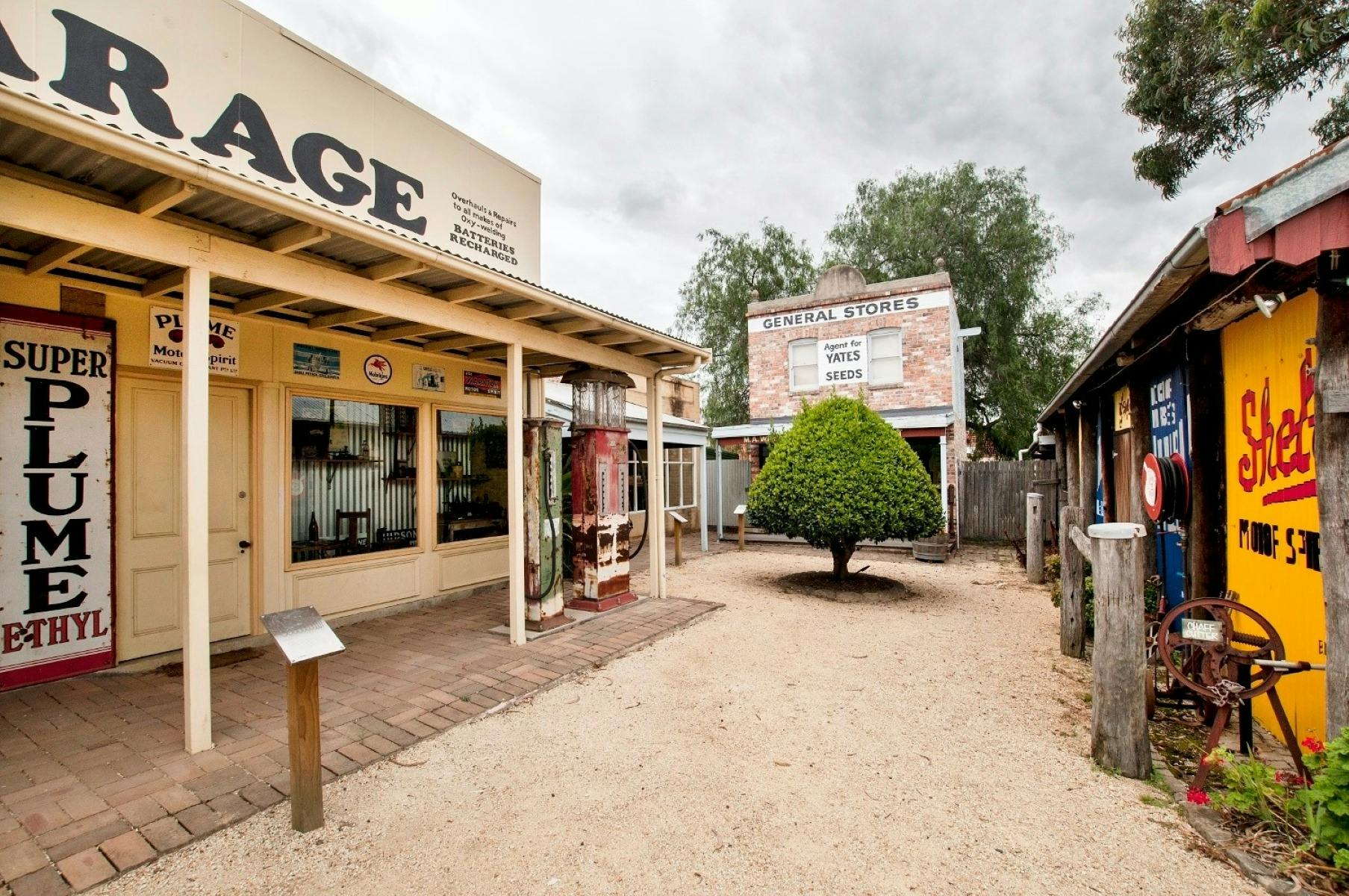
The Fairfield City Museum & Gallery (FCMG), opened in 1983, occupies a 1913 Edwardian building that originally served as the Smithfield and Fairfield Municipality Council Chambers until 1920. After decades of private ownership, the Fairfield City Council acquired the property in 1980, fulfilling the wish of its last owner, Maisie Morris, for it to become a museum. The Fairfield Historical Society’s lobbying was instrumental in its establishment.
Today, FCMG features three key areas. The original 1913 museum building is central. The popular Vintage Village transports visitors to the 1880s-1930s with recreated local businesses and homes, incorporating original and reconstructed heritage buildings. Highlights include the heritage-listed 1880s Slab Hut, a Victorian vernacular cottage, and Caversham Cottage, an 1880s Georgian-style weatherboard home. Additionally, the Stein Gallery, built in 1995 to complement the main building, hosts diverse exhibitions from local, state, and national contributors. It’s named after a pioneering local family who were foundational museum members.
The Crescent Reserve, International Monument & Clock Tower
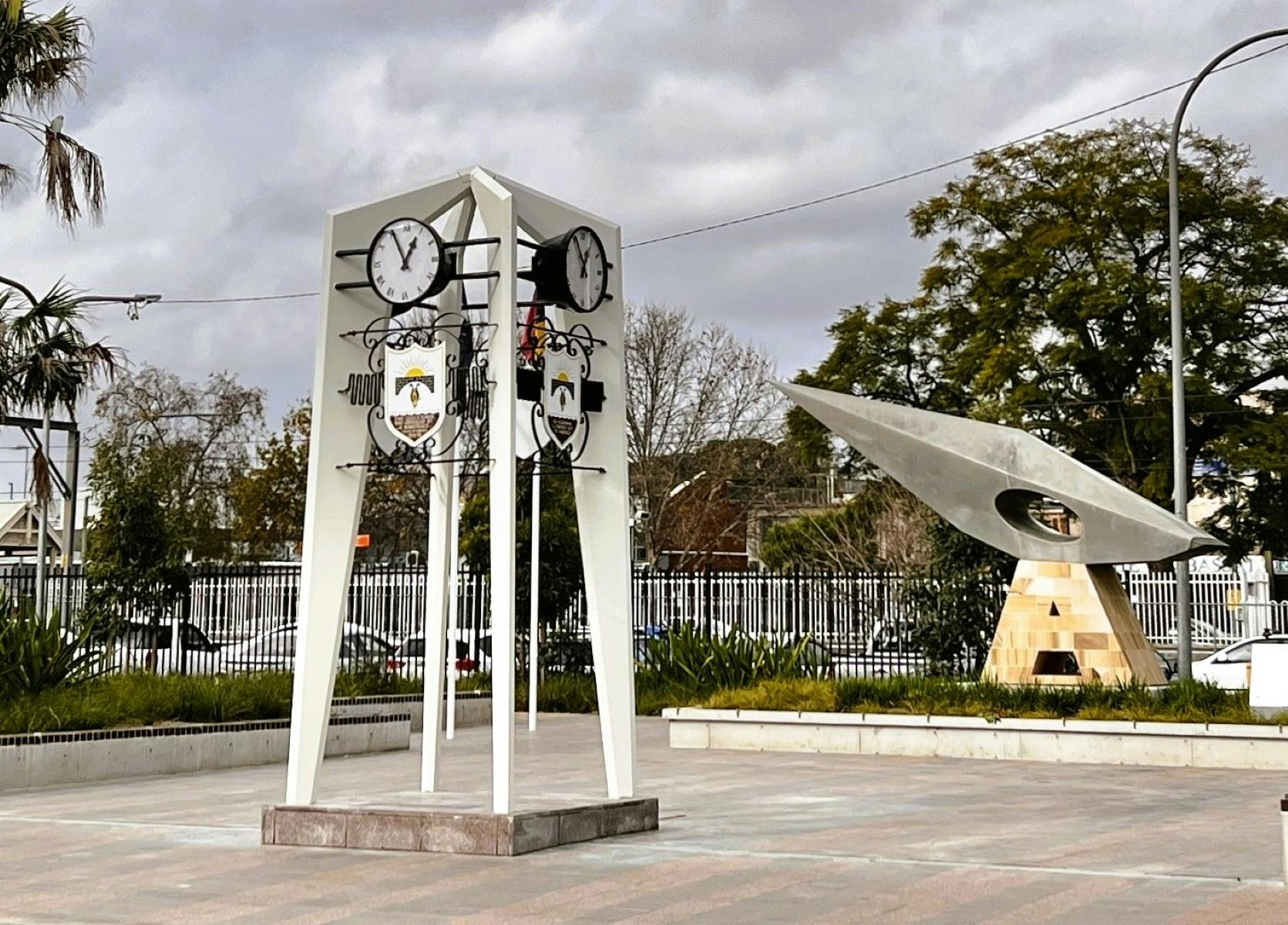
The Fairfield International Monument at The Crescent is a powerful tribute to the migrants who shaped Fairfield City, particularly those arriving before the early 1970s, predominantly from Europe. Conceived by the Fairfield Multicultural Society, a group of diverse individuals committed to honouring the many nationalities settling in the region, the monument was designed by Leonid and Yurij Denysenko.
Its symbolic design features an “A” representing Australia and Mount Ararat, while an angular form evokes a boat or plane, signifying the journey. A central opening symbolizes migrants emerging into their new homeland. Originally, a waterfall cascaded from its centre.
The Crescent also hosts other significant historical landmarks. The LJ Friend clock tower, originally installed in 1958 and recently restored, continues to mark time. Nearby is the Stimson Memorial drinking fountain, erected in 1935. The preservation of these monuments ensures future generations remember the invaluable contributions of those who journeyed to and built their lives in Fairfield.
Lansdowne Bridge
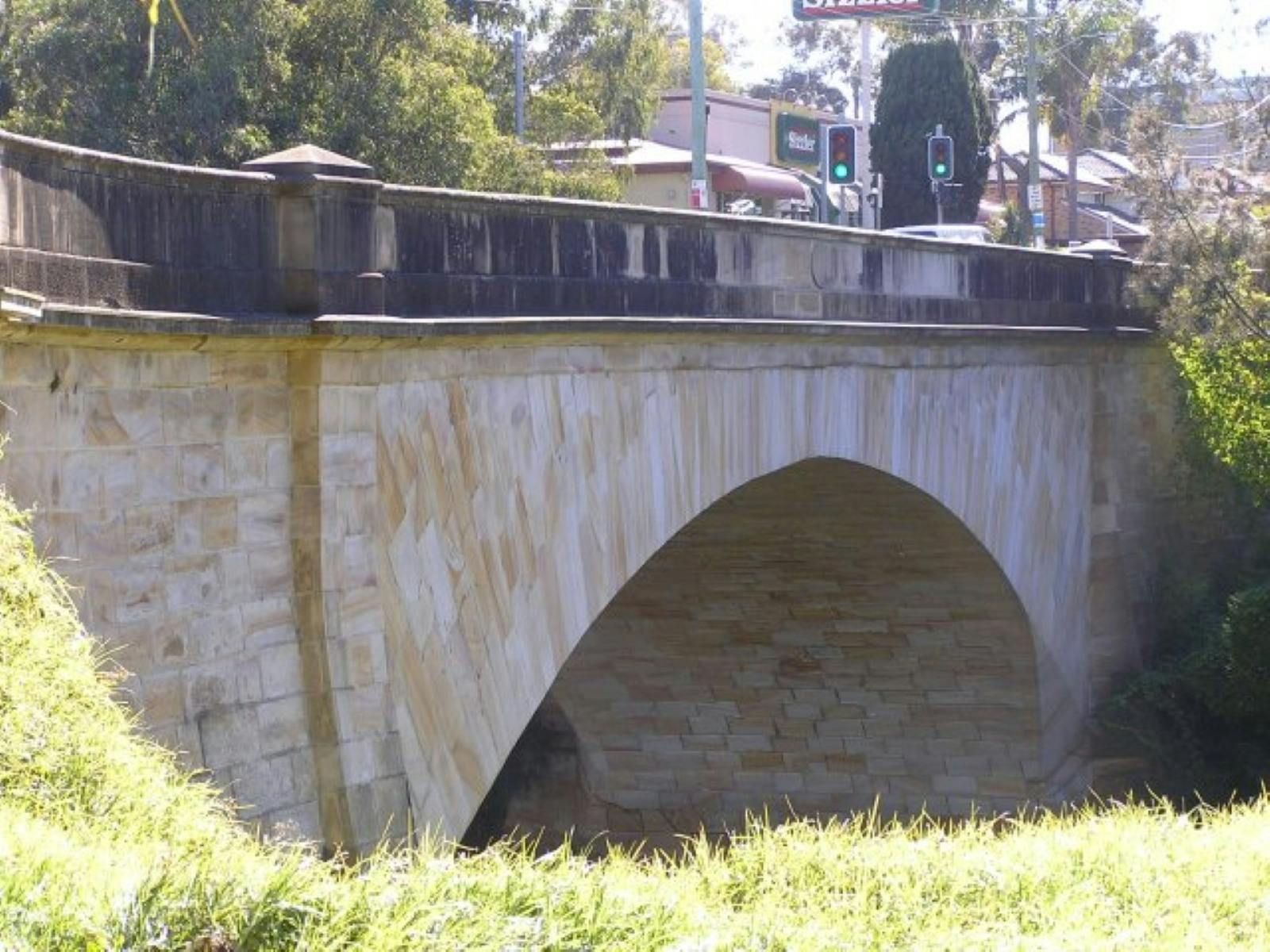
Completed in 1836, Lansdowne Bridge was a vital link on the Southern Road, funded by a £1,083 colonial government allocation. David Lennox, a skilled Scottish stonemason, arrived in New South Wales around the same time and was appointed Sub-Inspector of Bridges. By 1833, Lennox was overseeing the bridge’s construction, meticulously selecting stone from a quarry 11 km downstream and floating it to the site using tides. His workforce primarily consisted of convicts, some of whom he successfully advocated for to have their chains removed due to good conduct.
The project wasn’t without its challenges; a convict mutiny over pilfered liquor was swiftly quelled by Liverpool police. Governor Bourke laid the foundation stone on January 1, 1834, though the inscribed plate was stolen and quickly recovered. By mid-1834, Lennox began the complex process of building timber frames to support the arch. Though originally slated for a January 26, 1836 opening, minor delays pushed back completion. Once operational, tolls quickly covered costs, and by 1844, the bridge was generating significant revenue. Lansdowne Bridge stands today as a testament to Lennox’s expertise and the resilience of its builders.
Lakeside Walk – Eora Beach
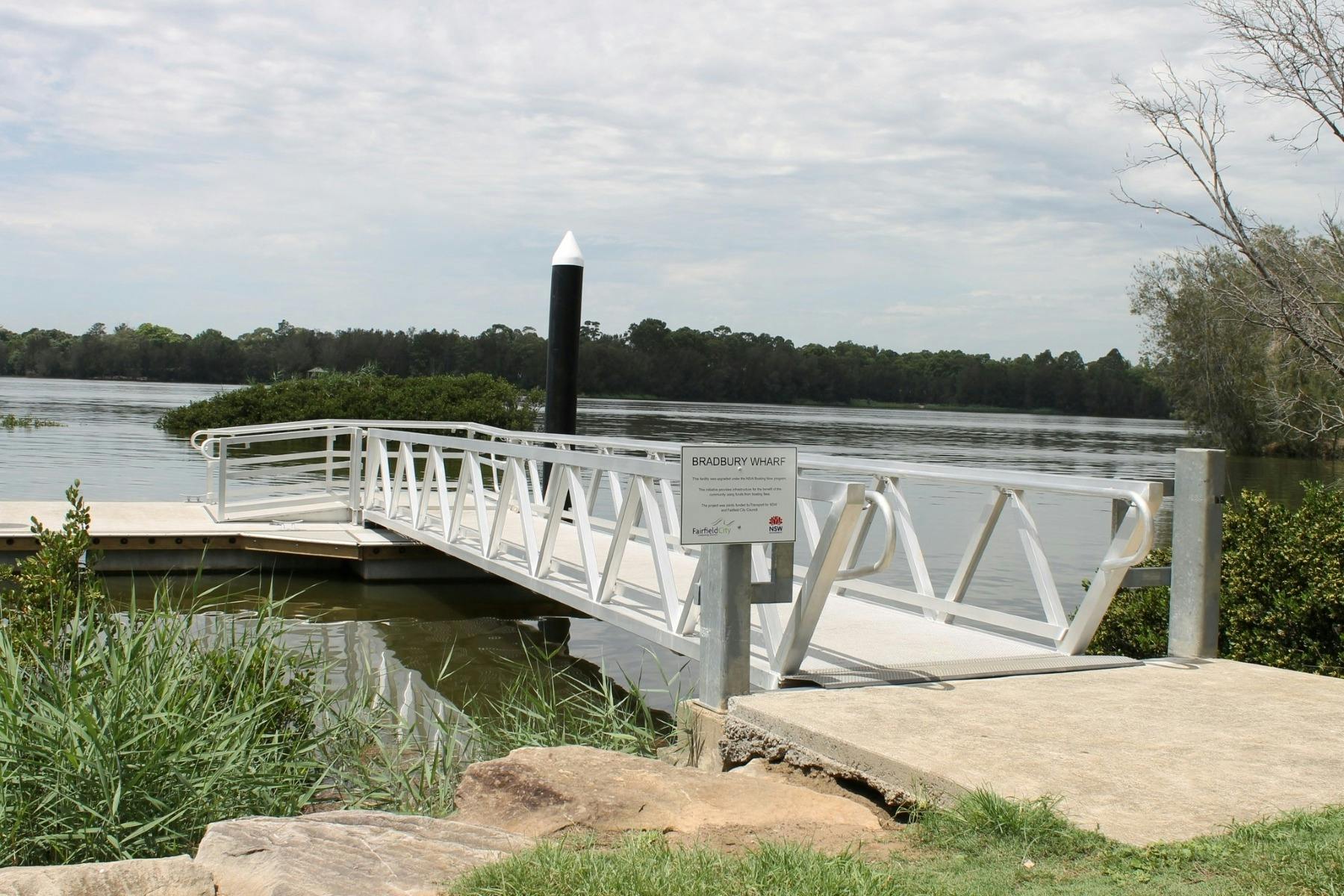
Begin your walk from the Bradbury Wharf car park, following the Lakeside Walk along the scenic shores of Chipping Norton Lake towards Eora Beach, a popular fishing spot (though swimming isn’t recommended due to poor water quality).
Chipping Norton Lake, a 49-hectare artificial lake within the Georges River system, was created in the late 1970s by deliberately flooding an area previously devastated by 1950s sand mining. Decades of environmental damage left the landscape barren until restoration efforts transformed it into a thriving wildlife reserve.
Today, the lake and its surrounding forests boast a rich ecosystem supporting over fifty bird species. The area features diverse habitats, including sedgelands, reed beds, mangroves, and endangered alluvial woodland vegetation. Managed by local councils, including Fairfield City Council, Chipping Norton Lake serves as both a wildlife refuge and a recreational area. Four islands within the lake are protected sanctuaries for native birdlife, with restricted public access. Be aware that bull sharks have occasionally been sighted in the lake’s waters.
Cabramatta Town Centre
Cabramatta stands out as one of Australia’s most vibrant and diverse communities, affectionately known as “Little Saigon.” Since the late 1970s, it has welcomed a significant influx of Southeast Asian migrants and refugees, particularly from Vietnam, Cambodia, and Laos, shaping its unique character.
The suburb’s streets are a feast for the senses, with bustling markets offering fresh produce, exotic herbs, and traditional medicines. Over 100 eateries serve up authentic Asian cuisine, from Vietnamese pho and banh mi to Thai curries, with abundant vegetarian and vegan options influenced by the local Buddhist communities.
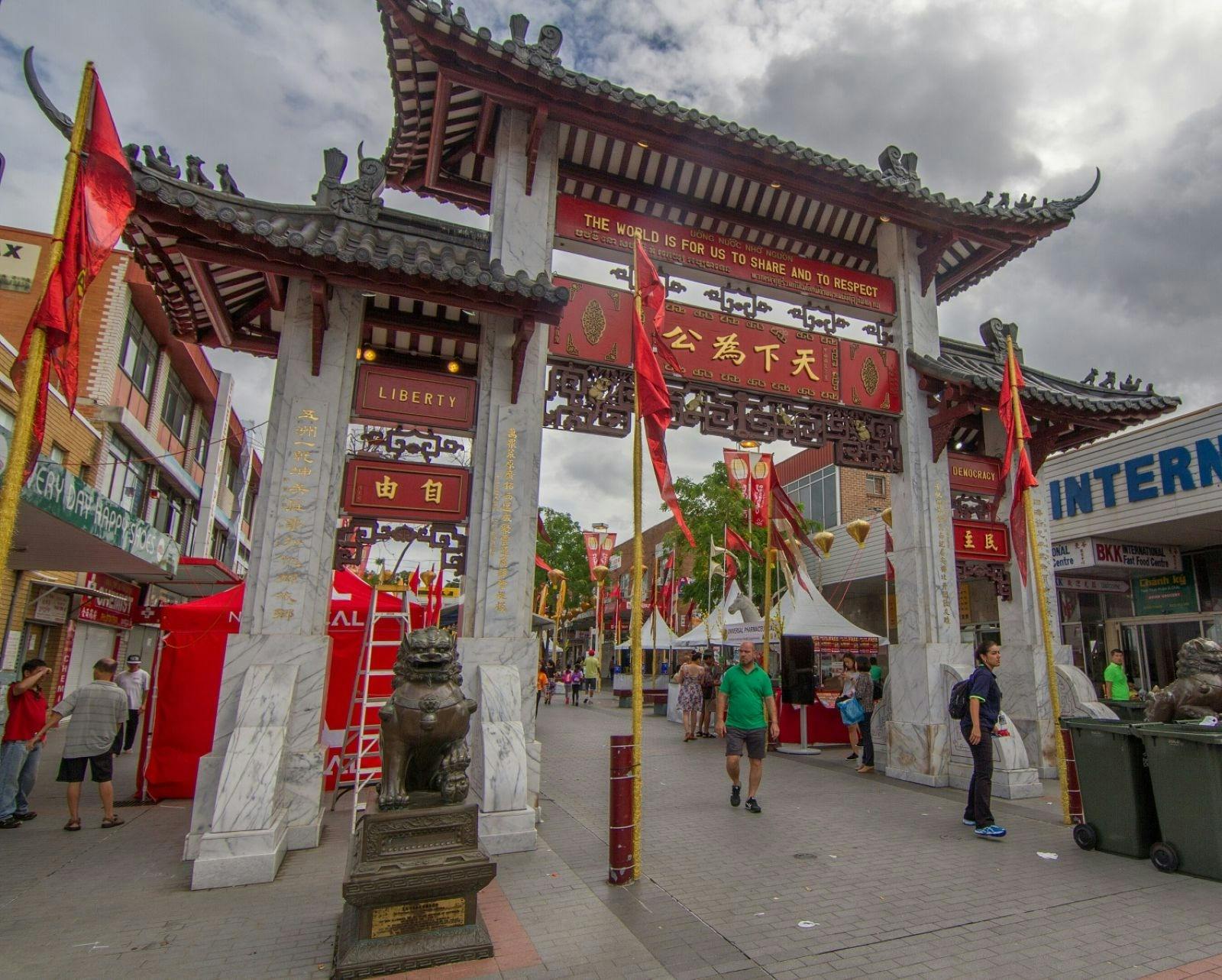
At the heart of the CBD lies Freedom Plaza, a pedestrian mall marked by the Pai Lau gateway, symbolizing liberty and democracy in five languages. Opened in 1991 during Lunar New Year, it’s a powerful emblem of multiculturalism. Nearby, Dutton Plaza, a retail precinct opened in 2016, reinvests all revenue back into the community. Just outside, Gough Whitlam Place honours the former Prime Minister and long-time local member. Each September, Cabramatta hosts one of Sydney’s largest Asian cultural events, the Moon Festival, drawing over 50,000 visitors for a day of entertainment, food, and fireworks.
Westacott Cottage
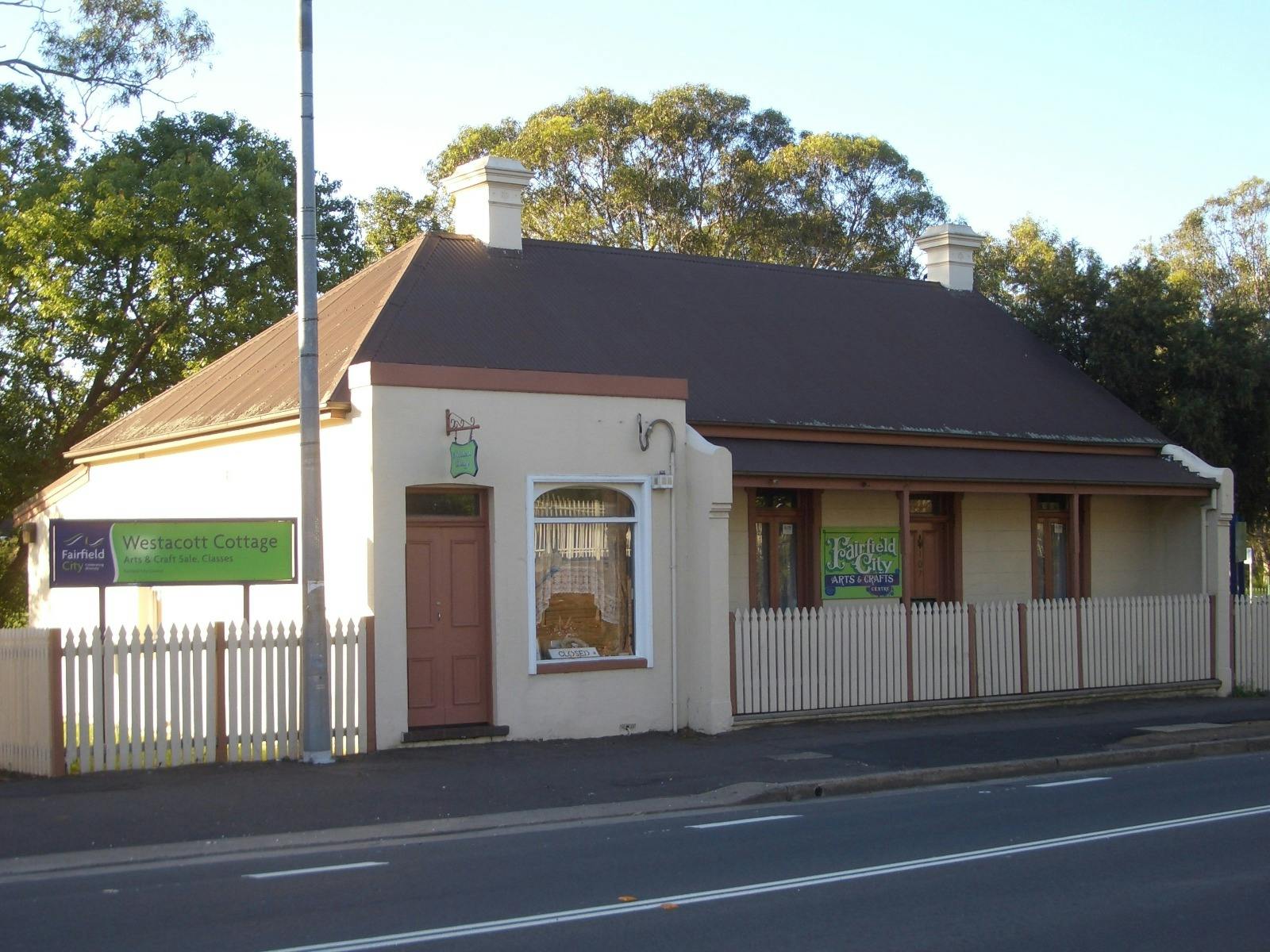
The Cottage was built by William Westacott in 1886, eight years after the creation of the nearby railway station. It was the home of Williams Westacott, his wife Ellen Mary and their children. Bill Westacott conducted a wood , coal and coke business for many years (on the site of the present car park). The two daughters also turned the front of the house into a thriving little sweet shop. Bill Denton then used the premise as a hairdressing salon and then it became a general store. In 1979, the cottage was purchased by Fairfield City Council. It was later renovated and transformed,with the assistance of a grant from the Cultural Division of the Premier’s Department, into the permanent home for the Fairfield City Arts and Crafts Group at a cost of $30,000.
The Westacott Cottage provided a venue for the Cabramatta and Districts Art Society, the Cottage China Painting Group, the Westacott Potters Group and the Hand Spinners Weavers and Dyers Guild to meet and create art works and handicrafts. It also enable the public to purchase some of these finished handcrafted goods from the cottage.
Tour details
- On demand
This business does not currently offer accessible facilities.
Operation information
Go Drivin – Sydney
Go Drivin, your gateway to exploring the country’s landscapes, histories, and cultures. At Go Drivin, every journey is an immersive experience designed to connect you with each destination. Their hands-free, self-guided trips allow you to explore iconic locations such as Mosman, Luna Park, Milsons Point, and Balmoral Beach with ease.
Discover the natural beauty of Botany Bay National Park, Kurnell, Cronulla, and the Royal National Park. Delve into the rich histories of Sutherland, Woronora, and Lucas Heights. Experience the serene landscapes of Ku-ring-gai, West Head, and Pittwater. Bask in the coastal charm of Palm Beach, Bondi, and Manly. Their trips also take you through the bustling vibes of Darlinghurst, Paddington, Centennial Park, Woolloomooloo, Rushcutters Bay, and Double Bay. Explore the Blue Mountains, Vaucluse, Watsons Bay, South Head, and The Gap.
They make every day tour or road trip an adventure, helping you uncover and learn new things about each place. With their experiential self-drive journeys, you’ll traverse the landscapes with less anxiety and more enthusiasm, creating unforgettable memories. It feels like having your own personal tour guide with their free app and website.
Transform your travels into an engaging narrative, where every stop is an opportunity to embrace the adventure. Because at Go Drivin, it’s not just about visiting a place, it’s about connecting with its soul and experiencing the journey of a lifetime.
Memberships
- Regional Tourist/Tourism Association/Organisation
- Visitor Information Centre
Plan more around this area
 Warwick Farm, NSW
 The William Inglis Hotel
The William Inglis Hotel is a luxury five-star boutique equine-themed hotel located in South West Sydney.

 Mount Pritchard, NSW
 Nightcap at Pritchards Hotel
Nightcap at Pymble Hotel offers 14 newly refurbished rooms, the hotel is ideal for travellers stopping over in Pymble from the central coast or Sydney.
 Parramatta, NSW
 SKYE Suites Parramatta
Perfectly situated at the heart of Parramatta city, SKYE Hotel Suites Parramatta offers designer interiors that merge inspiration, connectivity and comfort.
 Parramatta, NSW
Mantra Parramatta
Mantra Parramatta is the ideal choice when mixing business with pleasure, just minutes from ANZ Stadium, The Olympic Park at Homebush Bay, and central Parramatta.


 Bass Hill, NSW
 Rydges Bankstown Sydney
Rydges Bankstown Sydney hotel offers warm, contemporary, refreshing and welcoming accommodation.
 Harris Park, NSW
 Urban Rest Parramatta
Experience the finest of premium living that sets a groundbreaking new standard for accommodation in the area.
 Wetherill Park, NSW
 Volcanos Steakhouse – Wetherill Park
Volcanos Steakhouse is all about fresh flavours and quality dishes. The modern Australian menu features a fantastic range of steaks, ribs and burgers.
 Canley Heights, NSW
 Salty Cafe
Nestled in the heart of Canley Heights, Salty Cafe is your go-to spot for unbeatable coffee and smoothies, all-day brunch, and laid-back vibes.
 Canley Heights, NSW
 Kickin' Inn
At Kickin' Inn, Cajun seasoning isn't just a spice mix—it's the heart and soul of the dishes.
 Canley Heights, NSW
 Huong Xua Canley Heights
Step into a world of rich tradition and bold flavours at [Your Restaurant Name], where we bring the heart of Northern Vietnam to your table.
 Canley Vale, NSW
 Bar 53
With a bar in the kitchen, a dance party in the garden and an eatery in the lounge room, there's no place like Bar53.
 Canley Vale, NSW
 TK Something BBQ Buffet Restaurant
As an asian-fusion restaurant inspired by Korean BBQ, they offer a diverse blend of Asian flavours, including Korean, Vietnamese, Chinese, Thai, and Laotian cuisines.
