
Stories You Wear – Magpie Goose
Highlights
- Explore vibrant First Nations designs at the Museum of Brisbane, showcasing cultural stories through unique fashion pieces.
- Connect with talented Aboriginal artists like Amanda Hayman and Troy Casey, celebrating their rich heritage and creativity.
- Experience a family-friendly environment with convenient facilities, ensuring a comfortable visit for everyone.
- Discover the impact of fashion as storytelling, highlighting the significance of each garment in First Nations culture.
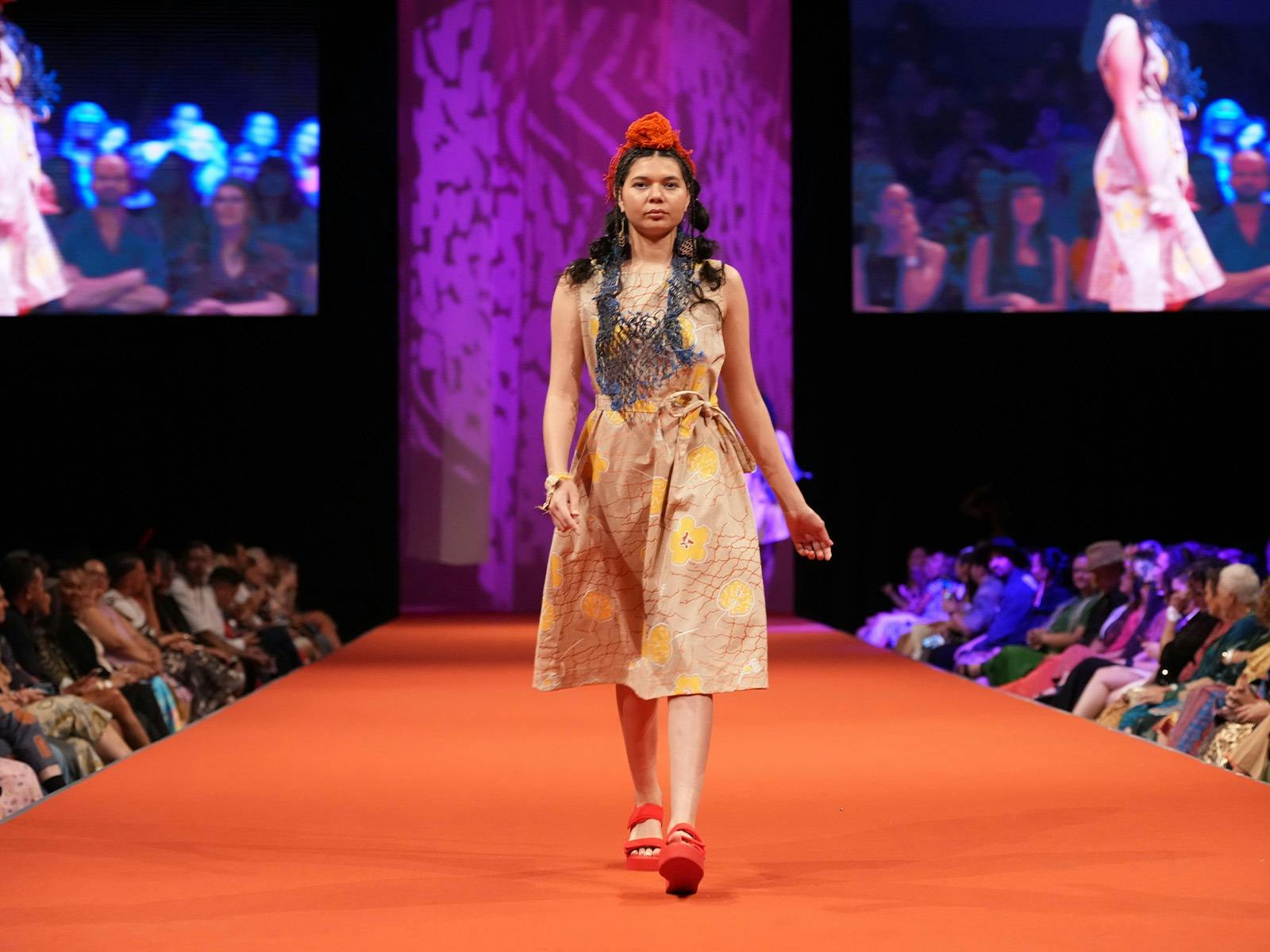
Museum of Brisbane is excited to collaborate with Magpie Goose, a proudly Aboriginal owned and led fashion and social enterprise, to celebrate extraordinary First Nations cultural stories and designs.
This exclusive to Brisbane exhibition, developed in close collaboration with Magpie Goose owners Amanda Hayman (Wakka Wakka and Kalkadoon) and Troy Casey (Kamilaroi), offers a deep dive into the work of some of the region’s most talented First Nations artists and designers. Using clothing as a canvas for storytelling, this exciting collaboration will connect audiences with the rich and diverse cultural expressions of First Nations communities in Queensland and beyond.
Discover the artists and stories behind the brand that’s making a difference, one garment at a time.
Stories You Wear: Magpie Goose is supported by the Queensland Government through Arts Queensland
Image: Magpie Goose x Quandamooka Artists, by Amanda Hayman & Troy Casey, Country to Couture, 2025, Photo by Dylan Buckee.
Images and Video
Dates & times
- Next occurrence: reoccurring
Features
Actively welcomes people with access needs.
General access

- Offers multiple options for booking – web, email, phone is available.
- Offers a range of contact methods for receiving complaints.
- Companion Cards are accepted.
- Employs people with disabilities.
- Staff are trained in disability awareness.
- Accessibility information and photos, including of a bathroom, room and/or floor plan on their website (can be emailed on request).
- Asks all visitors if there are any specific needs to be met.
- Website meets <a href="https://www.w3.org/WAI/standards-guidelines/wcag/" target="_blank">WCAG 2.0</a> accessibility standards
- Advise tour guides of the access needs of guests at the time of booking (includes pick up and drop off requirements)
- Assistance with booking arrangements (includes providing clear itineraries with written instructions on what to do at various destinations)
Communication

Welcomes and assists people who have challenges with learning, communication, understanding and behaviour. (includes people with autism, intellectual disability, Down syndrome, acquired brain injury (ABI), dyslexia and dementia)
- Staff are trained in communicating with people with learning or behavioural challenges.
- Uses Plain English / easy read signage and information (includes menus and emergency information)
- A quiet space is available at the venue/ facility.
Vision

Caters for people who are blind or have vision loss.
- Uses easy to read fonts in their signage and communication materials (Helvetica and Arial).
- Staff are trained in customer service for people with vision loss (training would incorporate way finding and communicating with people with vision loss).
- Raised tactile buttons in lifts are available.
- Handrails on all stairways
Hearing

Caters for people who are deaf or have hearing loss.
- Staff are trained in communicating with people who are deaf or have hearing loss.
- Volume controlled phones are available.
- Visual alerts for emergencies (Include flashing light) are available.
- A low noise reception areas with hearing loss friendly acoustics and adequate lighting for viewing facial expressions (includes common areas which are free of background noise, background music) is available.
Physical – Mobility

Caters for people with sufficient mobility to climb a few steps but who would benefit from fixtures to aid balance. (This includes people using walking frames and mobility aids)
- Grab rails in the bathroom
- Seating in common areas including reception area
Physical – Wheelchair

Caters for people who use a wheelchair.
- Step free outdoor pathways (includes picnic areas, barbecues and shelters)
- A doorbell or intercom at an accessible height and display a contact number (accessible height is 900mm-1100 mm)
- A step free main entrance to the building and/or reception area (includes ramps or slopes with a maximum gradient of 1:14, otherwise are too steep for wheelchairs)
- Step free access to restaurant, lounge and bar
- Step free access to the conference or function room
- Accessible seating areas in theatrette
- Lifts with enough space for people using a mobility aid to enter and turn around to use the lift buttons. Buttons are at accessible height.
- Doorways which are easy to open and have lever handles (doorways 850mm or wider when open and not heavy).
- An accessible public toilet which is unlocked.
- A wheelchair/scooter charging station (power point) in an accessible location is available.
- At least one wheelchair accessible parking space with wheelchair accessible signage clearly displayed (International standards are 3200mm wide x 2500 mm high).
- Wheelchair accessible transport options available in the general vicinity (provide information on name of the operator, phone and website link to individual providers for private vehicles, community transport train, mini vans, hire cars, buses, taxis, ferry, tram, light rail etc in their access statement).
Allergies and intolerances

Caters for people with allergies and intolerances.
- Modify their cooking and cleaning practices to cater for people with food allergies or chemical intolerances (could include menus with meals free from: nuts, dairy, seafood, eggs, gluten etc).
- Complies with The Food Authority requirements for allergy management in food preparation.
- Equipment to respond to anaphylactic shock such as epi–pens and defibrillator.
Access & Inclusion

An access and inclusion statement is available on the business website.
- https://www.museumofbrisbane.com.au/visit-us/access/
Plan more around this area
 Brisbane City, QLD
 Oaks Brisbane on Felix Suites
Oaks Felix is located in the central business district – Brisbane's prestigious financial and restaurant district.

 Brisbane City, QLD
 Oaks Brisbane on Charlotte Suites
Oaks Charlotte Towers is perfectly positioned in the heart of Brisbane City's business and financial district.
 Brisbane City, QLD

The Sebel Brisbane
For stylish hotel accommodation in the very heart of Brisbane, look no further than The Sebel Brisbane.

 Brisbane City, QLD
 Spire Residences by CLLIX
Spire Residences by CLLIX offers stylish, self-contained accommodation in the heart of Brisbane's CBD.

 Brisbane City, QLD
Hyatt Regency Brisbane
Hyatt Regency Brisbane, a place to connect, unwind and thrive – where history, community and modern comfort meet in the heart of Brisbane city.
 Brisbane City, QLD
 Brisbane Marriott Hotel
The multi award winning Brisbane Marriott Hotel is the epitome of elegance.
 Brisbane, QLD
 Supernormal
A new addition to the river boardwalk, Supernormal is a contemporary city bar & dining room – the ideal meeting and watching place.
 Brisbane, QLD
Goldfinch Restaurant and Street Cafe
Goldfinch. An airy, light-filled space, a friendly green oasis away from the city’s hustle and bustle.
 Brisbane City, QLD
 Goldfinch Easter High Tea
The Goldfinch Restaurant at Pullman & Mercure Brisbane King George Square will host a family-friendly Easter High Tea across the two weekends leading into Easter.
 Brisbane City, QLD
 Club Felix
Ascend into a world of delicious drinks and seductive surrounds, where the night comes alive with stories whispered over exquisite cocktails.
 Brisbane City, QLD
 Naldham House – Brasserie and Terrace
Naldham House is inspired by grand hotel lobbies of the world and the culinary delights of the fine brasseries of Europe.
 Brisbane City, QLD
 The Fifty Six
They strive to respect the foundational pillars of Cantonese cuisine; freshness, balance and elegance.
