Born or Built? Our Robotic Future
Highlights
- Explore interactive displays that challenge your understanding of AI and humanity at the Townsville exhibition.
- Engage in hands-on activities that spark curiosity and foster family conversations about technology's role in our lives.
- Test AI's conversational skills and discover robots' emotional recognition abilities for a thought-provoking experience.
- Enjoy family-friendly facilities, including a café and gift shop, enhancing your visit to this captivating exhibition.
Are we born or are we built? What makes us human in a world of robots, artificial intelligence (AI) and ever-evolving technology?
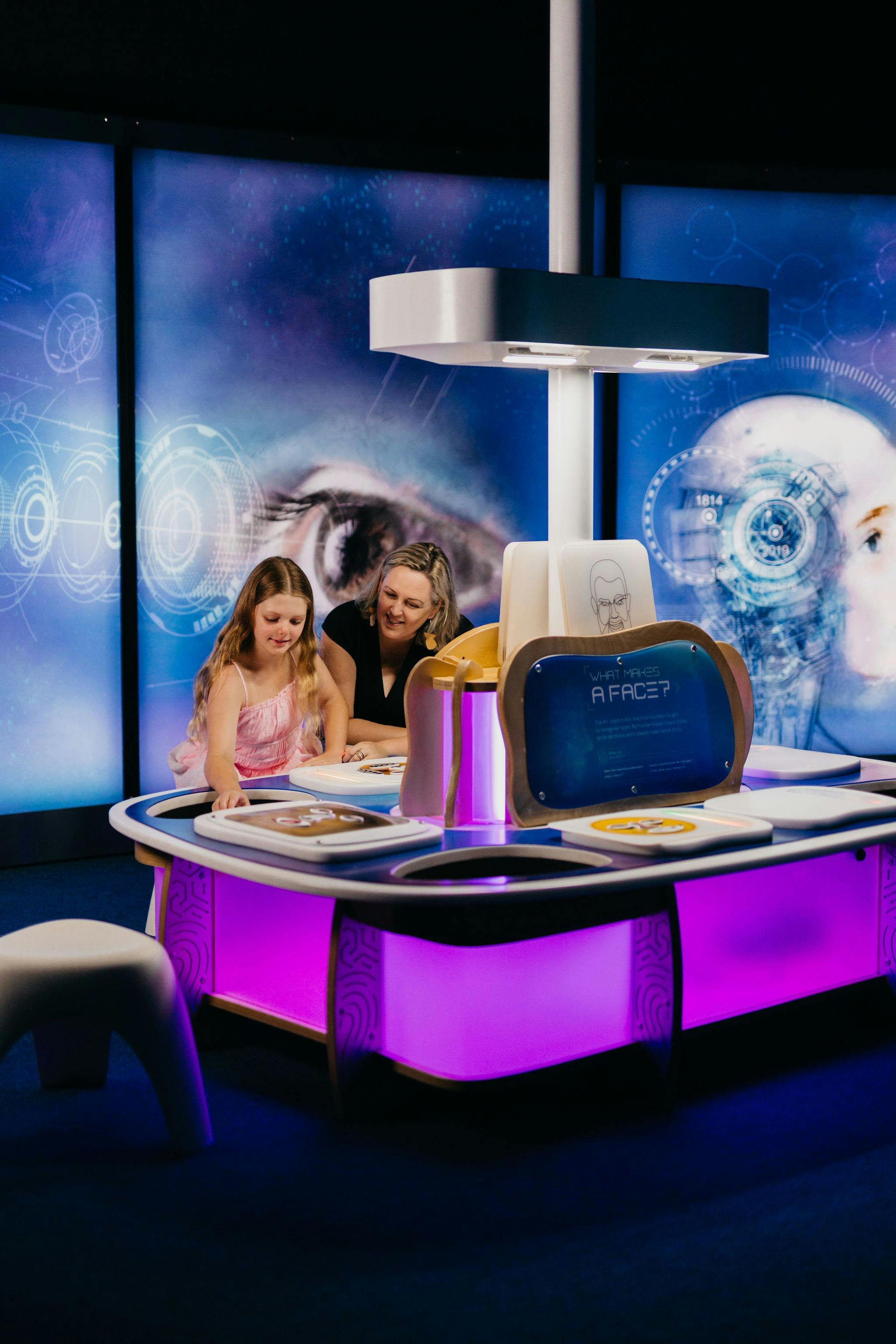
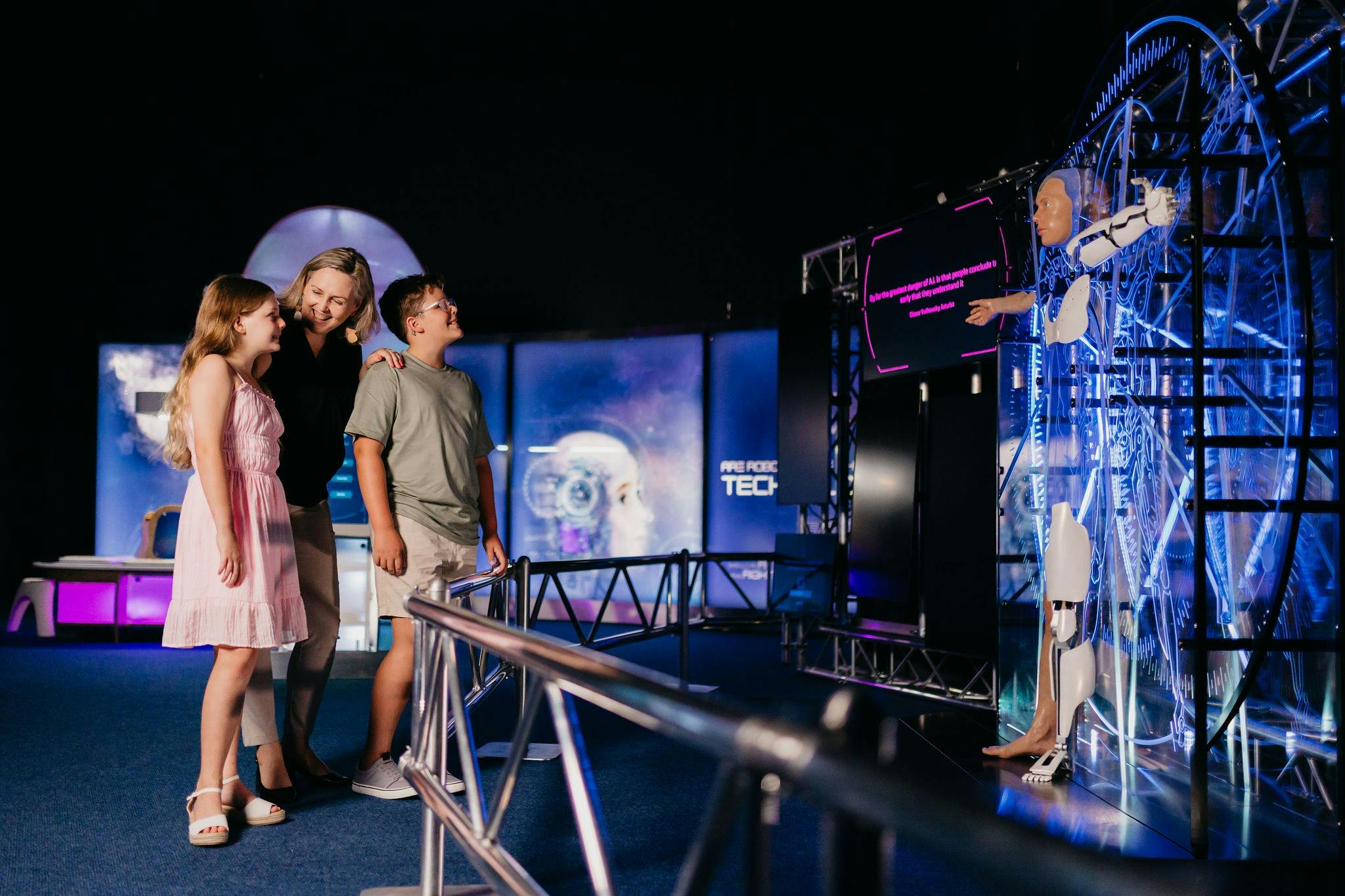
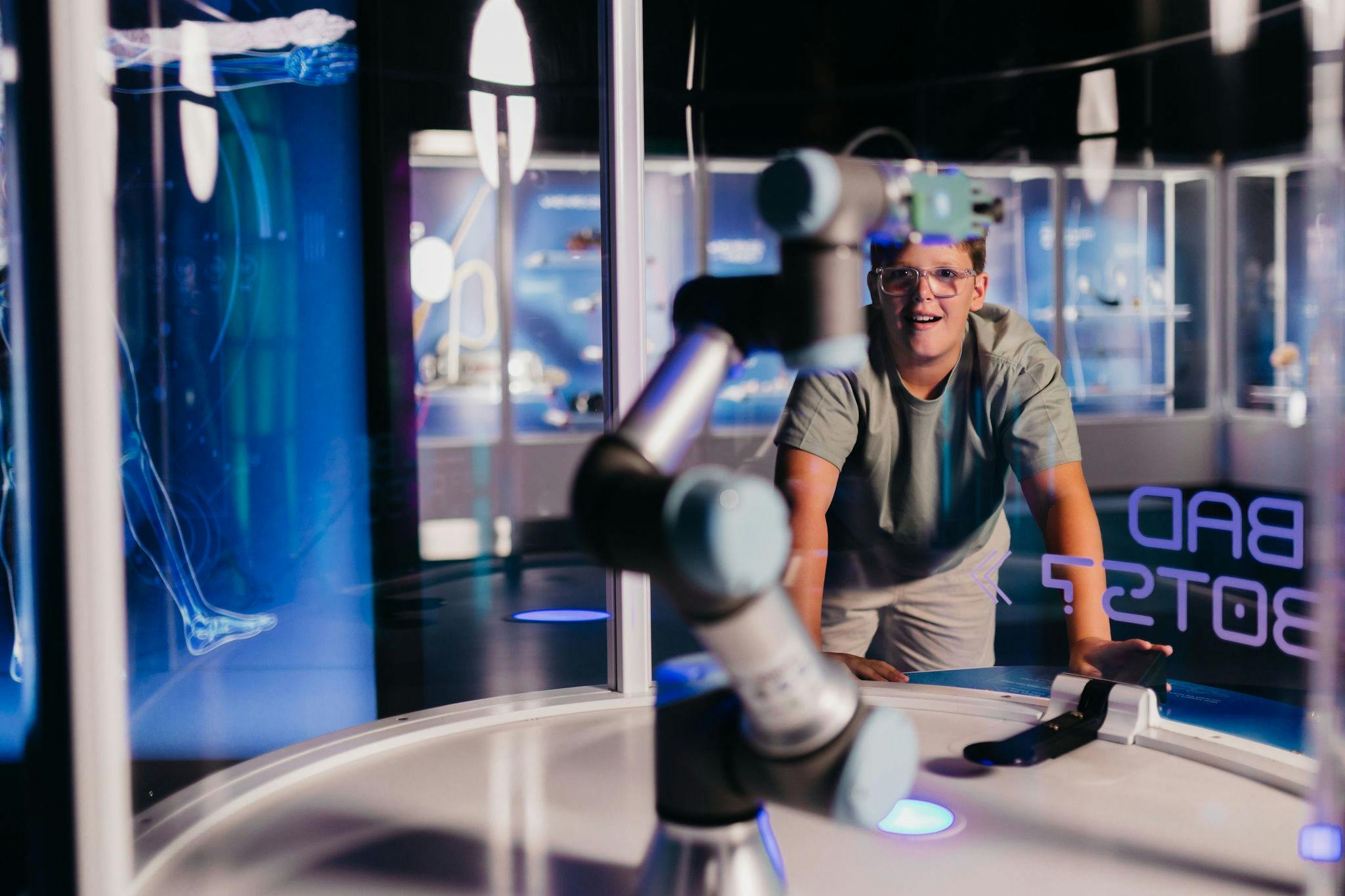
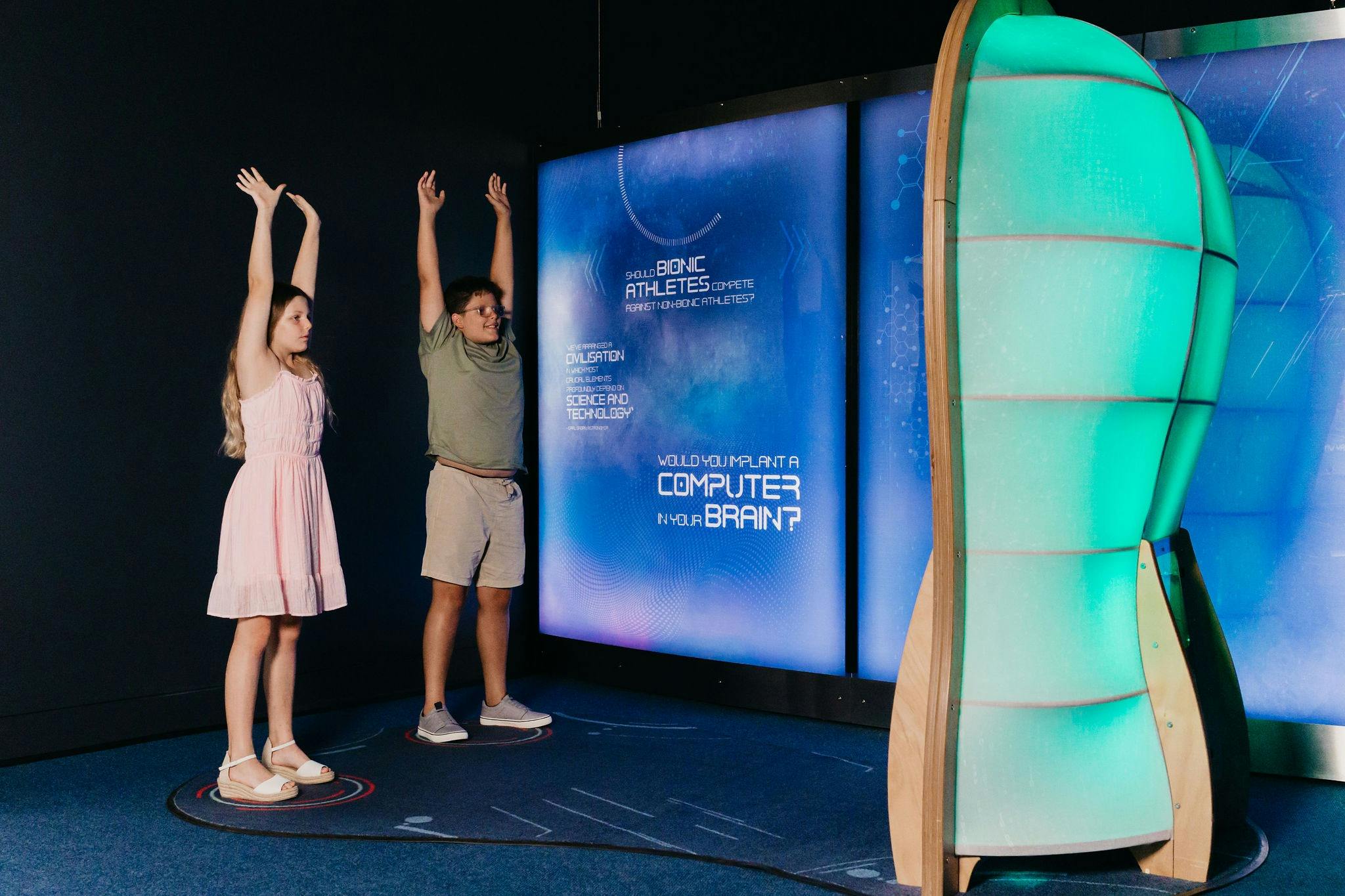
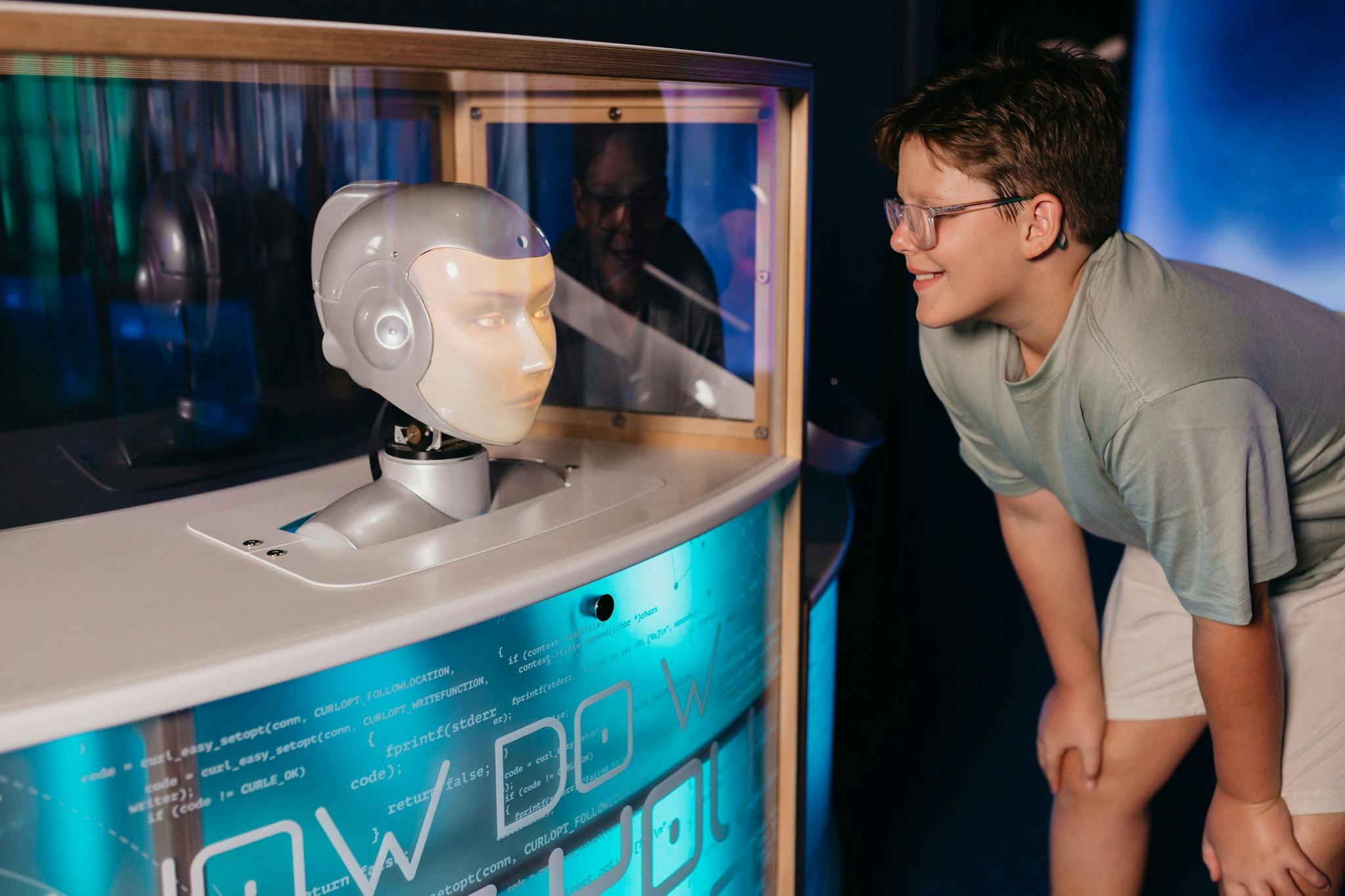
Born or Built? The Robotic Future is an inspiring and interactive exhibition for the whole family that explores the fascinating relationships between humans and machines.
Enter the intriguing world of robots and explore the big questions about how technology is shaping our lives and what it really means to be human in a society where machines are becoming more like us.
Through hands-on activities and thought-provoking displays visitors can test how intelligent AI really is in conversation, discover whether robots can read emotions and even share their thoughts on the big ideas that are influencing tomorrow’s world.
From prosthetics and implants that enhance the human body to brainwave-reading, this next-gen exhibition encourages families to play, learn and explore technology together in a fun and interactive way.
Whether you’re a curious kid, a tech-loving teen or an adult fascinated by the future, Born or Built? will ignite wonder and spark both exciting and important conversations for that continue long after your visit.
Born or Built? The Robotic Future is a travelling exhibition from Questacon – The National Science and Technology Centre.
Images and Video
Dates & times
- Next occurrence: reoccurring
Features
Tags
Actively welcomes people with access needs.
General access

- Offers multiple options for booking – web, email, phone is available.
- Offers a range of contact methods for receiving complaints.
- Companion Cards are accepted.
- Employs people with disabilities.
- Staff are trained in disability awareness.
- Accessibility information and photos, including of a bathroom, room and/or floor plan on their website (can be emailed on request).
- Asks all visitors if there are any specific needs to be met.
- Website meets <a href="https://www.w3.org/WAI/standards-guidelines/wcag/" target="_blank">WCAG 2.0</a> accessibility standards
- Advise tour guides of the access needs of guests at the time of booking (includes pick up and drop off requirements)
Vision

Caters for people who are blind or have vision loss.
- Information in large print is available.
- Uses easy to read fonts in their signage and communication materials (Helvetica and Arial).
- Audio enabled lifts are available.
- Raised tactile buttons in lifts are available.
- Handrails on all stairways
- Exit signs which are visible at a ground level (high level signs are difficult to see in a fire) are available.
Physical – Mobility

Caters for people with sufficient mobility to climb a few steps but who would benefit from fixtures to aid balance. (This includes people using walking frames and mobility aids)
- Uses floors/coverings which are slip resistant, firm and smooth
- Uses non-slip tiles in the bathroom or slip resistant matting
- Grab rails in the bathroom
- Seating in common areas including reception area
Physical – Wheelchair

Caters for people who use a wheelchair.
- Step free outdoor pathways (includes picnic areas, barbecues and shelters)
- A step free main entrance to the building and/or reception area (includes ramps or slopes with a maximum gradient of 1:14, otherwise are too steep for wheelchairs)
- Step free access to restaurant, lounge and bar
- Accessible seating areas in theatrette
- Lifts with enough space for people using a mobility aid to enter and turn around to use the lift buttons. Buttons are at accessible height.
- An accessible public toilet which is unlocked.
- At least one wheelchair accessible parking space with wheelchair accessible signage clearly displayed (International standards are 3200mm wide x 2500 mm high).
Allergies and intolerances

Caters for people with allergies and intolerances.
- Modify their cooking and cleaning practices to cater for people with food allergies or chemical intolerances (could include menus with meals free from: nuts, dairy, seafood, eggs, gluten etc).
- Staff are trained to respond to allergic reactions.
Plan more around this area
 Townsville City, QLD
 Rambutan Townsville
Rambutan is Australia's first ever resort-style backpacker hostel offering an impressive 58 rooms to accommodate a multitude of travellers in the heart of Townsville.
 Townsville, QLD
 Aligned Corporate Residences Townsville
Aligned Corporate Townsville offers a competitive and spacious alternative to hotel style accommodation.
 South Townsville, QLD
 Park Regis Anchorage
Park Regis Anchorage is a welcoming oasis in the heart of Townsville, Australia's largest tropical city.
 South Townsville, QLD
 Rydges Townsville
Rydges Southbank Townsville is centrally located on Palmer Street in the heart of Far North Queensland's capital.
 Townsville, QLD
 Grand Hotel and Apartments Townsville
The multi award winning Grand Hotel and Apartments Townsville is ideally located in the heart of Townsville's premier dining precinct and close to the Strand.

 Townsville, QLD
 Oaks Townsville Gateway Suites
Oaks Townsville Gateway Suites is Townsville's next generation in resort-style accommodation. Located on the waterfront and conveniently close to the Central Business District fringe.
 Townsville City, QLD
 Flinders Street Wharves
Home to Yards Bar, Merchants Bar, the Beer Garden, Rooftop and The Kiosk, offering a diverse mix of dining, drinks and event spaces.
 South Townsville, QLD
 Tiny Mountain Brewery
In the shadow of Townsville's Castle Hill, you'll find Tiny Mountain Brewery—an independent brewery with a big personality.
 South Townsville, QLD
 Levanti Restaurant
A Sophisticated Fusion of Mediterranean and Australian Fine Dining in Townsville Nestled in the lively heart of Townsville,
 South Townsville, QLD
 The Metropole Hotel
With over 100 years of charm, The Metropole has been a go-to for generations.
 Townsville, QLD
 Townsville Brewing Co.
The Townsville Brewery has been providing unique and original craft beer to the local area since 2001.
 Townsville City, QLD
 Quarterdeck
The Quarterdeck offers alfresco, casual dining by day. Playground by night. Welcome to Quarterdeck: Restaurant. Bar. Icon.
