
Images and Video




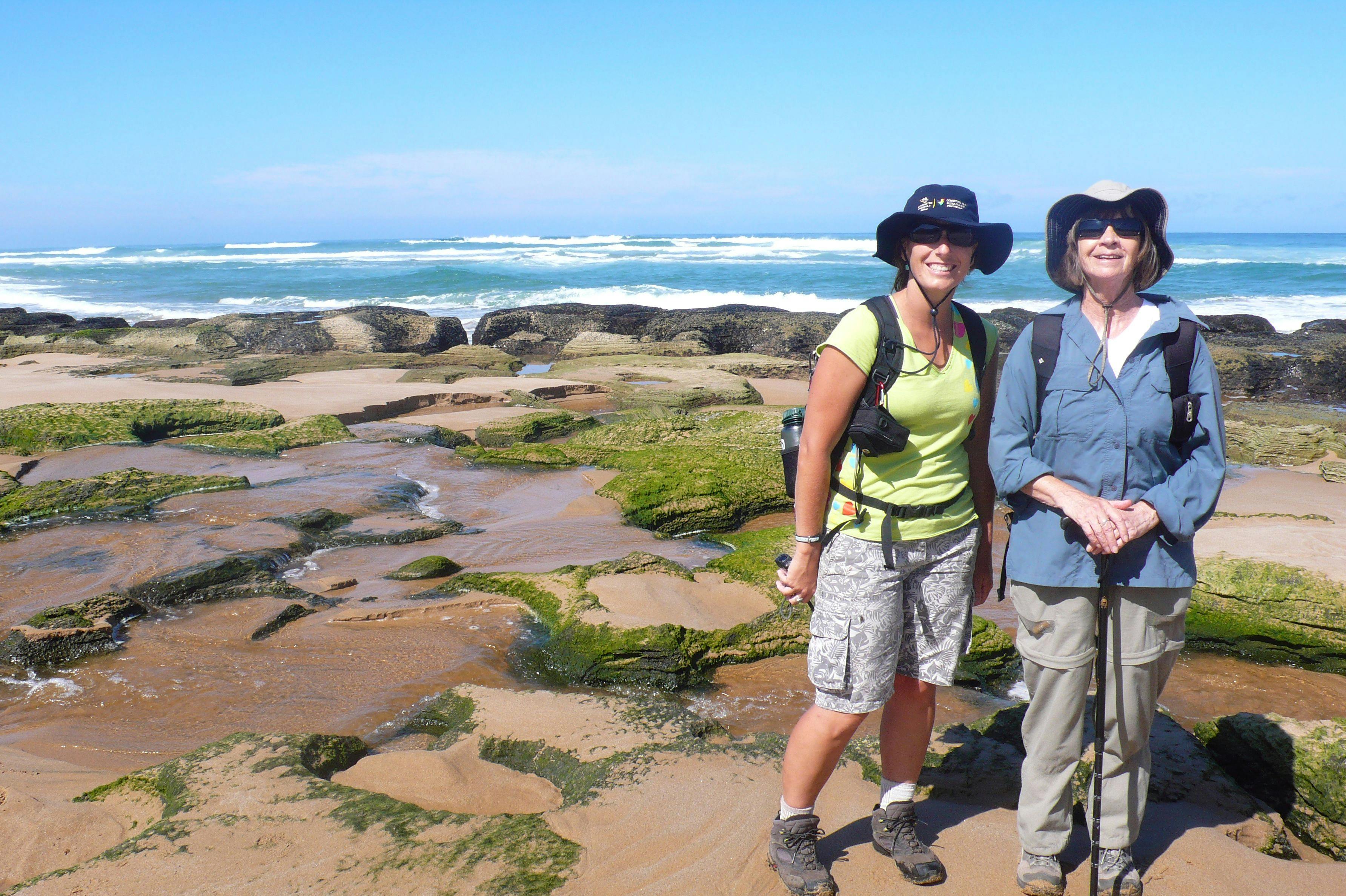

Great Ocean Walk -7 Day Group-Guided
Highlights
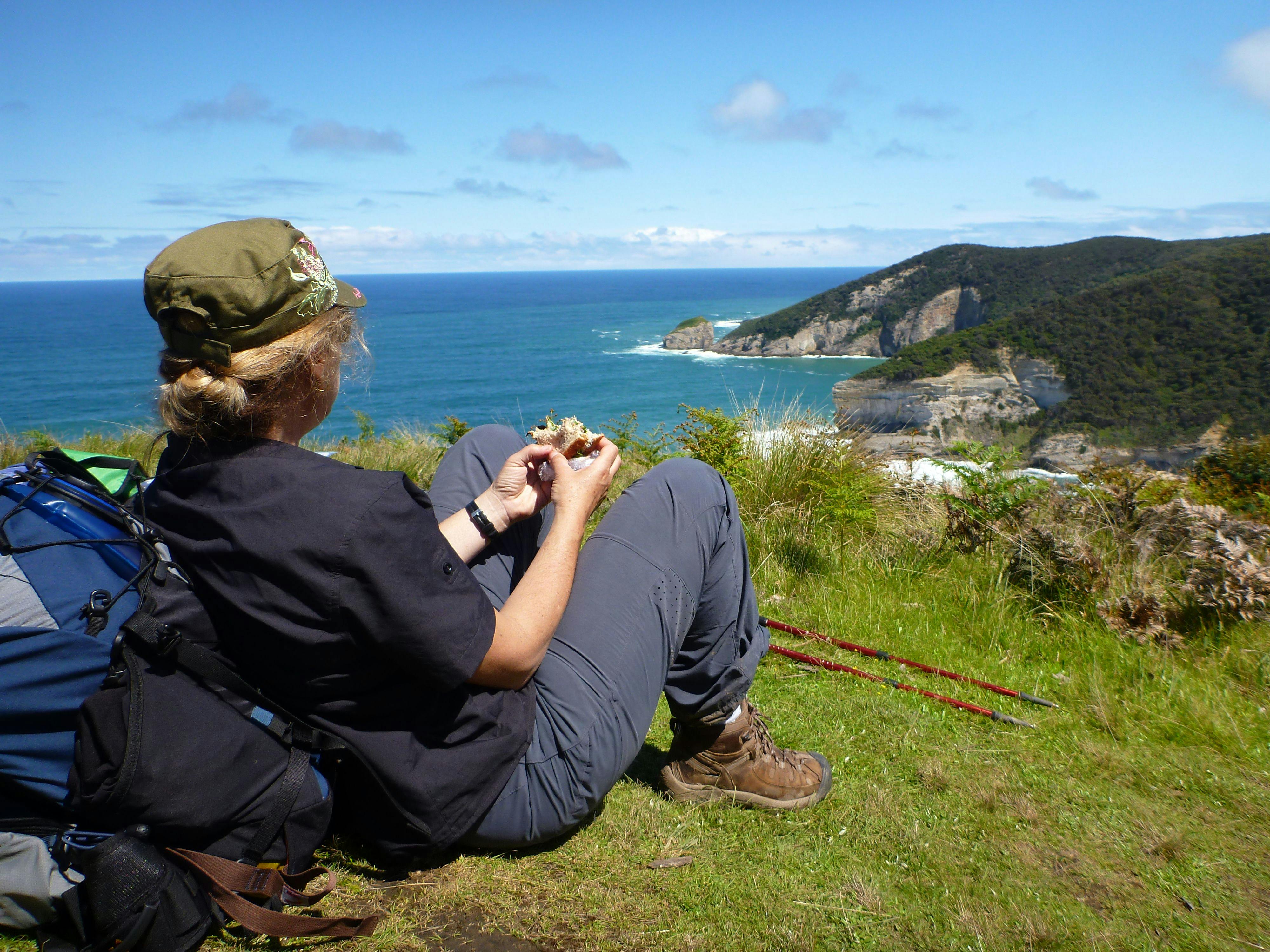
- Explore 104km of breathtaking coastal scenery, immersing yourself in one of Australia’s most iconic walks.
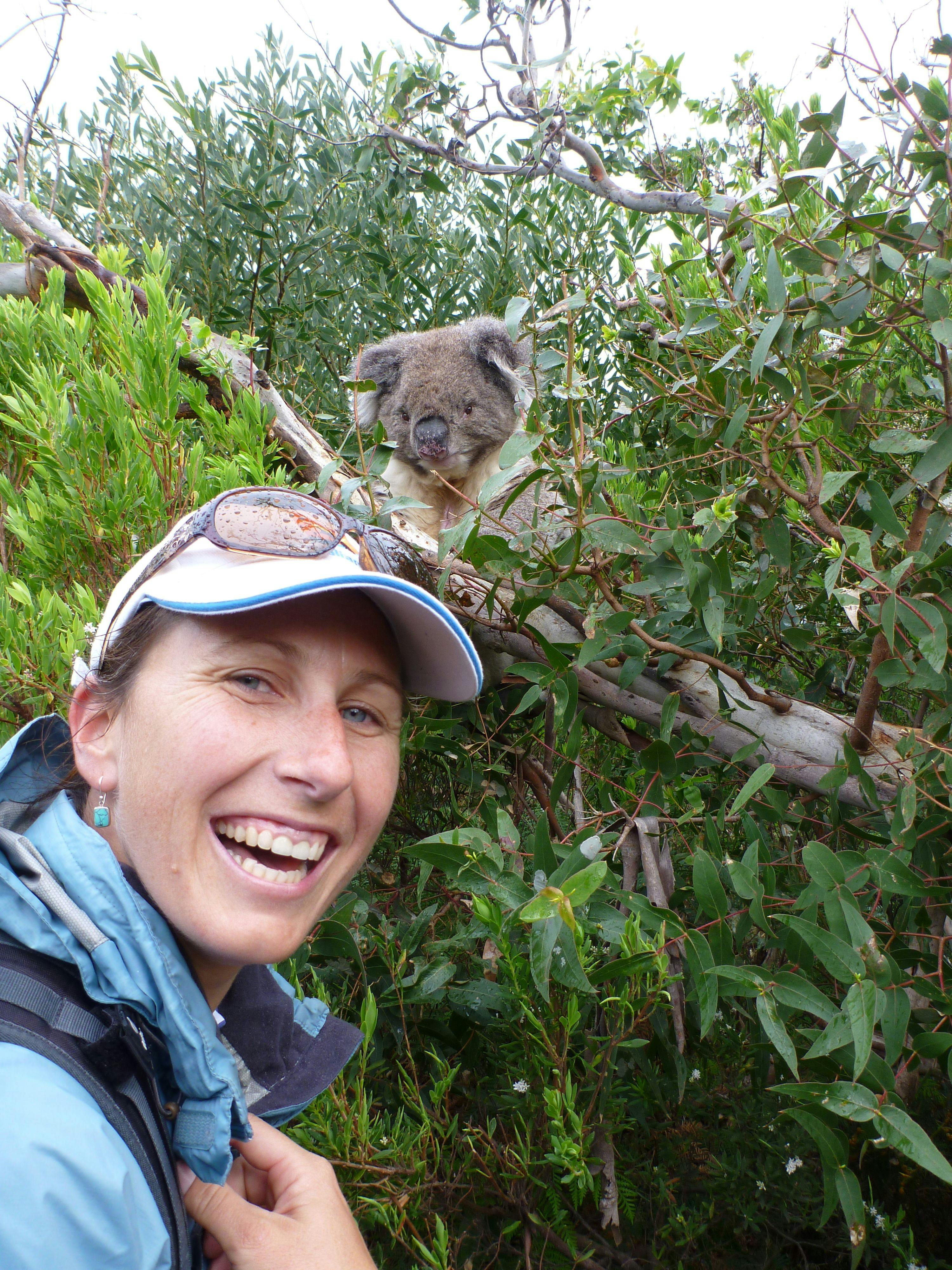
- Encounter koalas in manna gums, enhancing your wildlife experience along the stunning Great Ocean Walk.
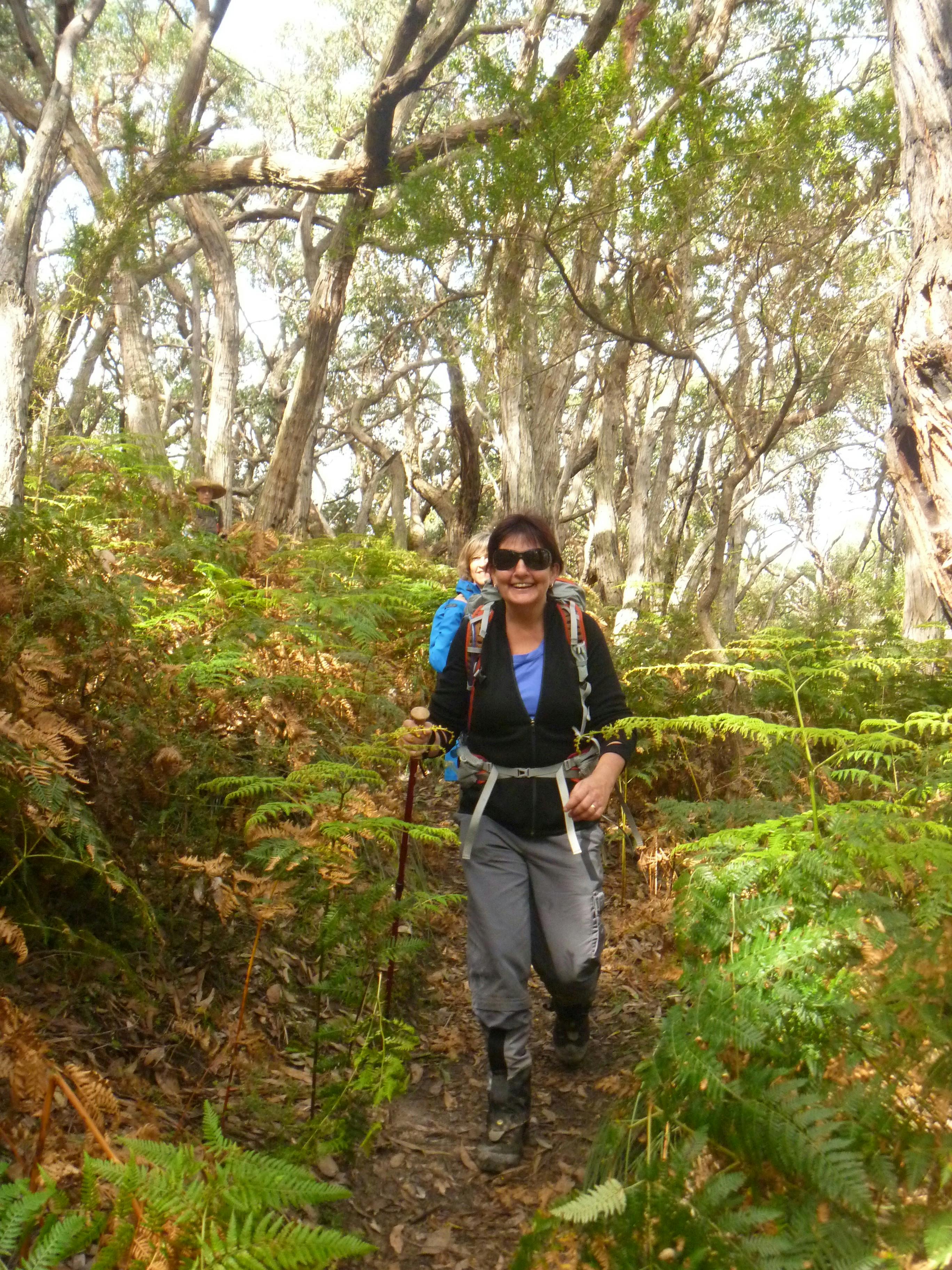
- Wander through towering Mountain Ash forests, surrounded by the tallest flowering plants in the world.
- Stroll along pristine beaches, soaking in the natural beauty of Australia’s diverse landscapes.
With its breathtaking coastal scenery, magnificent forests, abundant wildlife and sheer diversity of landscape, the Great Ocean Walk bears the mantle of being one of Australia’s most iconic walks.
Walk the 104km Great Ocean Walk track from end to end as it meanders its way through manna gums with koalas only a few steps away, to traversing massive sea cliffs that have made this location famous. Step through giant Mountain Ash forest, beneath the tallest flowering plants in the world, and along some of the most pristine beaches in Australia.
Itinerary highlights
Apollo Bay
There are excellent views over Apollo Bay and surrounds from up here. On a clear day you can see from Cape Patton in the east to Cape Otway in the south west. Apollo Bay was established in the early 1800s as a sealing and whaling station. It was named in 1845 when Captain Louttit called the town after his ship, the Apollo, which sheltered here during a storm. The first white settlers arrived in 1850 in search of timber, followed soon after by farmers and fishermen. In the late 1800s the town experienced name changes to Middleton and Krambruk but in 1898 was renamed Apollo Bay.
Shelley Beach
This area is an excellent koala habitat as is the forest to the north of the lighthouse. The koalas are an introduced species to this area and they have become prolific. So much so that they have destroyed much of the forest. The easiest way to spot koalas is to look for their droppings on the ground. The droppings are about 1cm long, tubular shaped, quite hard when dry, and contain coarse fragments of leaves. A koala is a marsupial that carries its hairless young in a pouch. The pouch is on mum’s belly and opens at the bottom so the baby doesn’t get hurt being dragged up trees. It has a muscle that can be tightened to hold the baby in. After leaving the pouch, the baby travels on mums back for another 6 mths. Koalas prefer to eat eucalyptus leaves from the Manna gum (which occur in this area), Red gum, Grey gum, Tallow wood, Swamp gum and Tasmanian Blue gum. The leaves have a high water content so koalas rarely drink water.
Blanket Bay
Blanket Bay earned it name from the primary role it played as a campsite for those using the Cape Otway, Apollo Bay to Birregurra to Geelong track in the 1840’s. A blanket was for resting – the bay gave fresh water and was, for over three decades, used as the landing place for the supplies (and staff) of the Cape Otway Lighthouse. Remains of the 1880’s jetty built for the easier handling of lighthouse supplies can still be seen at low tide.
Cape Otway Lighthouse
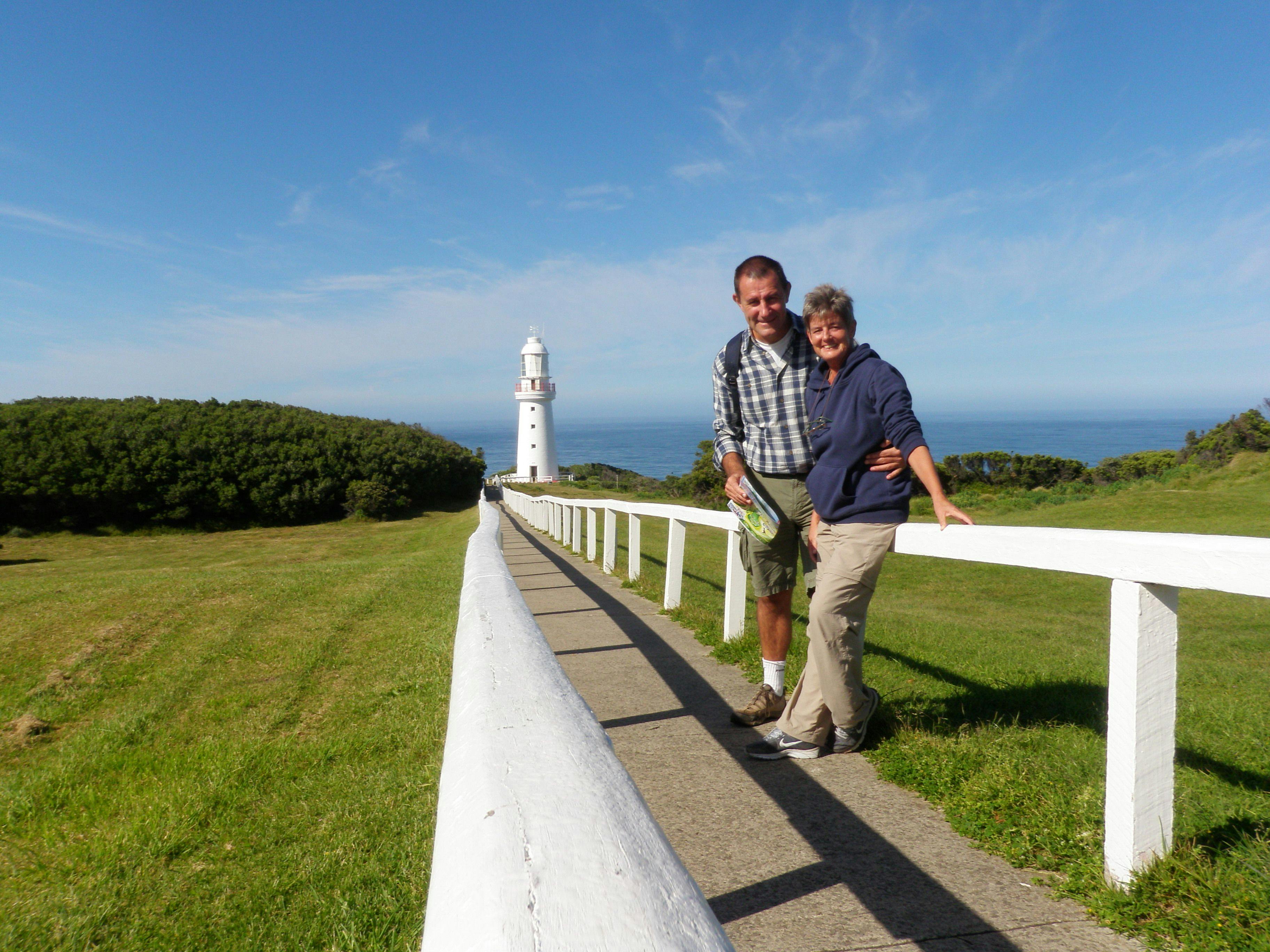
It’s definitely worth having a look here. This is the resting place of intrepid explorers and shipwreck casualties. The Shipwreck Coast has claimed 163 ships! Try to imagine how tough life must have been in the early days of settlement in this isolated place and you’ll understand why there are so many children buried here.
Aire Valley
Along this section of track there are fine examples of kangaroo apples. These tall shrubs have thin leaves that are shiny above and a paler colour beneath. They have large pink flowers with a yellow centre during spring and summer. Their name comes from the large yellow/orange fruits favoured by many native birds and animals.
Johanna Beach
You’ll see a lot more excellent grass trees (Xanthorroea australis) along this section. During flowering time they have thousands of tiny white flowers densely packed around each tall stem. These flower stems can grow to about 3 metres.
Port Campbell
If you do get down onto the beach, here is some information about the wrecks. Wrecks are haunting reminders of the treacherous nature of the sea and of the many people who have drowned at sea. The first remains are of the French barque Marie Gabrielle, wrecked here in 1869. The area looked so desolate to the surviving crew that they split up in search of rescue. Three days later the captain and four crew members made it to the Cape Otway lighthouse, while the second mate and two crew stumbled into a settlement at Aire River about the same time. The barque Fiji (second remains) was also swept ashore here in 1891. Twelve men drowned despite rescue efforts of a crew from Port Campbell, and their new-fangled rocket-launched rescue rope which was fired across the ship.
Milanesia Beach
Why is there a house down here? It’s a bit of an anomaly really, having a private house so close to the beach and National Park! The story we’ve been told is that the present owner’s grandparents bought a stretch of land from Johanna Beach to Moonlight Head back in the 1920s. The parks service has been trying to buy it back ever since but to no avail. Then they discovered some years back that the house was actually built in the park and not on private land. The owners were told to demolish it immediately, but after much negotiation they were allowed to keep the house as long they allowed public access through their land to the beach! The grandparents are buried in the Moonlight Head cemetery.
Moonlight Head
This area, rich and diverse in plant and animal life, has been a gathering, ceremonial and feasting place for thousands of years. Many sites and spiritual links remain today. Archaeological sites in the park show evidence that the local Gadabanud (King Parrot) people gathered shellfish and hunted game in the resource-rich area. There are many shell middens along this walk. The Gadabanud people ask that you respect and recognise these cultural sites and features as part of Australia’s history.
Princetown
On the other side of the road, there’s a boardwalk on crossing some wetlands. There are interpretive signs to help you identify the many birds that inhabit these wetlands. If you are tired and want to get picked up earlier, you could follow the boardwalk up into the Princetown settlement. There’s a phone here as well as a pub. It takes about 10 mins to walk there. Note that if you take this option you’ll miss out on seeing the 12 Apostles.
Twelve Apostles
Beside the lookout at Gibson Steps are a set of 86 steps built in the 1800s by Hugh Gibson of Glenample Homestead, to access the beach below. The two offshore stacks, called Gog and McGog, are some of the 12 Apostles. Stacks like this are formed when waves lash a headland, eroding it from both sides until an arch forms. Erosion continues until the arch collapses, leaving stacks behind.
Loch Ard Gorge
The cliffs around here began to form 10-20 million years ago under the sea from a build up of skeletons of countless millions of tiny marine animals. When the sea levels retreated, the soft limestone was exposed to the wild seas and winds of the Southern Ocean.
Tour details
-
Single Available from 15 March 2026
-
Single Available from 23 March 2026
-
Single Available from 17 April 2026
-
Single Available from 27 April 2026
-
Single Available from 8 May 2026
-
Single Available from 28 September 2026
-
Single Available from 12 October 2026
-
Single Available from 28 November 2026
Features
Service facilities
This business does not currently offer accessible facilities.
Operation information
Auswalk Walking Holidays
The highlights of an Auswalk walking holiday go far beyond exploring the iconic landmarks that you are going to experience on the track.
Auswalk allows you to discover Australia’s greatest landscapes in comfort. You will be carrying only a day pack as your luggage is transferred on to your next accommodation while you progress along the track. Arrive each evening to your next comfortable accommodation, ready to enjoy another display of the local produce. Rest assured that a wine list will also never be too far away.
On group guided trips you will travel with a group of like-minded people, accompanied by two professional guides allowing for the flexibility of easier and harder walk options.
For the ultimate adventure and flexibility Auswalk’s self guided inn-to-inn trips allow you to walk any day in the season, with your own group of two or more people. You will still enjoy their full support as you progress along the track from one accommodation to the next with luggage transfers, marked maps and detailed walk notes.
Tags
Accreditations
-
 ECO Certified (Advanced Ecotourism) by Ecotourism Australia
Plan more around this area
 South Yarra, VIC
The Lyall Hotel
Capturing the essence of its stylish South Yarra address, The Lyall Hotel and Spa is a small, privately owned five star hotel offering grand hotel
 South Yarra, VIC
 Oaks Melbourne South Yarra Suites
Located in one of Melbourne's most sought after suburbs against a backdrop of historic architecture, Oaks aparthotel occupies an enviable position in South Yarra.

 South Yarra, VIC
 Ovolo South Yarra
Blending past, present and progressive, a place where retro chic and pop-art collide. Taking its design cues from the days of disco, rock gods and

 Melbourne, VIC
 The Royce
Once Melbourne’s original luxury automobile showroom, and now a boutique hotel. The building's indulgent historical origins are on full display. From the grand marble-tiled staircase
 South Yarra, VIC
The Como Melbourne
Located in the fashionable South Yarra district, the vibrant Como Melbourne MGallery by Sofitel hotel is the epitome of chic style and sumptuous elegance. We

 South Yarra, VIC
 United Places Hotel Botanic Gardens
United Places Hotel Botanic Gardens is a twelve suite boutique hotel located in South Yarra. Located just 2km from the CBD amidst a village-like precinct
 Armadale, VIC
 Amaru Melbourne
Amaru in Armadale, Melbourne, is a three-hat dining destination in the Age Good Food Guide, offering a truly immersive and intimate culinary experience. The 34-seat
 Southbank, VIC
 Ludlow Bar and Dining Room
Ludlow, a modern riverside pub along Southbank, laid back and buzzy, with a public bar, dining room and huge beer garden terrace overlooking Melbourne. Serving
 Southbank, VIC
 BearBrass
BearBrass is a relaxed venue on the banks of the Yarra River, overlooking our beautiful city of Melbourne. Our barista's supply the promenade with fresh
 Melbourne, VIC
 Protagonist
Much like the name suggests, Protagonist promises to play a lead role in creating a distinctive and memorable first impression at Arts Centre Melbourne. Protagonist
 Southbank, VIC
Eureka 89
Eureka 89 is located on the top floor of Eureka Tower in Southbank Melbourne. Eureka 89 offers a truly memorable experience with glorious views through
 Melbourne, VIC
 The Barre
An intimate, modern atmosphere with food and drinks to match.
