The Cockle Train
Highlights
- Join the fully restored heritage train for a scenic journey from Goolwa to Victor Harbor along the oldest railway.
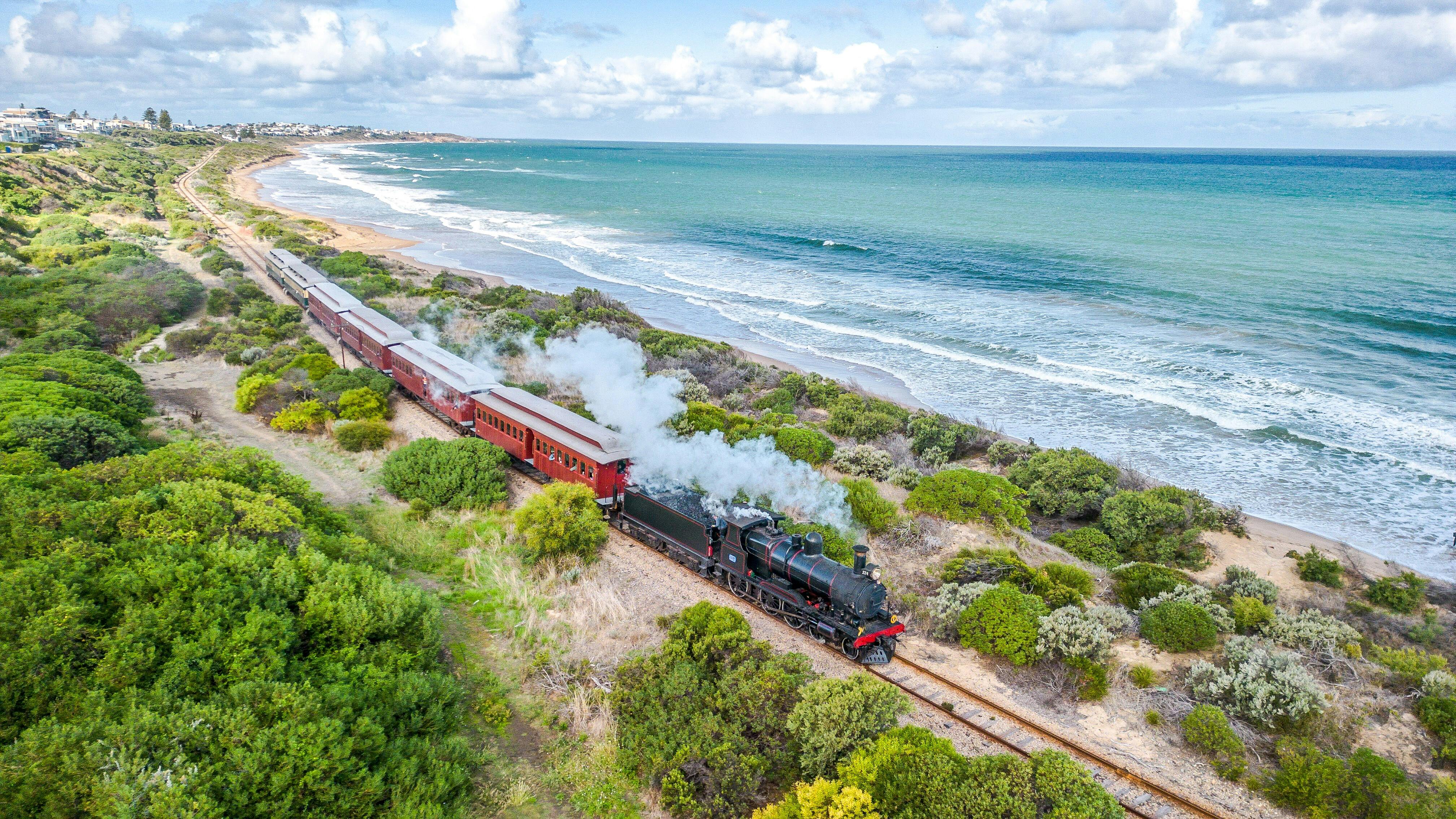
- Experience breathtaking coastal views of the Southern Ocean while traversing the stunning Fleurieu Peninsula cliffs.
- Discover the rich history of the railway dating back to 1854, connecting the River Murray to the ocean wharfs.
- Enjoy family-friendly facilities at Goolwa Railway Station, including a kiosk and gift shop for a delightful day out.
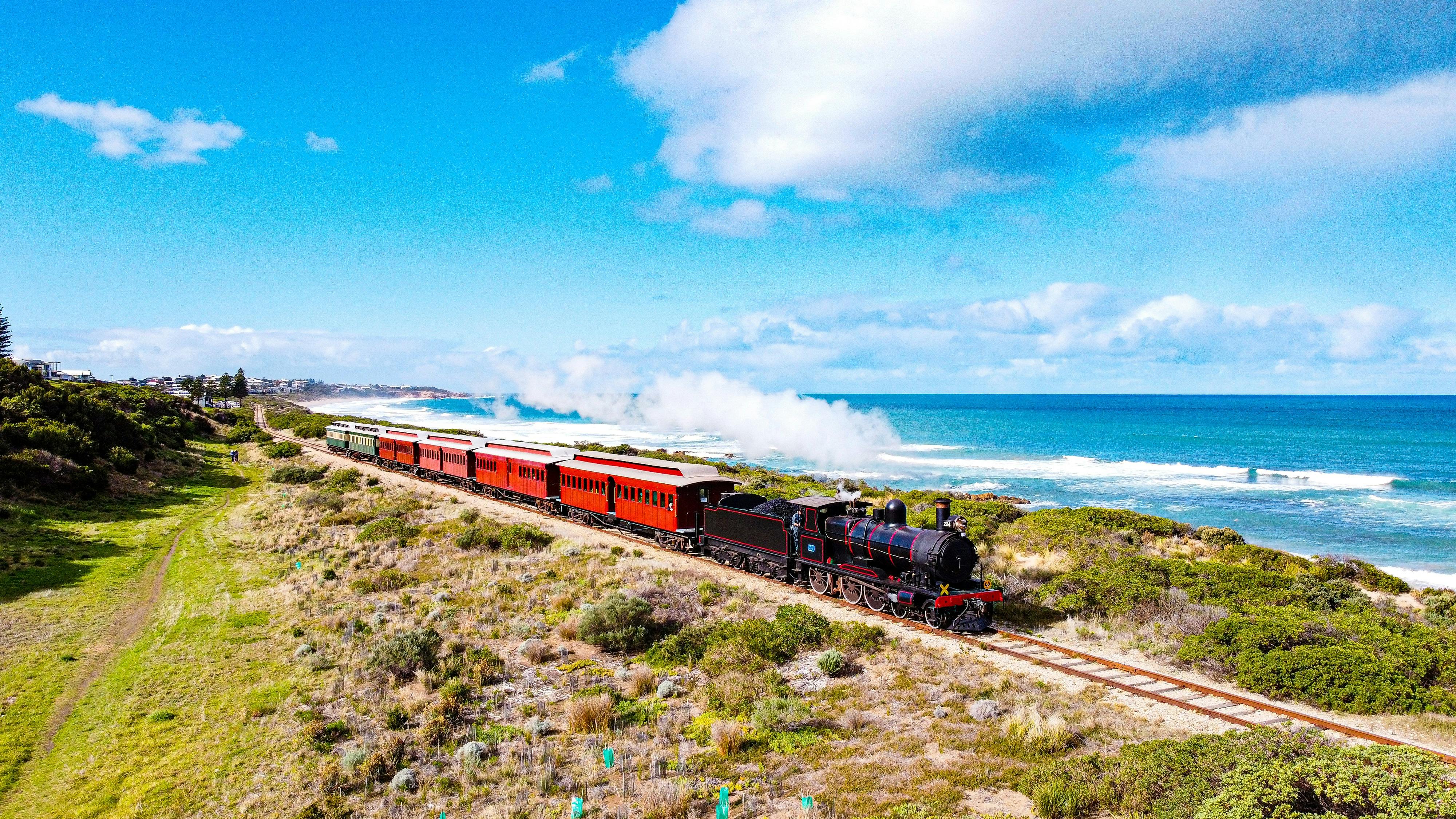
The Cockle Train travels along the oldest steel railed railway in Australia dating back to 1854 when it was constructed to provide a link between the River Murray and the ocean wharfs at Pt Elliot and later at Victor Harbor.
Tickets are available at the Goolwa, Port Elliot & Victor Harbour Railway Stations on day of travel.
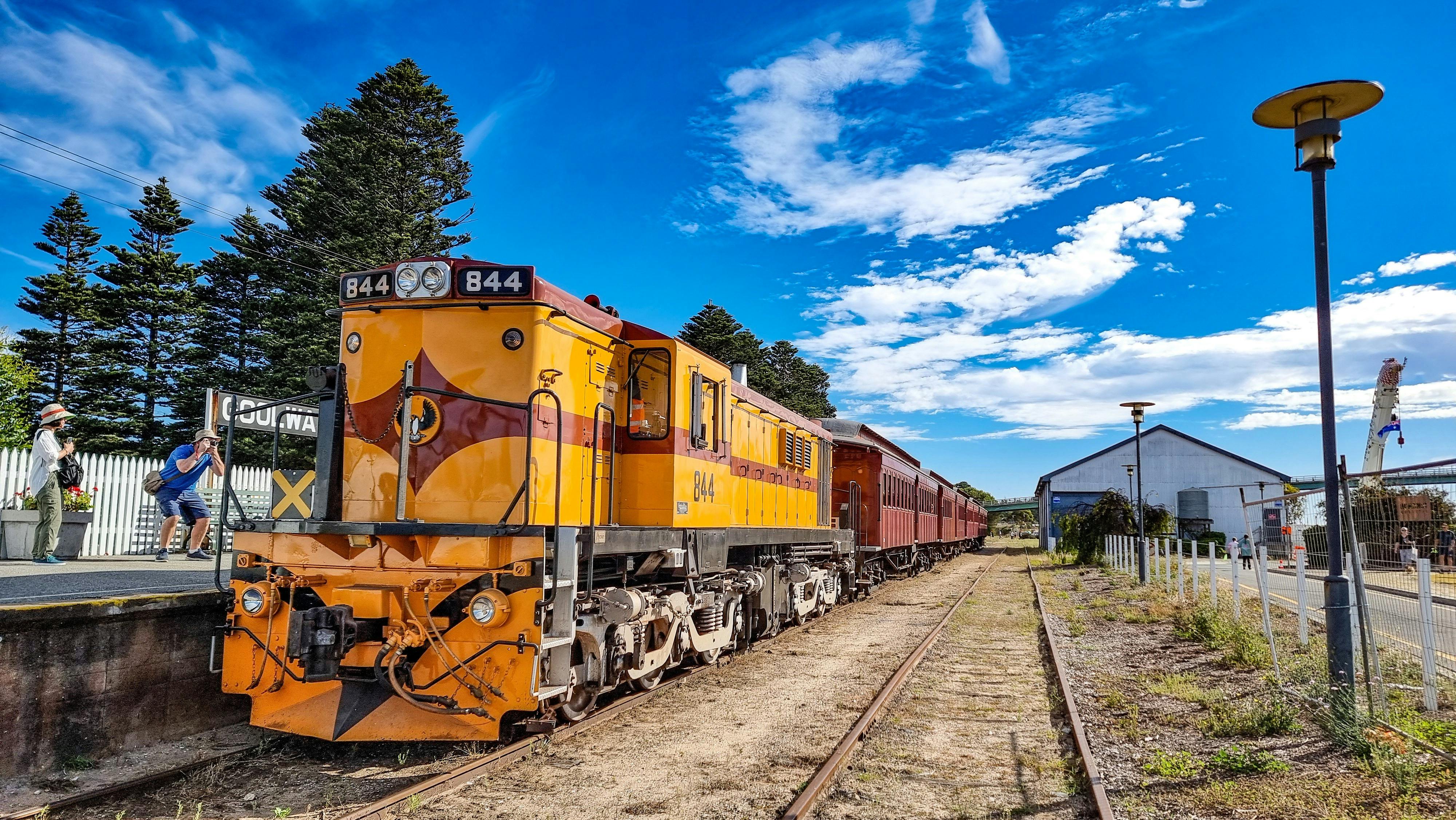
The Cockle Train commences its run each day at Goolwa station, in the historic Wharf Precinct alongside the River Murray.
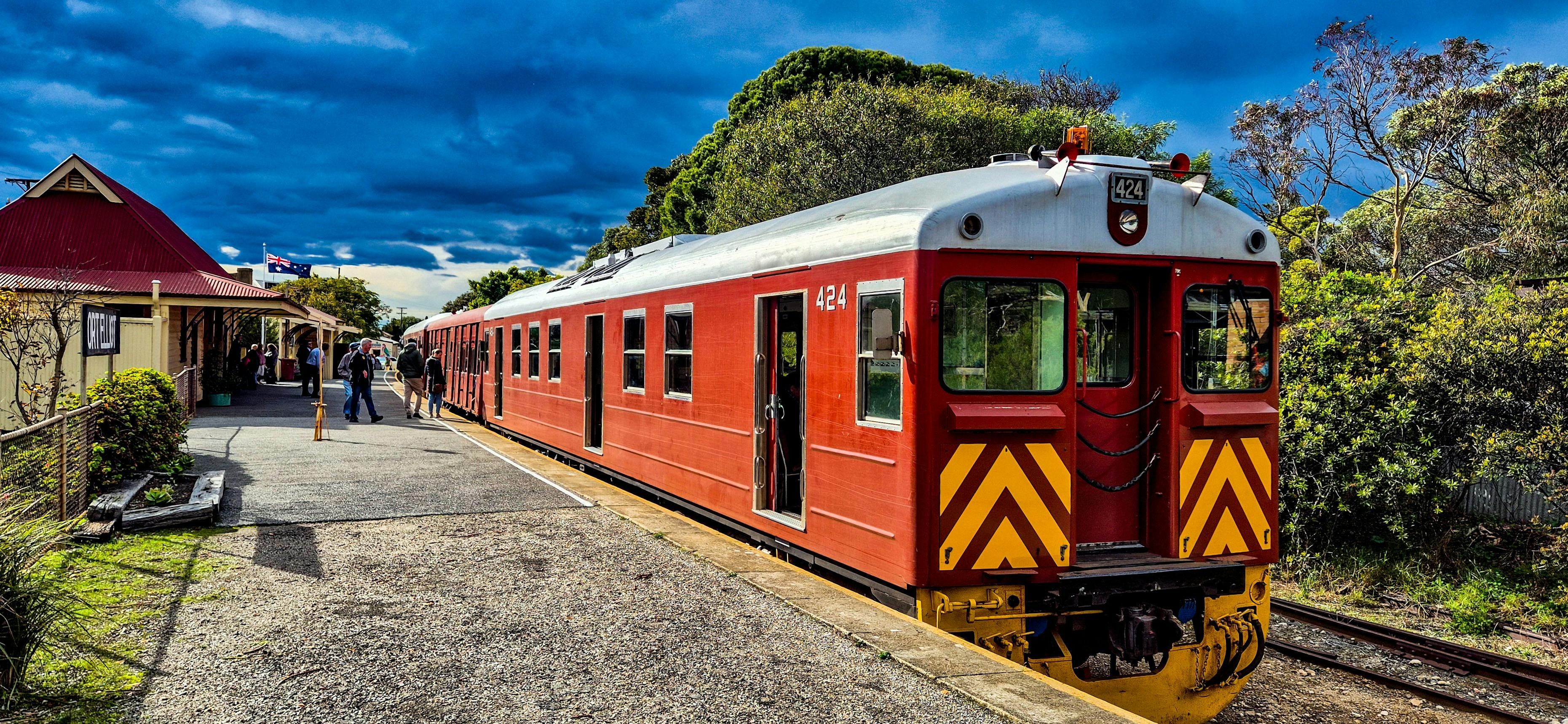
Leaving Goolwa, the line heads off across the plains to Middleton, picking up or dropping off passengers on request, and then to Port Elliot where it reaches the Encounter Bay coast.
After leaving Port Elliot the train climbs to the top of the coastal cliffs and passengers experience some of the most picturesque coastal scenery on the Fleurieu Peninsula, with nothing separating you from the beach below and a perfect view of the Southern Ocean – in winter the home of Southern Right Whale.
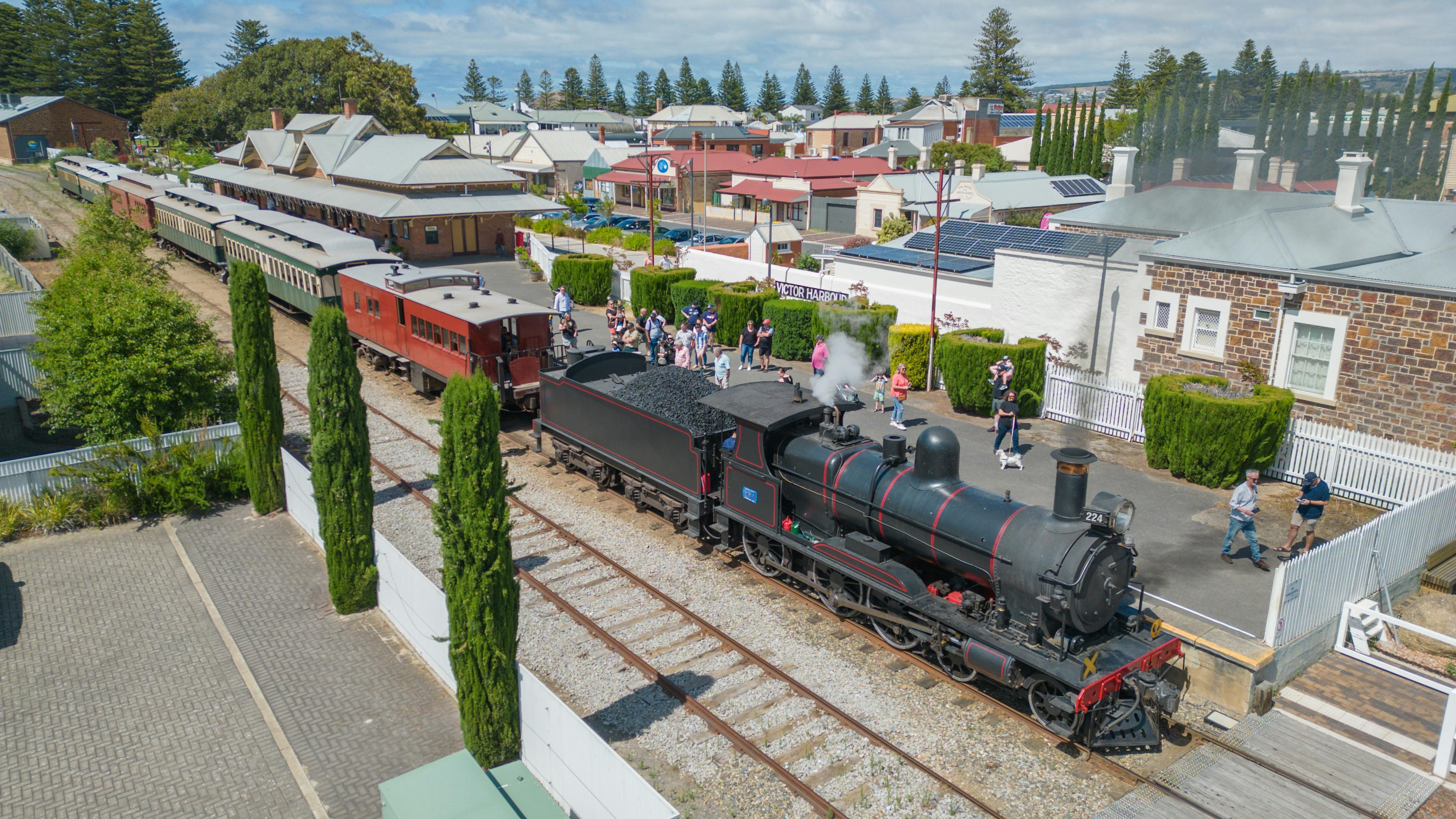
After a 30 minute journey the train edges into Victor Harbor station, right in the centre of the town and surrounded with its iconic pine trees.
Here, the locomotive is detached from the carriages and turned on our specially retained 30m long electric turntable before rejoining the carriages for the return journey to Goolwa.
Images and Video

Accreditations
-
 Quality Tourism Accreditation
- Regional Tourist/Tourism Association/Organisation
- Tourism Industry Council of SA
Features
Actively welcomes people with access needs.
General access

- Offers multiple options for booking – web, email, phone is available.
- Offers a range of contact methods for receiving complaints.
- Companion Cards are accepted.
- Assistance with booking arrangements (includes providing clear itineraries with written instructions on what to do at various destinations)
Communication

Welcomes and assists people who have challenges with learning, communication, understanding and behaviour. (includes people with autism, intellectual disability, Down syndrome, acquired brain injury (ABI), dyslexia and dementia)
- Uses Plain English / easy read signage and information (includes menus and emergency information)
Physical – Wheelchair

Caters for people who use a wheelchair.
- Step free outdoor pathways (includes picnic areas, barbecues and shelters)
- A step free main entrance to the building and/or reception area (includes ramps or slopes with a maximum gradient of 1:14, otherwise are too steep for wheelchairs)
- An accessible public toilet which is unlocked.
- Portable ramps.
- At least one wheelchair accessible parking space with wheelchair accessible signage clearly displayed (International standards are 3200mm wide x 2500 mm high).
Plan more around this area
 Goolwa, SA
 Piccolina Floating Accommodation
Cozy luxury floating accommodation located in the historic Captain Sturt marina on the River Murray at Goolwa.
 Goolwa, SA
 Rose Eden House at Goolwa
Rose Eden House is a Beautiful Heritage House built in 1876 and has been fully restored to its former beauty.
 Goolwa South, SA
 Eden Grove Lodge
Green Eden Lodge is a beautifully renovated three-bedroom retreat located in the heart of Goolwa, offering a perfect escape for families, couples, or friends seeking
 Goolwa, SA
 Motel Goolwa and Jack's Place Cafe
Goolwa Central Motel and Murphy’s Inn offers quality accommodation and comfort, centrally located in Goolwa with 25 large, modern luxury rooms, including spa rooms and

 Goolwa South, SA
 58 Colman Road, Goolwa South
Family holidays will be enjoyed close to the river, the beach, and within walking distance to Goolwa Town Centre. Take a stroll along the wharf
 Goolwa South, SA
 Leeside
Located on the banks of the Murray River in the historic river port town of Goolwa, Leeside is a welcoming family holiday home designed for
 Hindmarsh Island, SA
 Coorong Cafe
Coorong Cafe is located at Sugars Beach opposite the iconic Murray Mouth.
 Port Elliot, SA
 Jetty Food Store
Whether you're after a fruit fix, or a vegetable hit, Jetty Food Store has amazing produce sourced directly from Fleurieu farms.
 Port Elliot, SA
 The Joinery Wine Room
The Joinery at Factory 9 is the home of Charlotte Dalton Wines and Cooke Brothers Wines.
 Port Elliot, SA
 De Groot Coffee Co
Serving single origin coffee only, De Groot is a little different to most roasters.
 Hayborough, SA
 The Chiton Restaurant
The Chiton Restaurant is a family-friendly oceanfront venue featuring Mediterranean and French flavours, along with a variety of patisserie desserts.
 Hindmarsh Valley, SA
 Cut Hill Wall Distillery
Cut Hill Distillery, located on the picturesque Fleurieu Peninsula in South Australia, is dedicated to producing exceptional grain-based, double-distilled whiskies.
